
Pediculosis (Head lice)
Treatment available at our Madrid clinics at Calle Serrano 143 and La Moraleja
Dermatologists specialising in
Removal of lice
Head lice are only small and don’t look ferocious, but they represent one of the greatest ordeals for parents with school-age children. In developed countries, infestations can affect the entire school population and, contrary to enduring popular belief, have nothing to do with hygiene habits or the social status of the children affected.
Recognised reference clinics in Spain
Inicio > Clinical Dermatology > Paediatric Dermatology > Pediculosis
What sets us apart
Effective treatments that respect the scalp
Our paediatric dermatology unit offers a specialised approach to the treatment of head lice, combining accurate diagnosis, safe treatment and preventive education for families. We pride ourselves for using methods that respect children’s scalps, avoiding aggressive products and ensuring maximum effectiveness in the elimination of lice and their eggs. In addition, we provide personalised advice to parents, helping them to prevent further infestations and dispelling myths about the condition, ensuring complete and stress-free handling of the situation for children and their families.

Early diagnosis
Early detection of head lice is key to rapid and effective eradication. Our unit performs a thorough evaluation of the scalp and hair to confirm the presence of lice and their eggs, differentiating them from other conditions that may cause similar symptoms, such as flaking, seborrhoeic dermatitis or intolerances to hair products.
Detailed review with specialised technology
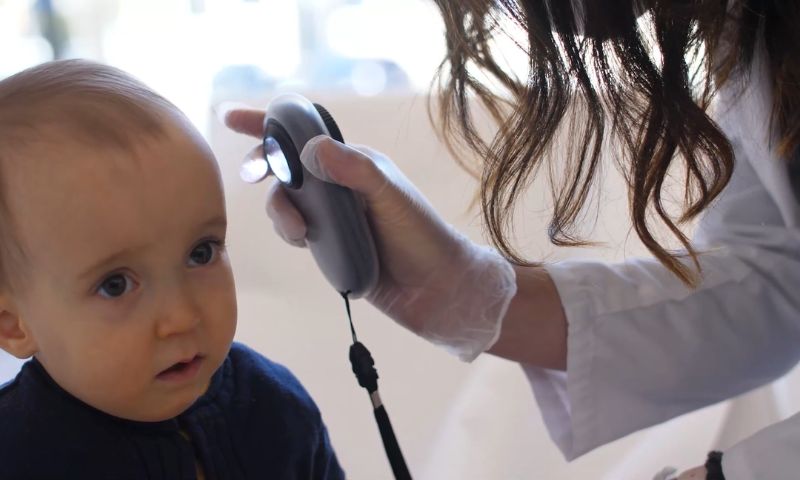
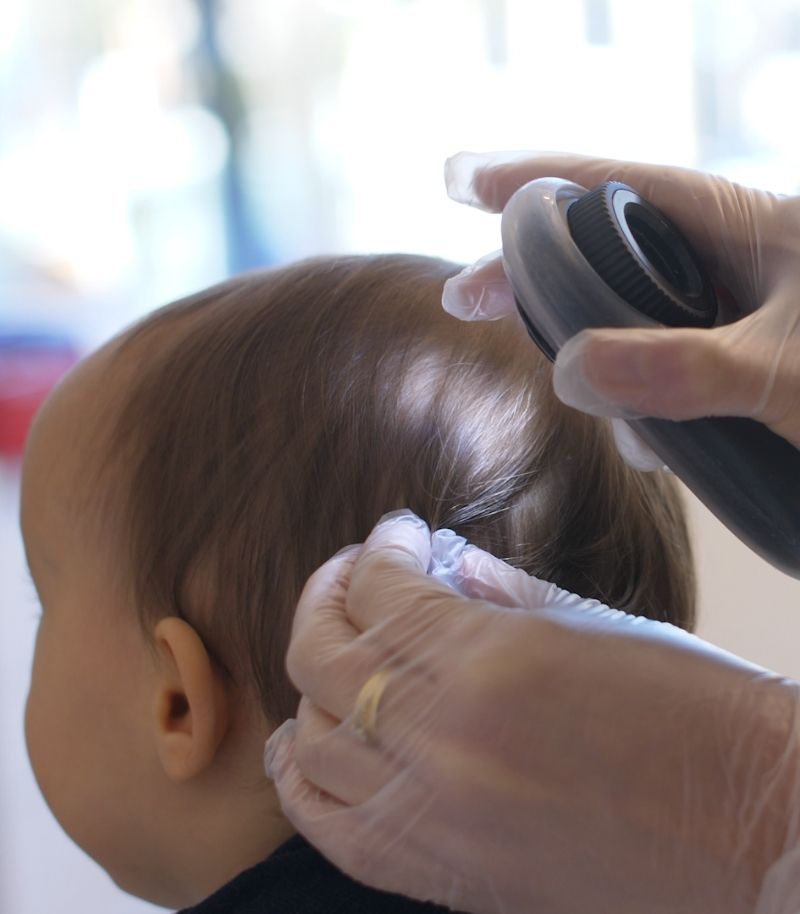
Our paediatric dermatologists use magnification, special light and fine combs to accurately detect live lice and eggs at different stages of development. This screening enables an accurate diagnosis and treatment adapted to the level of infestation in each child’s hair, avoiding unnecessary or ineffective treatments.
Differentiation from other conditions
Some scalp conditions can be mistaken for head lice, which can lead to misdiagnosis. For this reason, we make sure to analyse each case rigorously in order to offer a personalised and effective solution, avoiding unnecessary discomfort and guaranteeing the best treatment for each patient.
Safe treatments and prevention
We tackle head lice with safe and effective methods that eliminate both lice and their eggs, reducing the risk of reinfestation. Our approach combines specific products with preventive measures for lasting control of the problem.
Use of child-friendly treatments
We prescribe lotions, shampoos and products formulated to eliminate lice and their eggs without damaging the scalp. In addition, we instruct parents on correct application to maximise the effectiveness. In resistant cases, we combine topical treatments with the use of nit combs to ensure complete removal of eggs.
Prevention to avoid new infestations
Head lice are very easily passed on, so we offer effective prevention guidelines. We teach families to regularly check hair, use fine-tooth combs and maintain appropriate hygiene of personal items such as hats, combs and pillows. We also advise on habits at school and at home that can reduce the risk of infection, protecting the child and their environment.
Child-adapted care
Treating infestations of lice can be uncomfortable for children, so our unit makes sure that the experience is as tolerable as possible. Our priority is to create an environment of trust, where children feel comfortable and safe during the process of diagnosing and eliminating the head lice.
Non-invasive methods which are gentle on the scalp
We opt for gentle treatments that minimise irritation and avoid aggressive products that may cause adverse reactions. To eliminate lice and their eggs, we combine mechanical techniques, such as the use of nit combs, with specific lotions, ensuring a well-tolerated and effective procedure without compromising the health of the scalp.
A safe space and empathetic care
Our team of paediatric dermatologists is experienced in handling children, facilitating communication and reducing stress for the child during the consultation. We create a calm environment, explaining each step in a friendly way and using language adapted to their age so that they understand what is happening without getting anxious, encouraging their collaboration in the treatment.
What they are and how they are treated
A guide to understanding pediculosis
Pediculosis is an infestation caused by lice, tiny parasites that colonise the scalp and feed on the patient’s blood. It is one of the most common dermatological conditions and a frequent reason for consultation.
What do lice look like?
Head lice are insects measuring approximately 2 to 3 millimetres in length—roughly the size of a sesame seed. They are brown or greyish in colour and have six legs, which allow them to move easily across the scalp. They do not jump or fly; rather, they spread from one head to another through direct contact or by sharing hats, hoods, scarves, brushes and similar items.
They lay eggs, known as nits, which are oval-shaped, very small and light-coloured. Lice attach their eggs to the hair shaft near the scalp using a glue-like substance that makes removal difficult. Their preferred areas for laying eggs are the nape of the neck, the neckline and behind the ears, although they can colonise the entire scalp.

Symptoms and treatment of pediculosis (head lice)
Symptoms
Intense and characteristic itching, especially in the areas where lice feed, almost always at the nape of the neck and behind the ears. This symptom does not appear immediately after infestation and may take up to three weeks to develop. The itching is usually the reason why children are brought to consultation. Diagnosis is made when nits or live lice are observed during visual inspection of the scalp, after ruling out other causes such as eczema or intolerance to hygiene products.
If scratching is very intense, children may develop small wounds. However, these are not a specific symptom of lice infestation, as lice do not transmit diseases.
Treatment to eliminate lice
To completely eradicate lice, it is essential to take into account their life cycle, which lasts approximately 28 days. During this period, they can multiply rapidly, laying up to 10 eggs per day. Nits do not come off with regular brushing, and brushing alone is also insufficient to remove lice from the hair. For this purpose, special fine-toothed combs (nit combs) with very closely spaced rigid teeth are required.
Treatment with specific medications should be started once the presence of nits or live lice on the child’s scalp has been confirmed.
Advice on pediculosis treatment
- Most manufacturers recommend repeating the treatment once, one week after the first application. However, better results are obtained by repeating it again seven days later to cover the entire life cycle of the louse and ensure complete eradication.
- It is common for children to have lice several times during their school years. For this reason, alternating treatments with different active ingredients is advisable to prevent resistance.
- Using leave-in conditioners and hair softeners makes it harder for nits to adhere firmly to the hair.
- Keeping hair tied back or cut short can help reduce infestation.
- Do not use pediculicide medications preventively when there is no active infestation. They are not effective, can be harsh on the scalp, and increase the risk of eczema and resistance.
- As not all products are 100% ovicidal (they kill adult lice but not all eggs), it is advisable to use a nit comb daily after completing treatment to ensure there are no recurrences.
“Contrary to a widespread belief, lice have nothing to do with hygiene habits or the social background of affected children”
More information
Below you will find answers to some of the most frequently asked questions by parents regarding lice removal, as well as authorship and references for the information provided on this page.
Frequently asked questions about lice
Do lice jump or fly?
Neither. Lice do not jump or fly. They spread through direct contact and pass from one person to another when heads touch, or when combs, hats, hoods, scarves or pillows are shared.
Is pediculosis caused by poor hygiene?
No. Pediculosis has nothing to do with poor hygiene, and lice do not prefer dirty hair. In fact, they adhere more easily to clean hair.
Why does it affect girls more often?
It is more common in girls because they usually have longer, looser hair, which facilitates infestation and makes treatment more difficult. There is no scientific reason explaining this difference beyond these factors.
Is it only a childhood problem?
No. Adults are less likely to get lice because they do not usually engage in risk behaviours typical of children (sharing combs and brushes, swapping hats, scarves, etc.), but it is not impossible. Adults can also get lice, usually through contact with an infested child.
Do natural products work better than chemical ones?
No. There are home remedies such as mayonnaise, petroleum jelly or moisturising creams that may help detangle hair and loosen lice. However, their effectiveness is much lower than that of pharmacy-grade pediculicides.
Is vinegar pediculicidal?
No. Vinegar softens the substance that attaches nits to the hair shaft through the action of acetic acid. This helps them detach, but it does not kill the eggs and has no preventive effect.
Does tea tree oil prevent pediculosis?
It is one of the most commonly used natural remedies against lice infestation, but there is no scientific evidence supporting its effectiveness. Moreover, essential oils can be highly irritating or even toxic for children if not used at appropriate concentrations.
Authorship and references
The content of this page has been prepared by the Communication Department and the Medical Team of Grupo Pedro Jaén, in line with our editorial commitment to ensuring the accuracy and up-to-date nature of the information provided.
References on pediculosis:
1. Yetman RJ. The child with pediculosis capitis. J Pediatr Health Care. 2015 Jan-Feb;29(1):118-20. doi: 10.1016/j.pedhc.2014.09.002. Epub 2014 Oct 24. PMID: 25449003.
2. Madke B, Khopkar U. Pediculosis capitis: an update. Indian J Dermatol Venereol Leprol. 2012 Jul-Aug;78(4):429-38. doi: 10.4103/0378-6323.98072. PMID: 22772612.
3. Elston DM. Treating pediculosis–those nit-picking details. Pediatr Dermatol. 2007 Jul-Aug;24(4):415-6. doi: 10.1111/j.1525-1470.2007.00461.x. PMID: 17845169.
4. Javier J. The treatment and prevention of head lice infestation. Adv Nurse Pract. 2009 Feb;17(2):1-8. PMID: 19999418.
5. Nutanson I, Steen CJ, Schwartz RA, Janniger CK. Pediculus humanus capitis: an update. Acta Dermatovenerol Alp Pannonica Adriat. 2008 Dec;17(4):147-54, 156-7, 159. PMID: 19104739.
6. Bowden VR. Losing the louse: how to manage this common infestation in children. Pediatr Nurs. 2012 Sep-Oct;38(5):253-4, 277; quiz 255. PMID: 23189775.
7. Leung AKC, Lam JM, Leong KF, Barankin B, Hon KL. Paediatrics: how to manage pediculosis capitis. Drugs Context. 2022 Mar 14;11:2021-11-3. doi: 10.7573/dic.2021-11-3. PMID: 35371269; PMCID: PMC8932250.
8. Fu YT, Yao C, Deng YP, Elsheikha HM, Shao R, Zhu XQ, Liu GH. Human pediculosis, a global public health problem. Infect Dis Poverty. 2022 May 26;11(1):58. doi: 10.1186/s40249-022-00986-w. PMID: 35619191; PMCID: PMC9134731.
Where we see patients?
Clinics in Madrid
Grupo Pedro Jaén is a medical group founded more than three decades ago with the aim of providing medical, surgical and aesthetic solutions related to skin health and appearance. Led by Dr Pedro Jaén, the group has a highly specialised medical team that covers every area of care with top-level specialists, carries out extensive training activities, is a leader in medical research, and operates several clinics in Madrid, from which it offers the highest standards of care and clinical excellence to all patients.


Calle Serrano 143
This centre is the main headquarters of Grupo Pedro Jaén. It provides diagnostic and treatment services in skin cancer, clinical and aesthetic dermatology, laser treatments and other related specialties.
Mon - Fri 09:00 - 21:00 / Sat: 09:00 - 14:00
Calle Serrano 143, El Viso neighbourhood, Chamartín district, 28006 Madrid, Spain

La Moraleja
Located in Plaza de La Moraleja, this exclusive centre allows Grupo Pedro Jaén to bring its medical and aesthetic services closer to patients across the entire northern area of Madrid.
Mon - Thu: 09:30 - 20:00 / Fri: 09:30 - 18:00
Calle de la Estafeta 8, ground floor, La Moraleja, 28109 Alcobendas, Madrid
Related units and pages
Paediatric dermatology
Specialised care for the full range of dermatological conditions that may affect children.
Clinical dermatology
Highly specialised dermatologists for each skin condition, offering the most advanced treatments available.
Contact dermatitis
Identification of triggering causes, tailored treatment plans and personalised guidance.
Information and news
Press room
In the Grupo Pedro Jaén Press Room you can find information, advice and news related to dermatology, aesthetic medicine, trichology and general health. The group’s journals are also shared through an online platform, along with updates on the activity and media appearances of our clinics and healthcare professionals.
How to shower properly: tips for looking after your skin
Cold or hot water? Is it better to use a sponge? Find out how to shower properly and what dermatologists recommend to protect your skin.
Retinol in summer: should you stop using it?
We debunk this and other myths about using retinol during the warmer months.

Blog
News about Grupo Pedro Jaén. Information and advice on dermatology, aesthetic medicine, trichology, and general health

Media
Information about media appearances by our clinics and medical specialists.

Journal
Archive of all Grupo Pedro Jaén journals, available through an external online platform.