

Ageing does not only affect us through wrinkles, skin laxity or pigmentation changes. At Grupo Pedro Jaén, we recognise that ageing has a much broader impact on the body’s tissues and structures and is not simply an aesthetic issue. For this reason, we aim to take a comprehensive approach to this natural process, also addressing patients’ function and quality of life.
With this in mind, our Endocrinology and Nutrition Unit has developed a care programme called the Whole Body Program, designed to address each case holistically and with particular attention to one of the most important factors in healthy ageing: sarcopenia.
What is sarcopenia?
Sarcopenia is the progressive loss of muscle mass that occurs as we age. This process begins to become apparent at around the age of 30 and accelerates after the age of 50, leading to physical decline characterised by a gradual loss of strength and endurance. Sarcopenia also affects the quantity and quality of muscle fibres, which can influence balance and recovery after injury. Overall, sarcopenia affects general health and can have a marked impact on quality of life because it is associated with mobility problems and an increased risk of falls and fractures.
Although sarcopenia is a natural process associated with ageing, and certain chronic diseases may also be associated with it, there are several modifiable factors that can accelerate or worsen the condition, including a sedentary lifestyle and poor nutrition.
Causes and risk factors for sarcopenia
Sarcopenia is a complex condition driven by several factors, including the biological changes inherent in the ageing process. As we age, the body becomes less efficient at protein synthesis, an essential mechanism for maintaining and building muscle tissue.
This process is compounded by hormonal changes, particularly involving key hormones such as testosterone, oestrogen and growth hormone, all of which play an important role in muscle health. In addition, the body’s ability to regenerate and repair muscle tissue after injury or everyday wear and tear declines with age.
Physical inactivity is also one of the most important contributors to loss of muscle mass. Muscles — and the musculoskeletal system more broadly — require regular use and challenge in order to maintain strength and volume. Without the stimulus of regular exercise, muscles atrophy, tissues lose elasticity and overall physical function can deteriorate.
As in many other areas of health, poor nutrition can also have a significant impact on sarcopenia. Inadequate protein intake is particularly relevant. Protein is essential for maintaining muscle, forming new muscle fibres and supporting recovery after exercise or injury. Deficiencies in vitamins and minerals such as vitamin D and magnesium may also adversely affect muscle health.
Chronic diseases, inflammatory disorders and certain medications may contribute indirectly to sarcopenia. Conditions such as heart failure, chronic obstructive pulmonary disease and cancer, as well as medications that affect muscle metabolism or reduce appetite, can aggravate the condition.
Finally, lifestyle and environmental factors, including smoking and excessive alcohol consumption, may also influence the progression of sarcopenia through both direct and indirect effects on muscle health.

Symptoms and diagnosis of sarcopenia
Sarcopenia can present with several subtle but important symptoms, many of which may be mistaken for normal ageing. The first sign is often a noticeable reduction in muscle strength. Everyday activities such as lifting objects, climbing stairs or even standing up from a chair may become more difficult. Loss of muscle mass is also accompanied by reduced endurance, meaning that affected individuals may become fatigued more easily during physical activities they previously performed without difficulty.
Another important symptom is reduced mobility. People with sarcopenia often experience slower walking speed and a reduced ability to maintain balance, increasing the risk of falls and related injuries.
However, the diagnosis of sarcopenia is not based solely on symptoms. A clinical assessment is required and often includes several tests and measurements, such as grip-strength testing to provide a rapid assessment of overall muscle strength and ultrasound imaging to obtain more detailed information.
Ultrasound, which is widely used in our Endocrinology and Nutrition Unit, is particularly useful for assessing the morphology and structure of muscle and fat tissue. It also provides a more reliable assessment of tissue quality and the patient’s overall condition, allowing parameters such as the proportion of abdominal fat to be evaluated. This is relevant because excess abdominal fat is associated with a three- to five-fold increase in the risk of diabetes, heart attack and stroke.
Depending on the individual patient, assessment may also include an evaluation of physical function using walking-speed tests, balance assessment and tests of the ability to rise from a seated position. These help determine how sarcopenia is affecting the person’s ability to perform everyday activities.
Early recognition of symptoms and an accurate diagnosis are essential for effective management of sarcopenia. Early detection allows interventions to be introduced that can help slow the progression of muscle loss and improve quality of life.
How does sarcopenia affect quality of life?
Sarcopenia can have a profound impact on quality of life, both physically and psychologically.
Physically, reduced muscle strength and muscle mass can affect the ability to perform everyday activities. Tasks that were once simple, such as carrying shopping bags, climbing stairs or walking longer distances, may become increasingly difficult. This loss of independence and autonomy can lead to greater reliance on others for daily activities.
The risk of falls and injuries increases significantly because of the muscle weakness and impaired balance associated with sarcopenia. Falls not only pose an important physical risk, particularly in older adults, but can also lead to a persistent fear of falling, further limiting physical activity and mobility.
From a psychological perspective, coping with physical limitations and increasing dependence can have a negative impact on mental health. People with sarcopenia may experience frustration, low self-esteem and, in some cases, depression. Losing the ability to take part in previously enjoyable activities can also contribute to isolation and reduced social participation.
Socially, sarcopenia can limit interaction with friends and family and reduce opportunities for leisure and social activities. This can increase feelings of isolation and negatively affect personal relationships.
Understanding these effects is essential for managing sarcopenia comprehensively. Prevention and treatment should therefore address not only physical health but also the person’s mental and emotional wellbeing.

Strategies for preventing sarcopenia
Preventing sarcopenia is important for maintaining quality of life as we age. Once muscle mass has been lost, rebuilding it is generally more difficult than maintaining it in the first place. Prevention strategies therefore focus on keeping muscles active and healthy through measures ranging from exercise to nutrition.
Regular physical exercise
Exercise is the most effective measure for preventing sarcopenia. Activities that combine resistance training — such as lifting weights, using resistance bands of varying strengths or performing bodyweight exercises — with aerobic exercise such as walking, swimming, dancing or cycling are particularly beneficial. Resistance training helps build and maintain muscle mass, while aerobic exercise improves cardiovascular health and physical endurance. Exercise programmes should be adapted to the individual’s physical ability and preferences and should be realistic enough to maintain regularly.
Healthy nutrition
A balanced diet containing sufficient high-quality protein is fundamental for preventing sarcopenia. Proteins are the building blocks of muscle, and adequate intake is essential for maintaining muscle mass. In addition to protein, a diet rich in fruit, vegetables, whole grains and healthy fats provides nutrients that support general health and muscle wellbeing. It is also important to ensure sufficient calorie intake to avoid unwanted weight loss, which can contribute to loss of muscle mass.
Maintain an appropriate weight
Overweight and obesity are harmful to overall health, including the musculoskeletal system, muscle mass and strength. At the other extreme, being underweight can also be detrimental to muscle mass and may indicate an underlying disorder or nutritional deficiency. The objective is therefore to maintain an appropriate body weight.
Maintain an active lifestyle
An active lifestyle does not necessarily mean following an intensive sports programme or undertaking highly demanding physical training. It means incorporating physical activity into everyday life by walking more, taking the stairs instead of the lift, doing household tasks, going for walks, getting up regularly from the desk and stretching the legs. The aim is to avoid prolonged periods of inactivity and include regular movement throughout the day.
These strategies not only help prevent loss of muscle mass but also support better overall health and wellbeing as we age.
Treatment of sarcopenia and latest developments
Although prevention is fundamental in the management of sarcopenia, effective treatment strategies are available for people who are already experiencing its effects. These approaches focus on restoring and maintaining muscle mass and function, thereby improving quality of life.
Exercise and physical rehabilitation
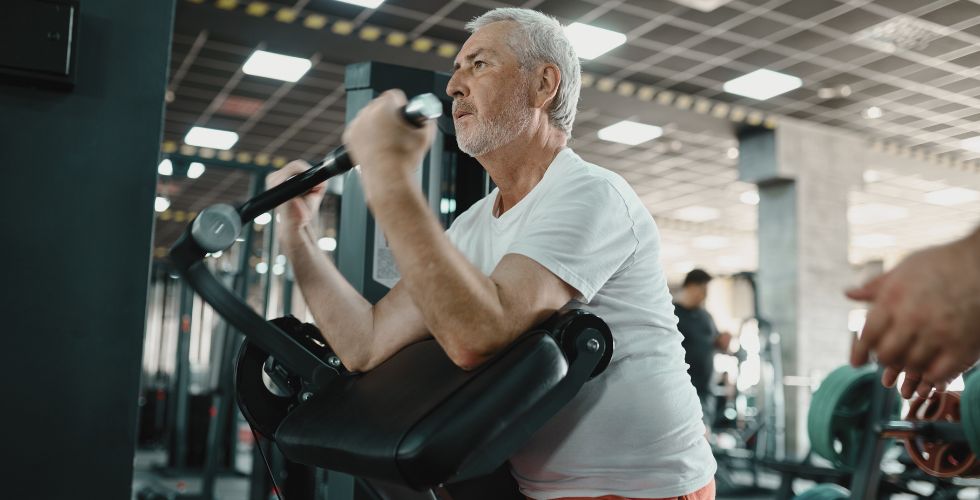
Physical exercise, particularly resistance training, is the cornerstone of sarcopenia treatment. This type of exercise is essential for increasing muscle mass and strength. Training programmes should be tailored to each person’s abilities and needs and may include weights, resistance machines, elastic bands or bodyweight exercises such as squats and press-ups. Balance and flexibility exercises are also important for improving mobility and reducing the risk of falls.
Nutrition and supplements
Nutritional intervention is another fundamental component of sarcopenia treatment. This includes ensuring adequate protein intake together with an appropriate balance of carbohydrates, fats and essential nutrients. In some cases, specialists may consider prescribing nutritional supplements, particularly where dietary deficiencies are identified. However, supplements should not be started without professional advice, as inappropriate use may result in adverse effects or unwanted reactions.
Pharmacological treatments
Several medications are being investigated for the treatment of sarcopenia. These include anabolic agents, such as certain hormone-based treatments, and medications that influence muscle metabolism. However, it is important to clarify that many of these treatments are still under investigation and have not been established as standard therapies. As with nutritional supplements, self-medication should be avoided and any pharmacological treatment for sarcopenia should be discussed with a specialist.
Latest research developments
Research into sarcopenia is advancing rapidly. Scientists are exploring new approaches, including genetic and molecular therapies, to address loss of muscle mass. The role of inflammation and oxidative stress in sarcopenia is also being investigated, with the aim of developing treatments that target these underlying mechanisms.
Treatment of sarcopenia requires a multidisciplinary approach that includes exercise, nutrition and, in selected cases, pharmacological intervention. Keeping up to date with current evidence and available treatments is essential to provide appropriate care. As research progresses, new and potentially more effective treatment strategies may become available, with the aim of improving quality of life in people affected by sarcopenia.
Establishing healthy lifestyle habits: Our aim is to establish healthy lifestyle habits that can be maintained over the long term. Every patient has different needs, so the approach is personalised in order to support healthy and active ageing.
Final conclusions
Sarcopenia is a condition characterised by age-related loss of muscle mass, endurance and strength. In an ageing population, it represents an important health and wellbeing challenge and is particularly relevant in older adults, as its effects extend beyond muscle loss to affect mobility, independence and overall quality of life.
References and Authorship
This content has been prepared by the Communications Department and the Medical Team of Grupo Pedro Jaén, in accordance with our editorial commitment to accuracy and regular updates of the information provided.
References on sarcopenia:
1. Breen L, Phillips SM. Interactions between exercise and nutrition to prevent muscle waste during ageing. Br J Clin Pharmacol. 2013 Mar;75(3):708-15. doi: 10.1111/j.1365-2125.2012.04456.x. PMID: 22957963; PMCID: PMC3575937.
2. McGlory C, van Vliet S, Stokes T, Mittendorfer B, Phillips SM. The impact of exercise and nutrition on the regulation of skeletal muscle mass. J Physiol. 2019 Mar;597(5):1251-1258. doi: 10.1113/JP275443. Epub 2018 Aug 1. PMID: 30010196; PMCID: PMC6395419.
3. Sánchez-Sánchez JL, He L, Morales JS, de Souto Barreto P, Jiménez-Pavón D, Carbonell-Baeza A, Casas-Herrero Á, Gallardo-Gómez D, Lucia A, Del Pozo Cruz B, Valenzuela PL. Association of physical behaviours with sarcopenia in older adults: a systematic review and meta-analysis of observational studies. Lancet Healthy Longev. 2024 Feb;5(2):e108-e119. doi: 10.1016/S2666-7568(23)00241-6. PMID: 38310891.
4. Hou Y, Xiang J, Wang B, Duan S, Song R, Zhou W, Tan S, He B. Pathogenesis and comprehensive treatment strategies of sarcopenia in elderly patients with type 2 diabetes mellitus. Front Endocrinol (Lausanne). 2024 Jan 8;14:1263650. doi: 10.3389/fendo.2023.1263650. PMID: 38260146; PMCID: PMC10801049.
5. Quach TK, Taylor MF, Currie PD, Eynon N, Ruparelia AA. Skeletal muscle ageing: lessons from teleosts. J Gerontol A Biol Sci Med Sci. 2024 Feb 17:glae052. doi: 10.1093/gerona/glae052. Epub ahead of print. PMID: 38367020.
6. Lee SH, Nho JH, Kim HY, Lee EJ. Factors influencing health-related quality of life in older adult women with sarcopenia: analysis of the Korean National Health and Nutrition Examination Survey 2019. Korean J Women Health Nurs. 2023 Dec;29(4):328-336. doi: 10.4069/kjwhn.2023.12.14. Epub 2023 Dec 28. PMID: 38204392; PMCID: PMC10788388.
