
Birthmarks
Treatment available at our Madrid clinics at Calle Serrano 143 and La Moraleja
Dermatologists specialising in
Treatment of birthmarks
In most cases, birthmarks do not pose a danger. Even so, it’s important to understand their cause and monitor their development over time in order to determine the appropriate treatment and the best time to apply it. At the Grupo Pedro Jaén Paediatric Dermatology Unit, we examine and classify each blemish, establish a differential diagnosis and draw up a course of action. To this end, we have the resources of this unit and, if necessary, those of other units in the centre, such as the Angioma, Laser, Diagnostic Imaging, Surgery or Vascular Malformations units.

Recognised reference clinics in Spain
Home > Clinical Dermatology > Paediatric Dermatology > Birthmarks
What sets us apart
Latest technology tailored to each case
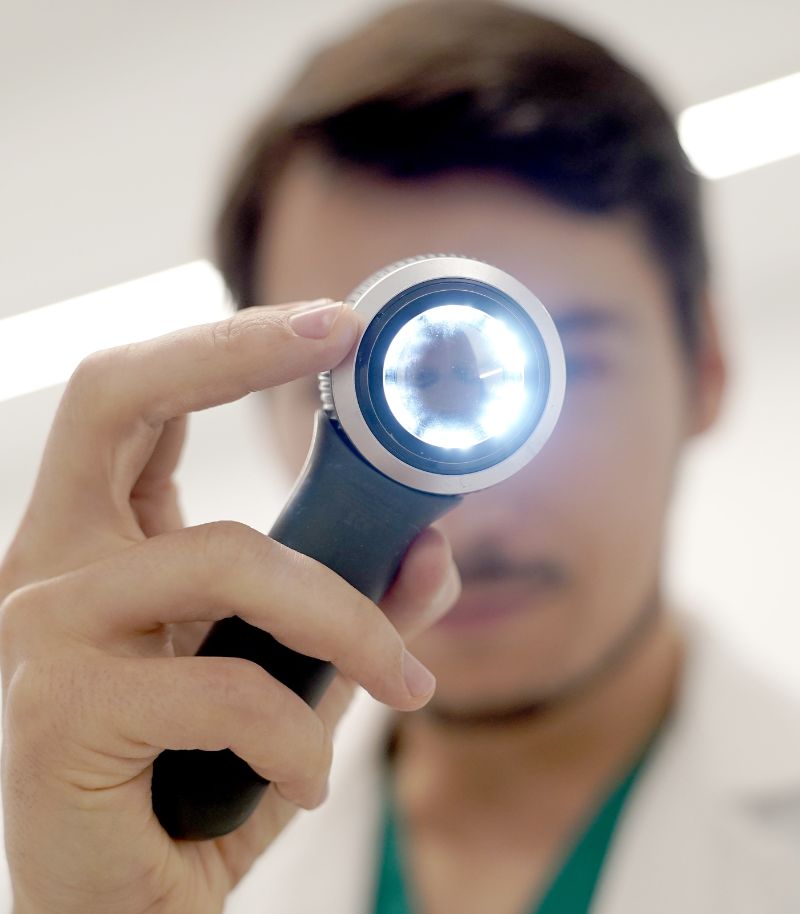
Our unit’s approach to birthmarks combines clinical expertise and advanced technology to provide an accurate diagnosis and a treatment tailored to each case. We evaluate each birthmark from the first consultation with tools such as digital dermatoscopy and skin ultrasound, enabling detailed monitoring of its evolution. Depending on the type of blemish and its impact, we apply innovative techniques such as vascular or pigmentary lasers, ensuring safe and effective results. In addition, our paediatric team creates a trusting environment so that children can receive treatment without stress.
Differential diagnosis
Birthmarks can have a variety of characteristics, ranging from pigmentary changes to vascular alterations. Accurate diagnosis is key to differentiate benign anomalies from those requiring treatment or monitoring. Our unit combines our specialists’ expertise with state-of-the-art technology to assess each case individually and design an optimal treatment plan.
Advanced assessment with imaging technology
From the first consultation, we use tools such as digital dermatoscopy, skin ultrasound and high-resolution imaging tests to examine the structure of the birthmark, determine its depth and assess whether it is likely to evolve over time. This detailed diagnosis enables us to rule out possible complications and make informed decisions about treatment.
Treatment plan tailored to each patient
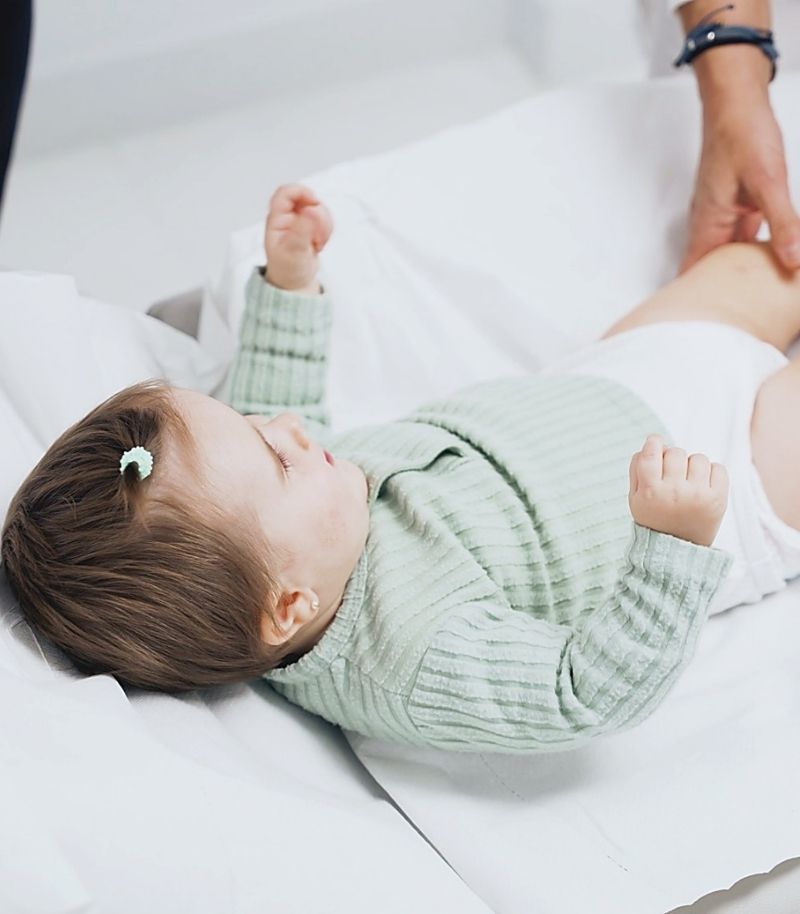
The treatment plan varies according to age, type of birthmark and its potential impact on the patient’s health or appearance. Some blemishes require only periodic monitoring, while others may benefit from laser therapies, topical drugs or surgical procedures, selected on the basis of safety and efficacy for each patient.
Treatment adapted to each type of birthmark
Birthmarks can be classified as vascular (such as haemangiomas and port-wine stains) and pigmented (such as congenital moles or café-au-lait spots), which implies a differentiated therapeutic approach. Our unit applies specific treatments for each type of birthmark, guaranteeing safe and effective results.
Specialised approach to vascular birthmarks
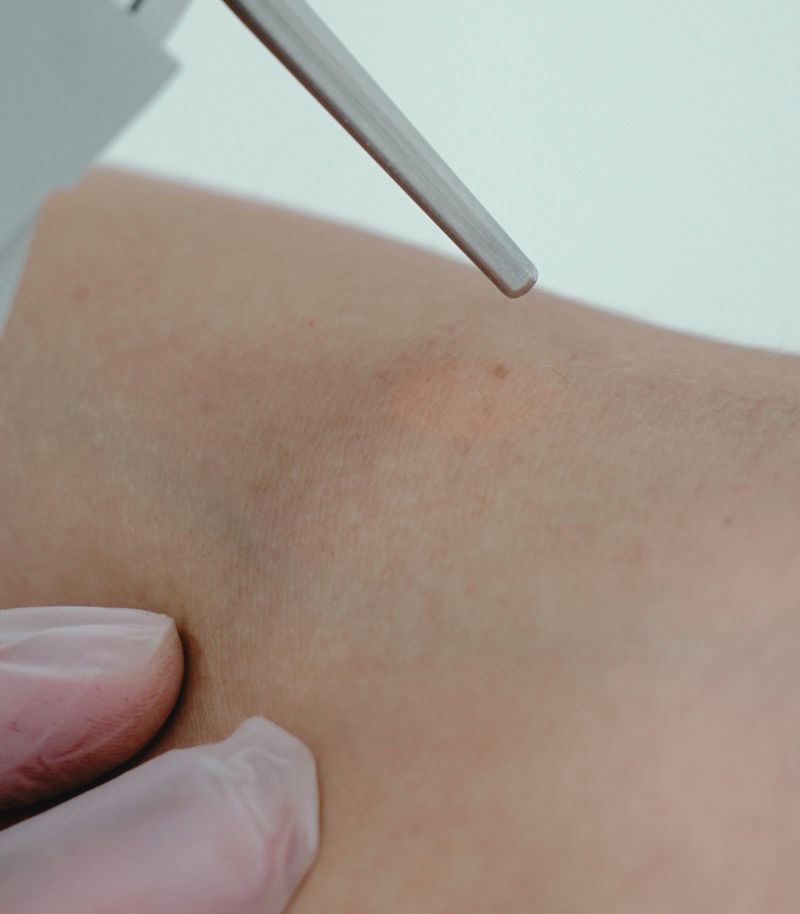
Vascular birthmarks may respond well to targeted treatments such as pulsed dye laser, which works by reducing the dilation of blood vessels without damaging the skin. In more complex cases, it may be necessary to combine different therapies to better treat the birthmark and improve its appearance without adverse effects.
Treatment options for pigmented birthmarks
For pigmented birthmarks, we use Q-switched lasers, IPL or combination treatments, depending on the depth and type of pigmentation. In patients with congenital moles which are extensive or in visible areas, we consider options such as surgery in combination with laser to optimise aesthetics and prevent future skin changes. Our aim is to provide a solution adapted to each patient, always prioritising their wellbeing and safety.
Advanced laser technology
Laser treatment is one of the most advanced and effective options for addressing birthmarks, enabling progressive reduction without affecting the surrounding skin. In our unit, we personalise the treatment according to the type of blemish, its location and the individual characteristics of the patient, guaranteeing optimal results with maximum safety.
Pulsed dye laser for vascular birthmarks
Laser treatment is one of the most advanced and effective options for addressing birthmarks, enabling progressive reduction without affecting the surrounding skin. In our unit, we personalise the treatment according to the type of blemish, its location and the individual characteristics of the patient, guaranteeing optimal results with maximum safety.
Combined laser for optimum results
Pigmented birthmarks, such as congenital moles or café-au-lait spots, can be treated with Q-switched lasers or intense pulsed light (IPL), which selectively remove pigment without altering the texture of the skin. In more extensive or deeper cases, several technologies can be combined or complementary procedures can be performed to achieve a uniform and long-lasting aesthetic correction.

Child-friendly care
The treatment of birthmarks in children requires a safe and comfortable environment, as well as specialised follow-up to ensure optimal evolution of the blemish. Our unit combines empathic care with regular check-ups to enable treatment to be adjusted where necessary and to minimise any possible complications.
Paediatric care in a trusted environment
From the first consultation, our paediatric dermatology team strives to create a calm and welcoming environment for the child and their family. We design each session to reduce anxiety and encourage the child’s cooperation during diagnosis and treatment. In addition, we apply techniques adapted to children’s skin, ensuring that the procedures are safe and well tolerated.
Progress monitoring and risk prevention
Birthmarks can evolve over time, so specialised monitoring is essential. We use advanced tools such as digital dermoscopy and skin ultrasound to assess changes in birthmarks and adjust treatments as needed. We also provide parents with care guidelines and inform them about warning signs that might indicate alterations that require a re-evaluation.
What they are, types and treatment
A guide to understanding birthmarks
Birthmarks, popularly known as “cravings”, are skin alterations present at birth or appearing during the first weeks of life that affect skin pigmentation. Approximately 80% of newborns have some type of birthmark, either at birth or shortly thereafter.

Types of birthmarks and treatment
Birthmarks are classified into two main groups according to their origin. Vascular birthmarks are associated with malformations or abnormalities of the vascular endothelium. Pigmented birthmarks, on the other hand, are caused by alterations in melanocytes, the cells responsible for producing melanin, which gives colour to the skin, hair and eyes.
Vascular
Salmon patches
Also known as angel kisses or stork bites, these are very common vascular birthmarks with a pale pink or light red colour. They are flat and usually appear on the nape of the neck, nose, eyelids, upper lip or between the eyebrows. They tend to become more visible when the baby cries and may be barely noticeable at other times.
They usually fade spontaneously within the first one to two years of life, although some may persist into adulthood. They are harmless and do not usually require treatment, but they should be assessed to differentiate them from other vascular lesions.
Haemangiomas
Commonly known as strawberry marks, these birthmarks are caused by benign tumours of the vascular endothelium that appear on the surface of the skin. They usually develop within the first few weeks of life and tend to regress almost completely over time. Although they are benign and do not pose a health risk, they should be monitored, as they may ulcerate. Treatment may be considered depending on their size, location and aesthetic impact. In these cases, the Paediatric Dermatology Unit works closely with the Angiomas Unit of Grupo Pedro Jaén. Angiomas Unit of Grupo Pedro Jaén. Dermatology Unit works closely with the Angiomas Unit of Grupo Pedro Jaén.
Port-wine stains
Also known as nevus flammeus, these birthmarks are characterised by their intense purplish or burgundy colour. Although sometimes grouped under flat angiomas, port-wine stains are not caused by benign vascular tumours, like haemangiomas, but by abnormalities in the embryonic development of blood vessels. They are not dangerous, but they can have a significant emotional and psychological impact, as they do not fade over time. On the contrary, they tend to darken and enlarge with age, which can be disfiguring, especially when located on the face or neck. These lesions are assessed by the Vascular Malformations Unit of Grupo Pedro Jaén, following initial evaluation in the Paediatric Dermatology Unit. Depending on the case, treatment may include pulsed dye laser therapy, surgery, sclerotherapy or medication.
Pigmented
Congenital moles
Congenital melanocytic nevi are rounded skin lesions that may appear anywhere on the body. They range in colour from light beige to dark brown and can sometimes be difficult to distinguish from other congenital pigmented lesions. Although they are usually benign, strict monitoring is essential to detect early changes suggestive of skin cancer.
The Diagnostic Imaging Unit of Grupo Pedro Jaén is equipped with advanced technology to carry out this follow-up and detect skin cancer at its earliest stages. In addition, our Skin Cancer Unit is a national and international reference in the medical and surgical treatment of all types of skin cancer.
Café-au-lait spots
As their name suggests, these birthmarks are brown in colour, ranging from very light to dark brown, sometimes resembling congenital nevi. They are most commonly located on the trunk and limbs and have well-defined borders. They are benign but should be monitored to assess their evolution and rule out associations with underlying conditions such as pityriasis versicolor, nevus spilus, pigmentary mosaicism or drug-related eruptions. Treatment is usually unnecessary, but if removal is indicated, depigmenting therapies or laser treatment may be considered.
Mongolian spots
These lesions are blue or bluish-grey in colour, irregular in shape and usually appear on the lower back or buttocks. They are benign and typically disappear before the age of five. As with any skin lesion, their evolution should be monitored to rule out pathological changes or associations with other dermatological or systemic conditions.
Childhood vitiligo
This condition is characterised by the appearance of white patches caused by the destruction of melanin in certain areas of the skin. These depigmented areas have well-defined borders and may affect the trunk, face, scalp, eyelashes, eyebrows, oral mucosa or genital area. These cases are referred to the Vitiligo Unit of Grupo Pedro Jaén.
“Approximately 80% of newborns may have some type of birthmarkl”
More information
Below you will find the authorship and references for the information provided on this page:
Authorship and references
The content of this page has been prepared by the Communication Department and the Medical Team of Grupo Pedro Jaén, in line with our editorial commitment to ensuring the accuracy and up-to-date nature of the information provided.
References on birthmarks:
1. Benjamin LT. Birthmarks of medical significance in the neonate. Semin Perinatol. 2013 Feb;37(1):16-9. doi: 10.1053/j.semperi.2012.11.007. PMID: 23419758.
2. Diociaiuti A, Paolantonio G, Zama M, Alaggio R, Carnevale C, Conforti A, Cesario C, Dentici ML, Buonuomo PS, Rollo M, El Hachem M. Vascular Birthmarks as a Clue for Complex and Syndromic Vascular Anomalies. Front Pediatr. 2021 Oct 7;9:730393. doi: 10.3389/fped.2021.730393. PMID: 34692608; PMCID: PMC8529251.
3. Hanson B, Spector LG, Boull C, Polcari I, Hook K, Maguiness S. Co-occurrence of infantile hemangiomas and other birthmarks. J Am Acad Dermatol. 2021 Aug;85(2):503-504. doi: 10.1016/j.jaad.2018.09.049. Epub 2018 Oct 5. PMID: 30296538.
4. Wassef M, Blei F, Adams D, Alomari A, Baselga E, Berenstein A, Burrows P, Frieden IJ, Garzon MC, Lopez-Gutierrez JC, Lord DJ, Mitchel S, Powell J, Prendiville J, Vikkula M; ISSVA Board and Scientific Committee. Vascular Anomalies Classification: Recommendations From the International Society for the Study of Vascular Anomalies. Pediatrics. 2015 Jul;136(1):e203-14. doi: 10.1542/peds.2014-3673. Epub 2015 Jun 8. PMID: 26055853.
5. Tran JM, Kelly KM, Drolet BA, Krakowski AC, Arkin LM. Light-based treatment of pediatric port-wine birthmarks. Pediatr Dermatol. 2021 Mar;38(2):351-358. doi: 10.1111/pde.14503. Epub 2020 Dec 27. PMID: 33368674.
6. Han Y, Ying H, Zhang X, Yu W, Cen Q, Chen X, Qiu Y, Chen H, Jin Y, Ma G, Lin X. Retrospective study of photodynamic therapy for pulsed dye laser-resistant port-wine stains. J Dermatol. 2020 Apr;47(4):348-355. doi: 10.1111/1346-8138.15238. Epub 2020 Feb 3. PMID: 32012364.
7. Faurschou A, Olesen AB, Leonardi-Bee J, Haedersdal M. Lasers or light sources for treating port-wine stains. Cochrane Database Syst Rev. 2011 Nov 9;(11):CD007152. doi: 10.1002/14651858.CD007152.pub2. PMID: 22071834.
8. Rodríguez Bandera AI, Sebaratnam DF, Wargon O, Wong LF. Infantile hemangioma. Part 1: Epidemiology, pathogenesis, clinical presentation and assessment. J Am Acad Dermatol. 2021 Dec;85(6):1379-1392. doi: 10.1016/j.jaad.2021.08.019. Epub 2021 Aug 19. PMID: 34419524.
9. Sebaratnam DF, Rodríguez Bandera AL, Wong LF, Wargon O. Infantile hemangioma. Part 2: Management. J Am Acad Dermatol. 2021 Dec;85(6):1395-1404. doi: 10.1016/j.jaad.2021.08.020. Epub 2021 Aug 19. PMID: 34419523.
10. Chinnadurai S, Sathe NA, Surawicz T. Laser treatment of infantile hemangioma: A systematic review. Lasers Surg Med. 2016 Mar;48(3):221-33. doi: 10.1002/lsm.22455. Epub 2015 Dec 29. PMID: 26711436.
11. Moustafa D, Blundell AR, Hawryluk EB. Congenital melanocytic nevi. Curr Opin Pediatr. 2020 Aug;32(4):491-497. doi: 10.1097/MOP.0000000000000924. PMID: 32692047.
12. Price HN. Congenital melanocytic nevi: update in genetics and management. Curr Opin Pediatr. 2016 Aug;28(4):476-82. doi: 10.1097/MOP.0000000000000384. PMID: 27307047.
13. Warner C, Dinulos JG. Core concepts in congenital melanocytic nevi and infantile hemangiomas. Curr Opin Pediatr. 2014 Feb;26(1):130-5. doi: 10.1097/MOP.0000000000000052. PMID: 24346182.
14. Gupta D, Thappa DM. Mongolian spots. Indian J Dermatol Venereol Leprol. 2013 Jul-Aug;79(4):469-78. doi: 10.4103/0378-6323.113074. PMID: 23760316.
15. Alimi Y, Iwanaga J, Loukas M, Oskouian RJ, Rizk E, Oakes WJ, Tubbs RS. A comprehensive review of Mongolian spots with an update on atypical presentations. Childs Nerv Syst. 2018 Dec;34(12):2371-2376. doi: 10.1007/s00381-018-3929-0. Epub 2018 Aug 6. PMID: 30083796.
Where we see patients?
Clinics in Madrid
Grupo Pedro Jaén is a medical group founded more than three decades ago with the aim of providing medical, surgical and aesthetic solutions related to skin health and appearance. Led by Dr Pedro Jaén, the group has a highly specialised medical team that covers every area of care with top-level specialists, carries out extensive training activities, is a leader in medical research, and operates several clinics in Madrid, from which it offers the highest standards of care and clinical excellence to all patients.


Calle Serrano 143
This centre is the main headquarters of Grupo Pedro Jaén. It provides diagnostic and treatment services in skin cancer, clinical and aesthetic dermatology, laser treatments and other related specialties.
Mon - Fri 09:00 - 21:00 / Sat: 09:00 - 14:00
Calle Serrano 143, El Viso neighbourhood, Chamartín district, 28006 Madrid, Spain

La Moraleja
Located in Plaza de La Moraleja, this exclusive centre allows Grupo Pedro Jaén to bring its medical and aesthetic services closer to patients across the entire northern area of Madrid.
Mon - Thu: 09:30 - 20:00 / Fri: 09:30 - 18:00
Calle de la Estafeta 8, ground floor, La Moraleja, 28109 Alcobendas, Madrid
Related units and pages
Laser Unit
An international reference in laser and intense pulsed light treatments, both in clinical and aesthetic dermatology.
Clinical dermatology
Highly specialised dermatologists for each skin condition, offering the most advanced treatments available.
Paediatric dermatology
Specialised care for the full range of dermatological conditions that may affect children.
Diagnostic Imaging
Cutting-edge and highly effective imaging technologies to achieve more accurate diagnoses while avoiding invasive procedures.
Angiomas Unit
Treatment of vascular skin anomalies, including cherry angiomas, haemangiomas, venous lakes, telangiectasias and related conditions.
Vitiligo Unit
Advanced treatments aimed at slowing disease progression and promoting repigmentation of the affected areas.
Information and news
Press room
In the Grupo Pedro Jaén Press Room you can find information, advice and news related to dermatology, aesthetic medicine, trichology and general health. The group’s journals are also shared through an online platform, along with updates on the activity and media appearances of our clinics and healthcare professionals.

How to shower properly: tips for looking after your skin
Cold or hot water? Is it better to use a sponge? Find out how to shower properly and what dermatologists recommend to protect your skin.
Retinol in summer: should you stop using it?
We debunk this and other myths about using retinol during the warmer months.

Blog
News about Grupo Pedro Jaén. Information and advice on dermatology, aesthetic medicine, trichology, and general health

Media
Information about media appearances by our clinics and medical specialists.

Journal
Archive of all Grupo Pedro Jaén journals, available through an external online platform.