
Facial implant surgery
At our centres in Madrid: Serrano 143, Serrano 166 and La Moraleja
Surgeons specialising in
Chin and cheekbone
Chin and cheekbone enhancement Facial implants (used in surgical procedures such as chin augmentation or cheekbone enhancement) are solid biocompatible devices used to restore volume to the face, address deformities or asymmetries, and provide a balanced, aesthetically pleasing appearance. The Grupo Pedro Jaén Oral and Maxillofacial Surgery Unit recommends these implants when it is not possible to harmonise facial volumes using resorbable fillers or when these materials are insufficient to achieve the desired result.

Recognised reference clinics in Spain
Home > Aesthetic Medicine > Facial Aesthetic Medicine > Facial Implants
What sets us apart
Safe, harmonious and personalised results
We have a team of expert oral and maxillofacial surgeons who work together to achieve safe, balanced and personalised results. We carry out a thorough anatomical study of the face before planning the intervention, carefully selecting the most suitable type, shape and size of implant. Where appropriate, we combine these procedures with complementary techniques to achieve a comprehensive enhancement of the facial profile, promoting rapid recovery with lasting results that integrate perfectly with the patient’s bone structure.
Facial contouring
Chin implants for projection and balance
Cheekbone enhancement for natural volume gain
Correction of congenital or post-traumatic sequelae

Facial contouring
Facial implants make it possible to modify and harmonise facial volumes when resorbable fillers are insufficient or do not provide appropriate results for the patient’s specific anatomy.
Effective solution for asymmetry or volume loss
Through genioplasty (chin surgery) or malar augmentation (cheekbone enhancement), we correct congenital defects, post-traumatic sequelae or aesthetic imbalances in patients with a receding chin or poorly defined cheekbones. Implants bring symmetry and proportion to the face.
Design tailored to each patient’s anatomy
Prior to each intervention, a complete study of the patient’s facial and dental anatomy is carried out, including a design and planning process using three-dimensional virtual models obtained via intraoral scanners and specialised software.

Chin implants for projection and balance
Chin surgery with implants (augmentation genioplasty) is the most effective technique for projecting the chin and improving the facial profile without altering other structures.
Harmonisation of the lower third of the fase
This procedure is performed when the chin is receding (retrognathia) in relation to the rest of the facial profile, or to correct obvious asymmetries. It restores the balance of the profile and defines the jawline.
Treatment combinations for optimal results
Depending on the needs of each case, chin surgery can be combined with other procedures to balance the face, such as rhinoplasty, buccal fat removal, lip lift or orthodontics.

Cheekbone enhancement for natural volume gain
The placement of malar implants is a facial harmonisation treatment that helps to define the cheekbone area, providing volume, structure and youthfulness to the middle third of the face.
Suitable for flat or aged faces
Cheekbone enhancement harmonises the middle third of the face. It is indicated in cases of malar flattening (lack of projection), volume loss or when sharper features are desired. This procedure improves facial support, softens nasolabial folds and rejuvenates the expression.
Treatment combinations for optimal results
As with other treatments to balance the face, cheekbone surgery can be complemented by other options such as buccal fat removal, bone remodelling or autologous fat grafting (lipofilling).
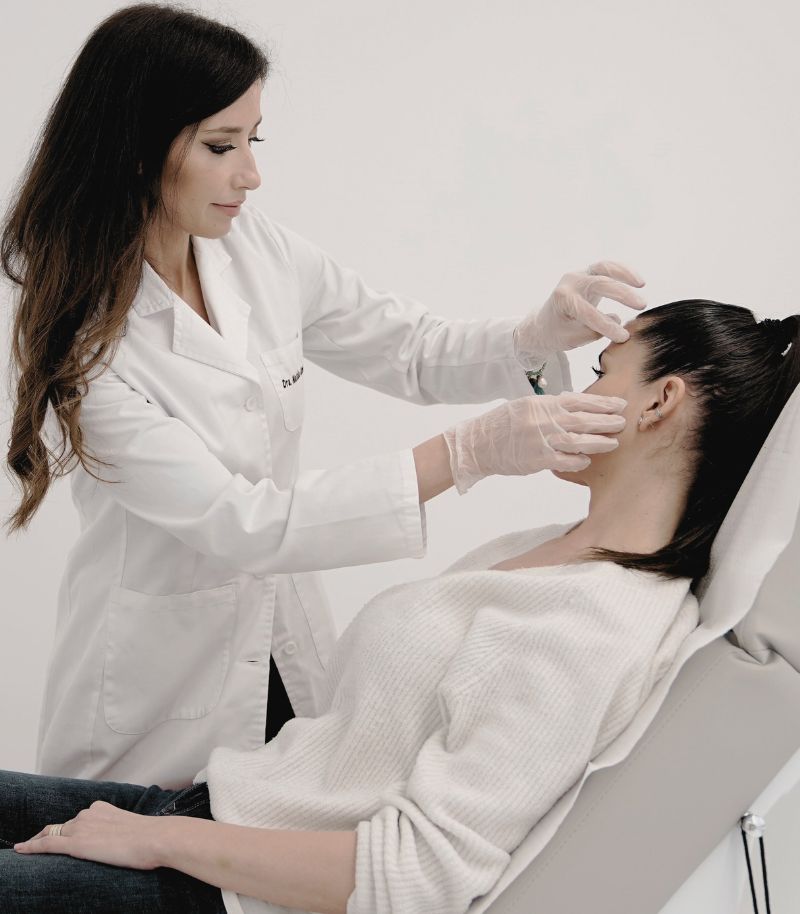
Correction of congenital or post-traumatic sequelae
Facial implants are also used for reconstructive purposes, improving the quality of life for patients with facial malformations or deformities.
Functional and aesthetic restoration
In cases of jaw or cheekbone imbalance, underdeveloped facial features (hypoplasia) or injuries resulting from accidents, implants help restore facial shape and symmetry. In some complex cases, they can also improve masticatory or speech functions.
Intervention coordinated with other specialist units
At Grupo Pedro Jaén, we work with multidisciplinary teams of maxillofacial surgeons, plastic surgeons and dermatologists to tackle these complex cases with an integrated approach, optimising both health and aesthetic outcomes.
What it is, indications and how it is performed
A guide to understanding facial implant surgery
Below, we explain when chin surgery (mentoplasty) and cheekbone surgery (malar augmentation) are indicated, what they involve, and how these aesthetic facial procedures are performed.

Mentoplasty: aesthetic chin surgery
Mentoplasty is a minimally invasive surgical procedure performed to modify the position of the chin and achieve a more balanced, harmonious facial appearance.
It is indicated when the chin is deviated from the facial midline, resulting in noticeable asymmetry; when it is excessively prominent or, conversely, retruded in relation to the rest of the facial profile; or when its vertical position is disproportionate—either excessive or insufficient—which may also affect the submental folds and even influence lip position or the overall shape of the mouth.
Depending on the individual case, mentoplasty may be combined with other procedures to harmonise the face as a whole, such as rhinoplasty, buccal fat removal, upper lip lift, or orthodontic treatment.
To perform mentoplasty, personalised titanium plates may be used when required. Prior to surgery, a comprehensive assessment of the patient’s facial and dental anatomy is carried out, together with precise surgical planning using three-dimensional virtual models generated through intraoral scanning and specialised software.
What does mentoplasty involve?
Mentoplasty is usually performed under local anaesthesia with sedation. The procedure is carried out through an intraoral incision, inside the mouth, to avoid visible skin scars. A controlled osteotomy of the mandibular bone forming the chin is then performed, allowing the bone segment to be repositioned—advanced, set back or centred—to restore facial harmony.
Once the desired position is achieved, the repositioned bone is stabilised using small titanium fixation plates to secure it to the remaining mandibular structure.
In patients who, in addition to repositioning the chin, require increased projection or volume, customised chin implants may be indicated. In such cases, the implant is inserted either through an intraoral incision—typically in the fold between the lower lip and the gum—or through a small incision beneath the chin.
When the intraoral approach is used, the scar remains completely hidden. If a submental incision is required, the scar typically becomes barely perceptible over the following months, provided appropriate care is taken, including smoking cessation, sun protection and, in selected cases, laser treatment to optimise scar remodelling.
Mentoplasty can be performed in both men and women once skeletal growth is complete, which generally occurs after the age of 20. The results are permanent and usually become clearly visible approximately one month after surgery. In addition to correcting facial symmetry, mentoplasty often provides an added anti-ageing effect by lifting and tightening the skin of the neck.
Recovery after chin surgery
Recovery following mentoplasty is generally rapid and straightforward. However, patients should be aware that bruising, swelling, mild pain and some difficulty opening the mouth are common during the first 7 to 10 days after surgery. These symptoms can usually be managed with standard anti-inflammatory medication and analgesics. Intermittent application of cold packs may also help reduce swelling and discomfort.
Patients are required to wear a chin compression garment immediately after surgery. During the first five days, it should be worn continuously (approximately 20 hours per day). Over the following 10 days, it is usually sufficient to wear it at night only.
It is also normal for slight bleeding from the surgical site to occur during the first few hours after the procedure. If this happens, gentle pressure with a sterile gauze pad can be applied.
On the day of surgery, patients should remain with the head elevated and sleep with two pillows to maintain proper positioning. During the first 24 hours, only cold liquids should be consumed. From 48 hours onwards, soft foods may be introduced, gradually increasing consistency as tolerated.
Patients should avoid touching the surgical area with the tongue. During the first 24 hours, tooth brushing should be avoided, and the mouth should not be rinsed—even with water—in order to prevent excessive cheek movement and pressure on the surgical site.
Oral hygiene may be resumed 48 hours after surgery, with particular care to prevent infection or delayed healing. This typically includes the use of chlorhexidine mouthwash, a soft surgical toothbrush and the application of chlorhexidine gel to the sutured area.
Smoking cessation is essential to promote proper wound healing and minimise the risk of complications.
Strenuous physical activity should be avoided for several days, although complete rest is not recommended. Physical activity may be resumed gradually, depending on the patient’s comfort and recovery progress.
“In most cases, the best results are achieved by combining different therapeutic options and acting at an early stage.”
Cheekbone surgery (malar augmentation)
Cheekbone surgery, also known as malar augmentation, is a minimally invasive surgical procedure performed to enhance cheekbone projection, avoid an excessively flat facial appearance and improve overall facial harmony.
As with mentoplasty, malar augmentation is indicated when non-surgical treatments used to lift or enhance the cheekbones—such as collagen stimulators, skin tightening systems or resorbable fillers—are insufficient, or when a permanent and structural result is desired.
Malar augmentation involves the placement of a solid synthetic implant with a moderately soft consistency beneath the tissues of the cheekbone area, providing volume and structure to achieve a more balanced and aesthetically pleasing face. As with other facial harmonisation procedures, cheekbone surgery may be combined with complementary techniques such as buccal fat removal (bichectomy), malar bone contouring or autologous fat grafting (lipofilling), a regenerative medicine technique that is increasingly used as an optimal volumising material in facial surgery.
The ultimate goal is to refine the facial contours, enhance cheekbone projection and achieve a more harmonious and youthful appearance.
How is cheekbone surgery performed?
Cheekbone surgery is carried out through an intraoral incision, inside the mouth, through which the malar implant is inserted and secured in the appropriate position using resorbable sutures. This approach ensures that all scars remain hidden within the oral cavity and are therefore completely imperceptible.
The procedure is usually performed under local anaesthesia with sedation, on an outpatient basis, allowing the patient to return home on the same day. The surgery typically lasts around one hour, although this may vary depending on whether it is combined with other procedures.
Recovery after malar augmentation
As with any surgical procedure, some degree of swelling, discomfort and pain in the treated area is expected. These symptoms are usually mild to moderate and can be managed effectively with standard anti-inflammatory medication and conventional analgesics.
During the first week after surgery, the application of cold packs is recommended to reduce swelling and promote tissue recovery. During this period, patients should follow a soft diet and maintain meticulous oral hygiene to prevent infection or postoperative complications.
As with similar procedures, oral care should include chlorhexidine mouth rinses and the use of a surgical toothbrush.
For the first month, strenuous physical activity should be avoided, although complete rest is not necessary. Strict photoprotection measures are also essential to prevent post-inflammatory hyperpigmentation.
The outcome of implant-based cheekbone augmentation is highly natural and permanent. Final results are usually fully appreciable approximately two months after surgery.

More information
Below you will find the authorship and references for the information provided on this page:
Authorship and references
The content of this page has been prepared by the Communication Department and the Medical Team of Grupo Pedro Jaén, in line with our editorial commitment to ensuring the accuracy and up-to-date nature of the information provided.
References on facial implant surgery:
1. Ferretti C, Reyneke JP. Genioplasty. Atlas Oral Maxillofac Surg Clin North Am. 2016 Mar;24(1):79-85. doi: 10.1016/j.cxom.2015.10.008. PMID: 26847515.
2. Viterbo F, Brock RS. Gliding mentoplasty: a new technique. Aesthetic Plast Surg. 2013 Dec;37(6):1120-7. doi: 10.1007/s00266-013-0226-x. Epub 2013 Oct 19. PMID: 24142115.
3. Arcas A, Vendrell G, Cuesta F, Bermejo L. Mentoplasty with Customized Guides and Plates Using 3D Technology: a More Precise and Safer Technique. Plast Reconstr Surg Glob Open. 2019 Aug 5;7(8):e2349. doi: 10.1097/GOX.0000000000002349a. PMID: 31592034; PMCID: PMC6756653.
4. Shokri T, Rosi-Schumacher M, Petrauskas L, Chan D, Ducic Y. Genioplasty and Mandibular Implants. Facial Plast Surg. 2021 Dec;37(6):709-715. doi: 10.1055/s-0041-1735307. Epub 2021 Sep 16. PMID: 34530467.
5. Abadi M, Pour OB. Genioplasty. Facial Plast Surg. 2015 Oct;31(5):513-22. doi: 10.1055/s-0035-1567882. Epub 2015 Nov 18. PMID: 26579866.
6. Bertossi D, Giampaoli G, Dell’Acqua I, Verner I, Pirayesh A, Nocini R, Nocini PF. Nonsurgical genioplasty. Dermatol Ther. 2019 May;32(3):e12874. doi: 10.1111/dth.12874. Epub 2019 Apr 25. PMID: 30873706.
7. Japatti SR, Chourasia N, Siddegowda CY, Shriram P, Yajurvedi R, Beawerwala T. Sagittal Genioplasty: New Techniques. J Maxillofac Oral Surg. 2020 Dec;19(4):638-641. doi: 10.1007/s12663-019-01313-x. Epub 2019 Dec 20. PMID: 33071514; PMCID: PMC7524966.
8. Hsieh TY, Dhir K, Binder WJ, Hilger PA. Alloplastic Facial Implants. Facial Plast Surg. 2021 Dec;37(6):741-750. doi: 10.1055/s-0041-1725088. Epub 2021 Mar 16. PMID: 33728626.
9. Jumaily JS. Cheek Augmentation in Gender-Affirming Facial Surgery. Otolaryngol Clin North Am. 2022 Aug;55(4):825-834. doi: 10.1016/j.otc.2022.05.004. Epub 2022 Jun 21. PMID: 35750524.
10. Whitehead DM, Schechter LS. Cheek Augmentation Techniques. Facial Plast Surg Clin North Am. 2019 May;27(2):199-206. doi: 10.1016/j.fsc.2018.12.003. Epub 2019 Mar 2. PMID: 30940385.
11. Soares DJ, Silver WE. Midface skeletal enhancement. Facial Plast Surg Clin North Am. 2015 May;23(2):185-93. doi: 10.1016/j.fsc.2015.01.004. PMID: 25921568.
Where we see patients?
Clinics in Madrid
Grupo Pedro Jaén is a medical group founded more than three decades ago with the aim of providing medical, surgical and aesthetic solutions related to skin health and appearance. Led by Dr Pedro Jaén, the group has a highly specialised medical team that covers every area of care with top-level specialists, carries out extensive training activities, is a leader in medical research, and operates several clinics in Madrid, from which it offers the highest standards of care and clinical excellence to all patients.

Calle Serrano 143
This centre is the main headquarters of Grupo Pedro Jaén. It provides diagnostic and treatment services in skin cancer, clinical and aesthetic dermatology, laser treatments and other related specialties.
Mon - Fri: 09:00 - 21:00 / Sat: 09:00 - 14:00
Calle Serrano 143, El Viso neighbourhood, Chamartín district, 28006 Madrid, Spain

La Moraleja
Located in Plaza de La Moraleja, this exclusive centre allows Grupo Pedro Jaén to bring its medical and aesthetic services closer to patients across the entire northern area of Madrid.
Mon - Thu: 09:30 - 20:00 / Fri: 09:30 - 18:00
Calle de la Estafeta 8, ground floor, La Moraleja, 28109 Alcobendas, Madrid, Spain

Calle Serrano 166
This centre currently offers services in body aesthetic medicine, endocrinology, nutrition, complementary aesthetic medicine and post-surgical aesthetic treatments.
Mon - Fri: 09:00 - 21:00 / Sat: 09:00 - 14:00
Calle Serrano 166, El Viso neighbourhood, Chamartín district, 28002 Madrid

Related units and pages
Facial aesthetics
Minimally invasive treatments to improve facial appearance with harmonious and natural-looking results.
Body aesthetics
A personalised approach combining different treatment strategies to address the main body-related concerns.
Male aesthetics
Surgical and aesthetic treatments fully adapted to male facial and body anatomy.
Scars
Fully personalised treatments tailored to the type and specific characteristics of each scar.
Plastic surgery
Treatment of facial and body aesthetic and functional concerns that require a surgical solution.
Complementary aesthetics
Cosmetic and aesthetic treatments that address beauty from a clinical perspective to achieve optimal results.
Information and news
Press room
In the Grupo Pedro Jaén Press Room you can find information, advice and news related to dermatology, aesthetic medicine, trichology and general health. The group’s journals are also shared through an online platform, along with updates on the activity and media appearances of our clinics and healthcare professionals.

How to shower properly: tips for looking after your skin
Cold or hot water? Is it better to use a sponge? Find out how to shower properly and what dermatologists recommend to protect your skin.
Retinol in summer: should you stop using it?
We debunk this and other myths about using retinol during the warmer months.

Blog
News about Grupo Pedro Jaén. Information and advice on dermatology, aesthetic medicine, trichology, and general health

Media
Information about media appearances by our clinics and medical specialists.

Journal
Archive of all Grupo Pedro Jaén journals, available through an external online platform.