
Carboxytherapy
At our centres in Madrid: Serrano 143, Serrano 166 and La Moraleja
Specialists in
Facial and body carboxytherapy
Carboxytherapy is a medical technique that uses medical-grade carbon dioxide (CO₂) to improve skin quality and treat both body and facial aesthetic concerns. As a body treatment, it is commonly used to attenuate cellulite, improve skin laxity and act on localised fat in selected areas. On the face, neck and décolletage, controlled application may help improve dark circles, fine skin laxity, dull skin or certain textural irregularities. At Grupo Pedro Jaén, this treatment is indicated after an individual assessment and integrated into personalised protocols, adjusting the technique to each area and therapeutic goal.

Recognised reference clinics in Spain
Home > Technology > Carboxytherapy
What sets us apart
Medical precision and personalised protocols
Carboxytherapy is not a “standard” treatment: results depend on correct indication, appropriate selection of the application plane and adjustment of parameters such as volume, flow and depth according to the area treated and the therapeutic goal. At Grupo Pedro Jaén, carboxytherapy is approached as a medical procedure integrated into a global plan, both in body aesthetics and facial aesthetics. This approach makes it possible to treat concerns that often coexist — cellulite and laxity, dark circles and dull skin, mild submental fullness and loss of firmness — in a coherent way, avoiding unnecessary duplication of procedures and prioritising safety and progressive tissue response.
Body and facial indications
Technique adapted to the anatomy of each area
Combined protocols and follow-up
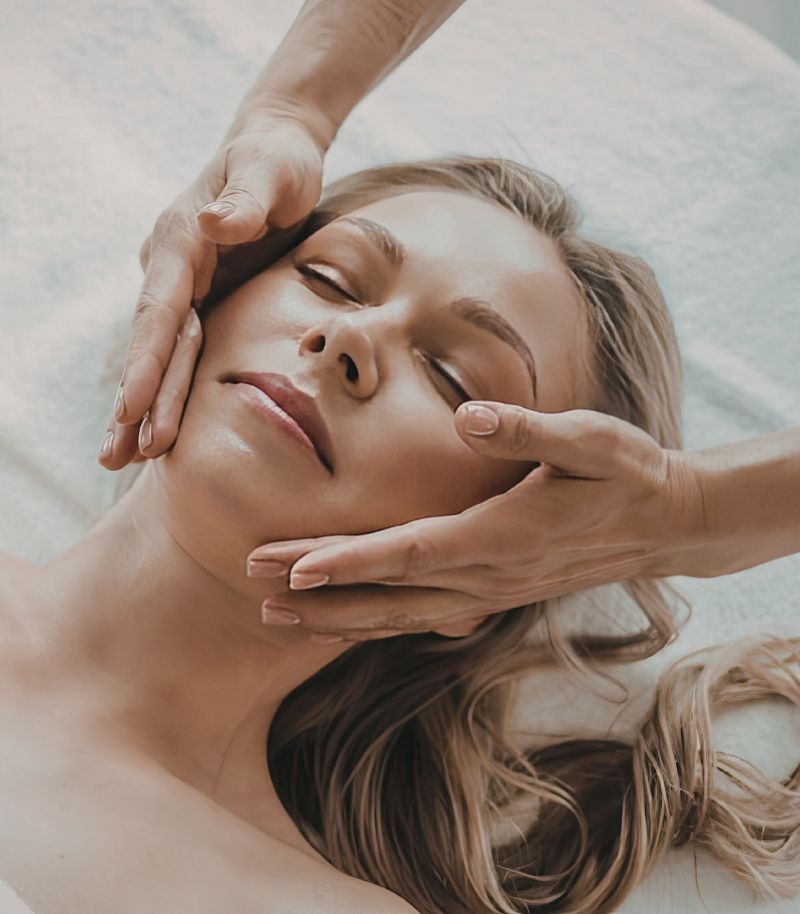
Body and facial indications
Carboxytherapy can be applied to different areas of the body, as well as to the face, neck and décolletage. Our distinguishing feature is that we approach it using the same medical criteria: defining what needs to be improved, which mechanism is the priority — microcirculation, fibrosis, laxity or small fat deposits — and how to integrate it into a realistic plan. This avoids applying repeated protocols without a clear indication and optimises treatment coherence.
Medical criteria for indicating the technique
Before starting treatment, we assess the condition of the skin and subcutaneous tissue, the predominant type of concern and the possible goals in each area, confirming that carboxytherapy is the appropriate option.
Planning by area and priority
In body treatments, priority is given to cellulite, laxity and localised fat; on the face, neck and décolletage, the focus is mainly on skin quality, dark circles or fine laxity, adapting the plan to the anatomy.
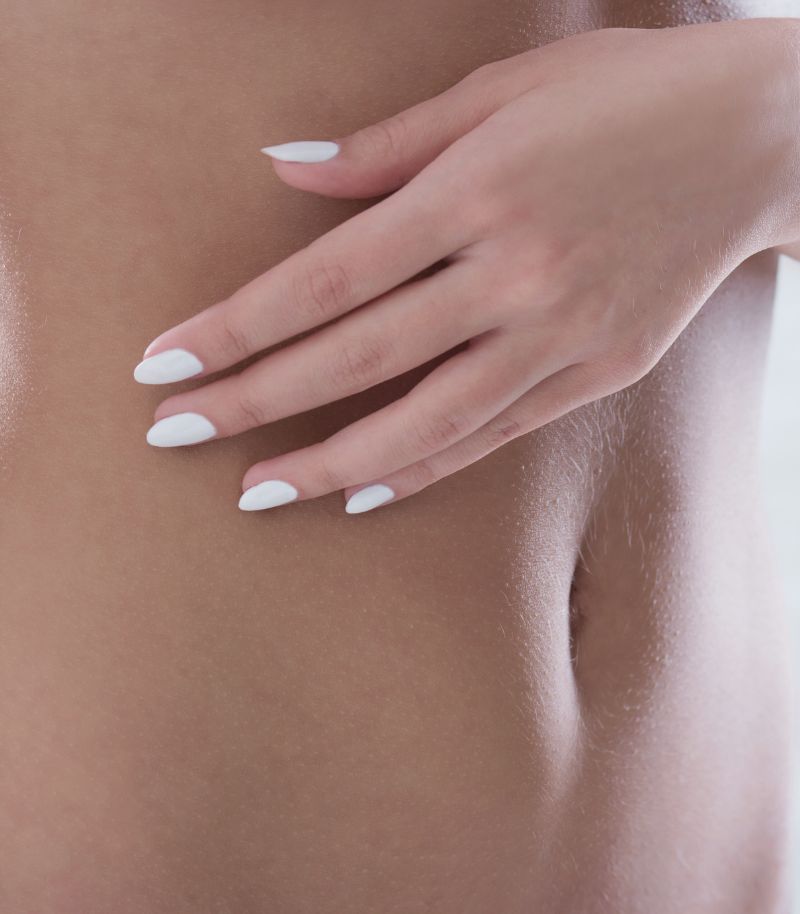
Technique adapted to the anatomy of each area
Carboxytherapy requires technical adjustments according to the area treated. The skin around the eyes, neck or décolletage does not behave in the same way as the skin on the thighs, buttocks or abdomen, so the application depth, flow and volume of CO₂ must be adapted to improve tolerance and uniformity. This control is essential to treat delicate areas safely and to address cellulite or laxity through a coherent plan when several factors coexist.
Precision in delicate areas
On the face, neck and décolletage, we apply conservative, controlled parameters to support microcirculation and firmness, respecting the anatomy and minimising transient effects.
Global approach
When cellulite, laxity and localised fat coexist, we adjust the treatment plane within the same strategy, avoiding duplication and maintaining clinical logic.
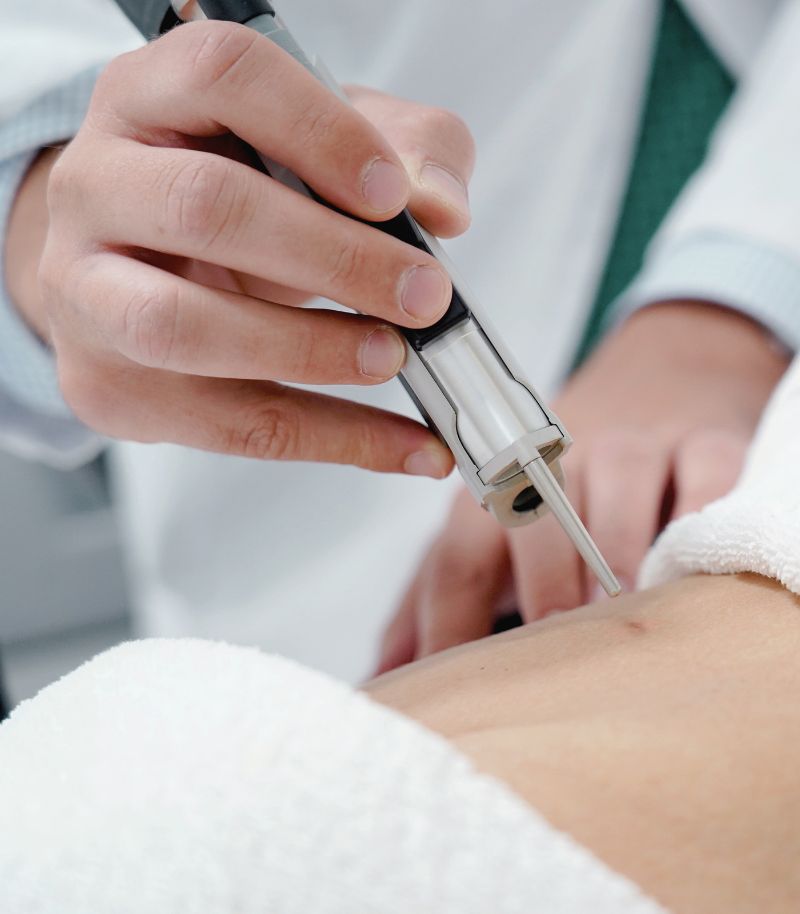
Combined protocols and follow-up
In many cases, carboxytherapy provides greater value when integrated into combined protocols, always based on medical judgement. The aim is not to accumulate treatments, but to decide which combination makes sense according to the objective: improving texture and skin quality, supporting drainage, treating fibrosis or reinforcing firmness. Planning by cycles and follow-up allow the protocol to be adjusted according to the evolution of the skin and tissue, particularly in progressive treatments where the response changes over time.
Integration with other therapies
Carboxytherapy may be combined with medical treatments such as mesotherapy, radiofrequency, shock wave therapy or lymphatic drainage when the case requires it and the plan justifies it.
Reassessment during the cycle
We review tolerance and response in order to adjust the protocol, decide on maintenance sessions and maintain a safe and medically appropriate treatment.
What it is, indications, application and results
A guide to understanding carboxytherapy
Carboxytherapy is a medical procedure that consists of the controlled infiltration of medical-grade carbon dioxide (CO₂) into different layers of the skin and subcutaneous tissue. Its aim is to improve skin quality, optimise microcirculation and act on concerns such as cellulite, skin laxity or certain localised fat deposits.
The CO₂ used is medical-grade and is administered through specific devices that allow the volume, speed and depth of infiltration to be precisely regulated. In expert hands, it is a versatile and safe technique that can be applied both to the body and to the face, neck and décolletage, adapting the strategy to each clinical indication.

Body carboxytherapy
In body treatments, carboxytherapy is mainly used to treat:
- Cellulite on the buttocks, thighs and abdomen.
- Localised fat.
- Mild or moderate skin laxity.
- Fibrosis or skin irregularities after surgery.
CO₂ infiltration produces a transient increase in microcirculation and tissue oxygenation, stimulates collagen and elastin synthesis and has a lipolytic effect on small fat deposits.
As a result, progressive improvement in skin texture and tone may be observed, together with attenuation of the “orange peel” appearance and, in some cases, visible volume reduction in localised areas.
In selected patients, it may form part of combined protocols before or after procedures such as liposuction, with the aim of optimising the final result and improving tissue quality.
Carboxytherapy on the face, neck and décolletage
In the face and neck area, carboxytherapy is mainly aimed at improving skin quality and treating localised concerns such as:
- Dark circles with a vascular component.
- Mild under-eye bags.
- Fine laxity on the neck and décolletage.
- Dull or tired-looking skin.
- Atrophic scars, including some acne scars.
- Mild submental fat.
In these cases, treatment is performed in more superficial planes and with specific parameters. Improvement is related to the stimulation of microcirculation and activation of dermal remodelling processes, contributing progressively to skin that appears more luminous, even and firm.
“In general, the best outcomes are achieved by combining different therapeutic options and initiating treatment at an early stage”
How carboxytherapy works
At tissue level, CO₂ triggers several physiological mechanisms:
- Increased microcirculation and local oxygenation.
- Stimulation of collagen and elastin synthesis.
- Improved tissue drainage.
- Lipolytic effect on small areas of localised fat.
Clinically, these effects translate into improved skin quality, greater firmness and a reduction in superficial irregularities.
What happens during a carboxytherapy session?
No prior preparation is required. After the medical assessment, treatment is performed using microinjections with very fine needles and a device that precisely regulates gas flow.
Depending on the indication, CO₂ is infiltrated into different planes:
- More superficially, when the goal is to improve skin quality or fine laxity.
- Into the subcutaneous plane, when the aim is to act on localised fat or cellulite.
It is common to combine different planes within the same session in order to address several concerns at the same time.
Session duration depends on the area treated. Patients can usually return to their normal activities almost immediately.
How many sessions are needed?
The number of sessions is individualised after medical assessment.
For body treatments, an initial plan of one or two sessions per week over several weeks is usually prescribed, often completing protocols of 15 to 20 sessions depending on the indication and response.
For the face, neck and décolletage, cycles are usually shorter, generally between 4 and 8 sessions spaced every 2 to 4 weeks. In some cases, maintenance sessions may be recommended.

Results and combination with other treatments
Improvement is progressive.
For indications such as cellulite or laxity, changes become noticeable as the protocol advances and consolidate at the end of the recommended cycle. In the treatment of dark circles or skin quality improvement, the skin usually appears more luminous and even over the first sessions.
Carboxytherapy may form part of combined protocols with other medical or dermo-aesthetic techniques, such as mesotherapy, radiofrequency, shock wave therapy or lymphatic drainage.
At Grupo Pedro Jaén, we design personalised plans according to the diagnosis, skin quality and patient expectations, always prioritising a medical, evidence-based approach to optimise results.
Safety and possible side effects
When performed with medical-grade CO₂ by qualified professionals, carboxytherapy is a safe and well-tolerated procedure.
After the session, mild and transient effects may appear, such as redness, a sensation of pressure or slight oedema in the treated area, which usually resolve spontaneously within a short time. Small bruises may occasionally occur, as with any injectable technique.
There are relative and absolute contraindications that must be assessed individually, especially in patients with certain serious systemic diseases, significant coagulation disorders or active skin disease in the area to be treated.
For this reason, a prior medical assessment is always essential in order to confirm the indication and rule out possible risks.
More information
Below you will find the authorship and references for the information provided on this page:
Authorship and references
The content of this page has been prepared by the Communication Department and the Medical Team of Grupo Pedro Jaén, in line with our editorial commitment to ensuring the accuracy and up-to-date nature of the information provided.
References on carboxytherapy:
1. Kroumpouzos G, Arora G, Kassir M, Galadari H, Wollina U, Lotti T, Grabbe S, Goldust M. Carboxytherapy in dermatology. Clin Dermatol. 2022 May-Jun;40(3):305-309. doi: 10.1016/j.clindermatol.2021.08.020. Epub 2021 Aug 20. PMID: 35667826.
2. Kołodziejczak A, Podgórna K, Rotsztejn H. Is carboxytherapy a good alternative method in the removal of various skin defects? Dermatol Ther. 2018 Sep;31(5):e12699. doi: 10.1111/dth.12699. Epub 2018 Aug 28. PMID: 30155955.
3. Ahramiyanpour N, Shafie’ei M, Sarvipour N, Amiri R, Akbari Z. Carboxytherapy in dermatology: A systematic review. J Cosmet Dermatol. 2022 May;21(5):1874-1894. doi: 10.1111/jocd.14834. Epub 2022 Feb 14. PMID: 35124882.
4. Podgórna K, Kołodziejczak A, Rotsztejn H. Cutometric assessment of elasticity of skin with striae distensae following carboxytherapy. J Cosmet Dermatol. 2018 Dec;17(6):1170-1174. doi: 10.1111/jocd.12465. Epub 2017 Dec 6. PMID: 29214715.
5. Oliveira SMD, Rocha LB, da Cunha MTR, Cintra MMM, Pinheiro NM, Mendonça AC. Effects of carboxytherapy on skin laxity. J Cosmet Dermatol. 2020 Nov;19(11):3007-3013. doi: 10.1111/jocd.13337. Epub 2020 Feb 24. PMID: 32091181.
6. Brochado TMM, de Carvalho Schweich L, Di Pietro Simões N, Oliveira RJ, Antoniolli-Silva ACMB. Carboxytherapy: Controls the inflammation and enhances the production of fibronectin on wound healing under venous insufficiency. Int Wound J. 2019 Apr;16(2):316-324. doi: 10.1111/iwj.13031. Epub 2018 Nov 22. PMID: 30467979; PMCID: PMC7949331.
7. El-Domyati M, Hosam El-Din W, Medhat W, Ibrahim MR, Khaled Y. Carboxytherapy for striae distensae: A promising modality. J Cosmet Dermatol. 2021 Feb;20(2):546-553. doi: 10.1111/jocd.13844. Epub 2020 Dec 3. PMID: 33205585.
8. Medrano K, Arruda S, Oza N, Sadick N. Carboxytherapy Mask as Post Nanofractional Radiofrequency Treatment for Improvement of Facial Skin Quality and Photoaging. J Drugs Dermatol. 2021 Apr 1;20(4):461-465. doi: 10.36849/JDD.2021.5856. PMID: 33852250.
9. Koutná N. Karboxyterapie – nová neinvazivní metoda estetické medicíny [Carboxytherapy–a new non-invasive method in aesthetic medicine]. Cas Lek Cesk. 2006;145(11):841-3. Czech. PMID: 17168416.
10. Nassar S, Assem M, Mohamed D, Hassan G. The efficacy of radiofrequency, intense pulsed light and carboxytherapy in facial rejuvenation. J Cosmet Laser Ther. 2020 Nov 16;22(6-8):256-264. doi: 10.1080/14764172.2021.1880598. Epub 2021 Apr 12. PMID: 33840336.
11. Eldsouky F, Ebrahim HM. Evaluation and efficacy of carbon dioxide therapy (carboxytherapy) versus mesolipolysis in the treatment of cellulite. J Cosmet Laser Ther. 2018 Oct;20(5):307-312. doi: 10.1080/14764172.2017.1400175. Epub 2018 Jan 17. PMID: 29338476.
12. Al Taweel AI, Al Refae AA, Hamed AM, Kamal AM. Comparative study of the efficacy of Platelet-rich plasma combined with carboxytherapy vs its use with fractional carbon dioxide laser in atrophic acne scars. J Cosmet Dermatol. 2019 Feb;18(1):150-155. doi: 10.1111/jocd.12561. Epub 2018 Apr 22. PMID: 29682870.
13. Nofal E, Elkot R, Nofal A, Eldesoky F, Shehata S, Sami M. Evaluation of carboxytherapy and platelet-rich plasma in treatment of periorbital hyperpigmentation: A comparative clinical trial. J Cosmet Dermatol. 2018 Dec;17(6):1000-1007. doi: 10.1111/jocd.12478. Epub 2018 Jan 3. PMID: 29297970.
14. El-Domyati M, Hosam El-Din W, Medhat W, Ibrahim MR, Khaled Y. The use of Carboxytherapy alone or in combination with fractional CO2 laser for facial rejuvenation: A split-face comparative study. J Cosmet Dermatol. 2020 Jul;19(7):1648-1655. doi: 10.1111/jocd.13470. Epub 2020 May 24. PMID: 32378291.
Where we see patients?
Clinics in Madrid
Grupo Pedro Jaén is a medical group founded more than three decades ago with the aim of providing medical, surgical and aesthetic solutions related to skin health and appearance. Led by Dr Pedro Jaén, the group has a highly specialised medical team that covers every area of care with top-level specialists, carries out extensive training activities, is a leader in medical research, and operates several clinics in Madrid, from which it offers the highest standards of care and clinical excellence to all patients.

Calle Serrano 143
This centre is the main headquarters of Grupo Pedro Jaén. It provides diagnostic and treatment services in skin cancer, clinical and aesthetic dermatology, laser treatments and other related specialties.
Mon - Fri: 09:00 - 21:00 / Sat: 09:00 - 14:00
Calle Serrano 143, El Viso neighbourhood, Chamartín district, 28006 Madrid, Spain

La Moraleja
Located in Plaza de La Moraleja, this exclusive centre allows Grupo Pedro Jaén to bring its medical and aesthetic services closer to patients across the entire northern area of Madrid.
Mon - Thu: 09:30 - 20:00 / Fri: 09:30 - 18:00
Calle de la Estafeta 8, ground floor, La Moraleja, 28109 Alcobendas, Madrid, Spain

Calle Serrano 166
This centre currently offers services in body aesthetic medicine, endocrinology, nutrition, complementary aesthetic medicine and post-surgical aesthetic treatments.
Mon - Fri: 09:00 - 21:00 / Sat: 09:00 - 14:00
Calle Serrano 166, El Viso neighbourhood, Chamartín district, 28002 Madrid

Related units and pages
Facial aesthetics
Minimally invasive treatments to improve facial appearance with harmonious and natural-looking results.
Body aesthetics
A personalised approach combining different treatment strategies to address the main body-related concerns.
Male aesthetics
Surgical and aesthetic treatments fully adapted to male facial and body anatomy.
Scars
Fully personalised treatments tailored to the type and specific characteristics of each scar.
Plastic surgery
Treatment of facial and body aesthetic and functional concerns that require a surgical solution.
Complementary aesthetics
Cosmetic and aesthetic treatments that address beauty from a clinical perspective to achieve optimal results.
Information and news
Press room
In the Grupo Pedro Jaén Press Room you can find information, advice and news related to dermatology, aesthetic medicine, trichology and general health. The group’s journals are also shared through an online platform, along with updates on the activity and media appearances of our clinics and healthcare professionals.
How to shower properly: tips for looking after your skin
Cold or hot water? Is it better to use a sponge? Find out how to shower properly and what dermatologists recommend to protect your skin.
Retinol in summer: should you stop using it?
We debunk this and other myths about using retinol during the warmer months.

Blog
News about Grupo Pedro Jaén. Information and advice on dermatology, aesthetic medicine, trichology, and general health

Media
Information about media appearances by our clinics and medical specialists.

Journal
Archive of all Grupo Pedro Jaén journals, available through an external online platform.