
Radiofrequency ablation for uterine fibroids
At our centres in Madrid (Spain), located at Calle Serrano 166, and in La Moraleja
Gynaecologists specialising in
Radiofrequency ablation of uterine fibroids
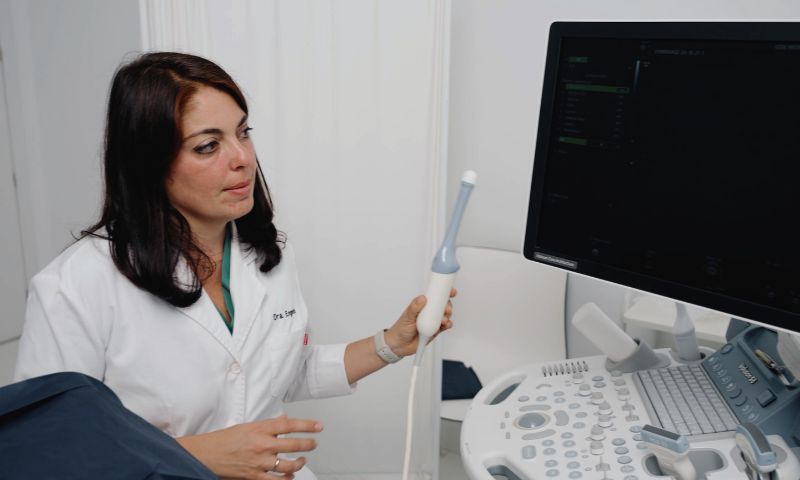
Uterine fibroids are very common benign tumours that can cause heavy menstrual bleeding, pelvic pain, anaemia, a sensation of pressure and other symptoms that affect quality of life. When fibroids cause symptoms, it is important to assess the most appropriate treatment for each patient. Radiofrequency ablation is a minimally invasive technique that allows certain fibroids to be treated without abdominal incisions. The procedure is performed transvaginally under ultrasound guidance, applying thermal energy precisely within the fibroid to progressively reduce its volume and improve associated symptoms.
Recognised reference clinics in Spain
Home > Gynaecology > Radiofrequency ablation for uterine fibroids
What sets us apart
Treating fibroids while preserving the uterus
Radiofrequency ablation allows certain fibroids to be treated without abdominal incisions. The procedure is performed transvaginally under ultrasound guidance, applying thermal energy precisely within the fibroid so that the treated tissue is gradually reabsorbed by the body. This technique preserves the uterus, leaves no external scars and generally allows a relatively quick recovery. However, not all fibroids are suitable for radiofrequency ablation. Its indication must be assessed individually, taking into account the number, size and location of the fibroids, the patient’s symptoms and age, other possible gynaecological conditions and her reproductive plans.
Minimally invasive treatment of uterine fibroids
Radiofrequency ablation allows certain uterine fibroids to be treated without the need for conventional surgery. By applying controlled thermal energy within the fibroid, the treated tissue is gradually reabsorbed by the body, reducing its volume and the associated symptoms.
Precise treatment under ultrasound guidance
The procedure is performed transvaginally under ultrasound guidance. The specialist introduces a fine needle into the fibroid and applies the energy precisely, aiming to preserve healthy uterine muscle tissue and surrounding structures.
No incisions and rapid recovery
As the fibroid is accessed through the vagina, no abdominal incisions are required and no external scars are left. Radiofrequency ablation is usually performed under light sedation and generally takes less than 30 minutes, although the duration may vary depending on the case. Hospital admission is usually unnecessary, and the patient can generally return home on the same day.
Progressive reduction in fibroid size and associated symptoms
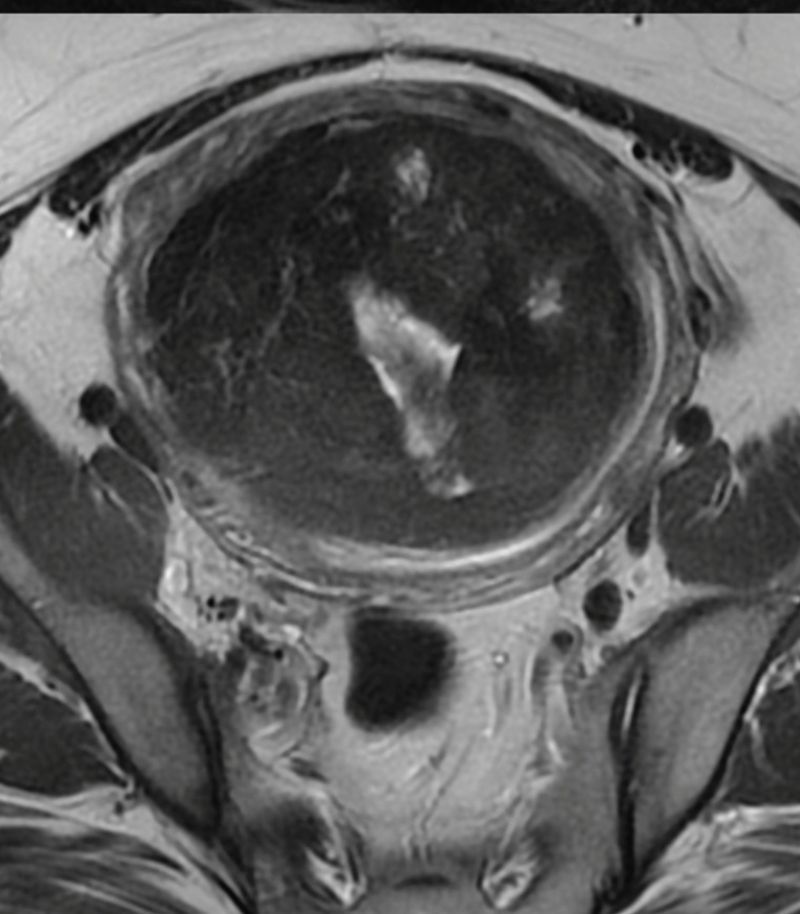
Radiofrequency ablation does not remove the fibroid. Instead, it acts on the fibroid tissue to produce a gradual reduction in its volume. The main aim of treatment is to improve the symptoms caused by the fibroid and reduce their impact on the patient’s quality of life. Results are not immediate, as the body needs time to reabsorb the treated tissue.
Improvement in bleeding and discomfort
As the fibroid decreases in size, heavy menstrual bleeding, associated anaemia, pelvic pain and discomfort during sexual intercourse may improve. Symptoms caused by pressure from the fibroid on surrounding structures may also be relieved.
Short recovery period
During the first few days, patients may experience mild pelvic discomfort, a sensation of pressure or light vaginal bleeding. Recovery is generally quick, allowing patients to resume their usual activities within a short period. The medical team provides individualised instructions and arranges follow-up to monitor clinical progress and the gradual reduction in fibroid size.
Uterine preservation and individualised assessment
One of the main characteristics of radiofrequency ablation is that it allows the fibroid to be treated while preserving the uterus. It may be considered for women who wish to avoid conventional surgery, particularly when the location of the fibroid makes surgical treatment more difficult or when an operation could involve greater risk to healthy uterine tissue.
Future pregnancy plans
By preserving the uterus and avoiding the extensive uterine scars associated with certain surgical procedures, radiofrequency ablation may be considered for women who wish to become pregnant in the future. Pregnancies with favourable outcomes have been reported following the procedure, although evidence on reproductive outcomes is still developing. The treatment does not, in itself, guarantee fertility or pregnancy.
Prior gynaecological assessment
Not all fibroids can be treated using radiofrequency ablation. Before recommending the procedure, a comprehensive gynaecological assessment and imaging investigations are necessary. The number, size and location of the fibroids, the patient’s symptoms, age and reproductive plans, and any other relevant abnormalities are considered to determine the most appropriate treatment option.
Information about radiofrequency ablation for uterine fibroids
A guide to radiofrequency ablation for uterine fibroids
Radiofrequency ablation is one of the treatment options available for certain symptomatic uterine fibroids. Its aim is not to remove the fibroid during the procedure, but to apply controlled thermal energy within it to produce a gradual reduction in its volume and associated symptoms.
Not all fibroids require treatment, and not all are suitable for radiofrequency ablation. The decision depends on the patient’s symptoms, the number of fibroids, their size and location, her medical history and reproductive plans.
When might a fibroid need treatment?
Many uterine fibroids cause no symptoms and require only monitoring. Treatment may be considered when they cause problems such as heavy menstrual bleeding, anaemia, pelvic pain or pressure, a sensation of heaviness or certain fertility-related difficulties.
The decision does not depend solely on the size of the fibroid. Its location, number, progression and impact on quality of life are also important when selecting treatment.
Which fibroids can be treated using radiofrequency ablation?
The indication must be established following a gynaecological assessment and ultrasound examination. The number, size and location of the fibroids, together with their relationship to the uterine cavity and other structures, help determine whether radiofrequency ablation is an appropriate option.
There is no single technique suitable for every type of fibroid. Fibroids that grow into the uterine cavity may be better suited to hysteroscopic treatment, while other fibroids may require radiofrequency ablation, laparoscopy or alternative approaches.
For this reason, the choice of procedure should be made after assessing the specific characteristics of the uterus and fibroids.
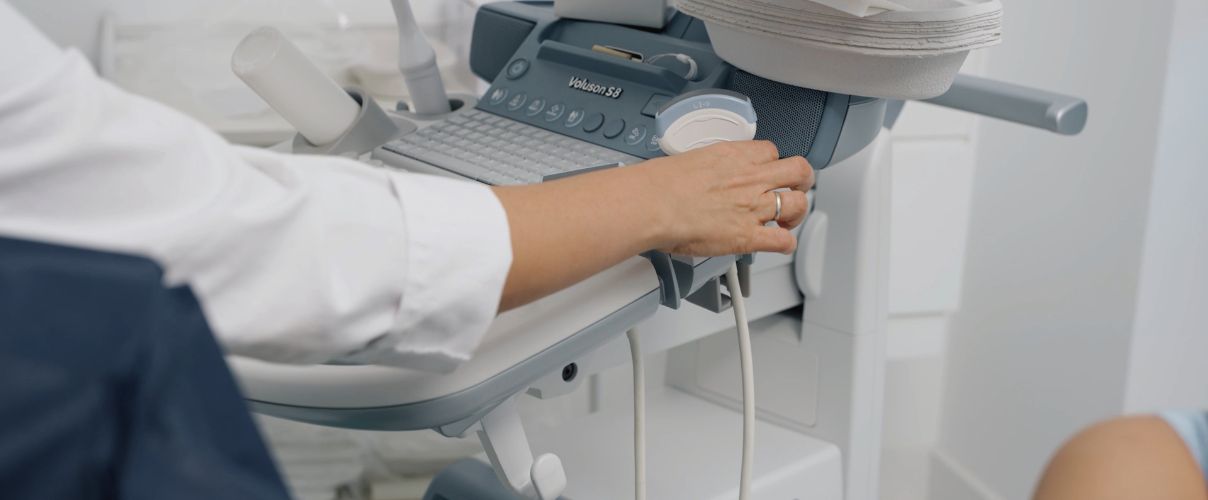
How is transvaginal radiofrequency ablation performed?
The procedure is performed under ultrasound guidance. A specialised needle or electrode is introduced transvaginally into the fibroid, where radiofrequency energy is applied in a controlled manner.
The heat generated produces an area of coagulation within the treated tissue. The body subsequently reabsorbs this tissue gradually, so the fibroid decreases in volume over time.
Ultrasound allows the specialist to locate the fibroid and monitor the position of the device during energy delivery.
Fibroid reduction is gradual
Radiofrequency ablation does not remove the fibroid immediately. Following treatment, a gradual reduction process begins and continues over the following months.
Available studies have shown reductions in fibroid volume and improvements in symptoms such as heavy menstrual bleeding. The extent of the response may vary between patients and different types of fibroids.
Follow-up ultrasound examinations therefore allow changes in fibroid size to be monitored and assessed alongside improvements in clinical symptoms.
Radiofrequency ablation, hysteroscopy or surgery: how is the choice made?
Treatment of uterine fibroids must be tailored to their characteristics and to each patient’s needs.
Operative hysteroscopy may be particularly useful for certain submucosal fibroids that protrude into the uterine cavity. Other fibroids may be treated using radiofrequency ablation, while some cases require laparoscopic myomectomy, mini-laparotomy or other techniques.
The aim of the initial assessment is to select the most appropriate option, taking into account the patient’s symptoms, anatomy, medical history and reproductive plans.
“The Gynaecology Unit manages conditions related to clinical and aesthetic gynaecology, reproductive health and gynaecological surgery, among other areas.”
Radiofrequency ablation, fertility and pregnancy
Radiofrequency ablation allows fibroids to be treated while preserving the uterus. However, preserving the uterus and improving fertility are not the same thing.
Pregnancies following transvaginal radiofrequency ablation have been reported, and the available findings are encouraging. Nevertheless, studies on reproductive outcomes remain more limited than those assessing reductions in fibroid volume and improvements in symptoms.
Therefore, when a patient wishes to become pregnant, either now or in the future, the indication must be assessed particularly carefully, considering the type of fibroid, its relationship to the uterine cavity, the patient’s reproductive history and the different treatment alternatives.
What is recovery like?
Transvaginal radiofrequency ablation is usually performed as an outpatient procedure, and recovery is generally shorter than after surgical procedures requiring abdominal incisions.
During the first few days, patients may experience pelvic discomfort, pain of varying intensity, light bleeding or other symptoms associated with the treatment process.
The time needed to resume normal activities fully depends on each patient’s recovery and the instructions provided after the procedure.
Possible risks and complications
Transvaginal radiofrequency ablation is a minimally invasive technique, but it is not entirely risk-free.
Published studies report a low frequency of serious complications and indicate that most recorded adverse events are mild. Possible complications include pain, fever, bleeding, infection and the expulsion of fibroid tissue, as well as other less frequent complications.
Appropriate patient selection, ultrasound guidance and postoperative follow-up are among the measures used to minimise these risks.
Could further treatment be needed in the future?
The response to radiofrequency ablation may vary according to the characteristics of the fibroids and the individual patient.
Although treatment may achieve a substantial reduction in fibroid volume and associated symptoms, the treated fibroid does not always disappear completely, and other fibroids may be present that did not initially require treatment.
In some cases, continued monitoring, a further procedure or another treatment option may be necessary if symptoms persist or recur.
Further information
Below are the authorship details and references for the information provided on this page.
Authorship and references
The content of this page has been prepared by the Grupo Pedro Jaén Communications Department and Medical Team in accordance with our editorial commitment to ensuring that the information provided is accurate and up to date.
References:
1. Chen I, Berman JM, Balk EM, et al. Radiofrequency Ablation for the Treatment of Uterine Fibroids: A Systematic Review and Meta-Analysis by the AAGL Practice Committee. J Minim Invasive Gynecol. 2025;32(1):74-91. doi: 10.1016/j.jmig.2024.09.011.
2. Thomaz GDGR, Kautz LG, Macelaro GP, et al. Transvaginal Radiofrequency Ablation for Symptomatic Uterine Fibroids: A Systematic Review and Meta-Analysis of Effectiveness, Safety, and Reproductive Outcomes. J Minim Invasive Gynecol. 2026;33(8):1100-1109. doi: 10.1016/j.jmig.2026.04.006.
3. Marín Martínez ME, Cruz-Melguizo S, Vaquero Argüello G, et al. Transvaginal radiofrequency ablation: a therapeutic option for managing symptomatic uterine fibroids in women with reproductive desires. F&S Reports. 2024;5(3):320-327. doi: 10.1016/j.xfre.2024.07.001.
4. Santalla-Hernández A, Naveiro-Fuentes M, Benito-Villena R, et al. Complications of transvaginal radiofrequency ablation of fibroids: A 5-year experience. Eur J Obstet Gynecol Reprod Biol X. 2023;20:100244. doi: 10.1016/j.eurox.2023.100244.
5. National Institute for Health and Care Excellence (NICE). Heavy menstrual bleeding: assessment and management. NICE Guideline NG88. Updated version.
Where we see patients?
Clinics in Madrid
Grupo Pedro Jaén is a medical group founded more than three decades ago with the aim of providing medical, surgical and aesthetic solutions related to skin health and appearance. Led by Dr Pedro Jaén, the group brings together top-level specialists in each area, maintains a strong commitment to training and medical research, and operates several clinics in Madrid, offering care of the highest quality and excellence.


Calle Serrano 166
Mon - Fri: 09:00 - 21:00 / Sat: 09:00 - 14:00
Calle Serrano 166, El Viso neighbourhood, Chamartín district, 28002 Madrid

La Moraleja
Located in Plaza de La Moraleja, this exclusive centre allows Grupo Pedro Jaén to bring its medical and aesthetic services closer to patients across the entire northern area of Madrid.
Mon - Thu: 09:30 - 20:00 / Fri: 09:30 - 18:00
Calle de la Estafeta 8, ground floor, La Moraleja, 28109 Alcobendas, Madrid, Spain
Related units and pages
Operative hysteroscopy
Tratamiento mínimamente invasivo de pólipos, determinados miomas y otras alteraciones localizadas en el interior del útero.
Fertility
Estudio de los factores femeninos y masculinos que pueden dificultar la consecución de un embarazo.
Reproductive surgery
Procedimientos destinados a tratar alteraciones anatómicas que pueden interferir en la fertilidad o en la evolución del embarazo.
Assisted reproduction
Técnicas y tratamientos personalizados para buscar el embarazo cuando existen dificultades reproductivas.
Pregnancy care
Seguimiento del embarazo y atención durante el posparto adaptados a las características de cada paciente.
Gynaecology Unit
A comprehensive approach to health and aesthetic concerns related to the female reproductive system.
Information and news
Press room
In the Grupo Pedro Jaén Press Room you can find information, advice and news related to dermatology, aesthetic medicine, trichology and general health. The group’s journals are also shared through an online platform, along with updates on the activity and media appearances of our clinics and healthcare professionals.

How to shower properly: tips for looking after your skin
Cold or hot water? Is it better to use a sponge? Find out how to shower properly and what dermatologists recommend to protect your skin.

Retinol in summer: should you stop using it?
We debunk this and other myths about using retinol during the warmer months.

Blog
News about Grupo Pedro Jaén. Information and advice on dermatology, aesthetic medicine, trichology, and general health

Media
Information about media appearances by our clinics and medical specialists.

Journal
Archive of all Grupo Pedro Jaén journals, available through an external online platform.