
Hair loss diagnosis
Treatment at our clinics in Madrid on Calle Cinca and La Moraleja
Dermatologists specialising in
Diagnosis of alopecia
To date, around 100 different types of alopecia have been described, each of which requires a specific treatment in order to achieve the best patient outcomes. It is therefore essential to make a precise diagnosis. For this reason, the Grupo Pedro Jaén Hair Disorders and Hair Transplant Unit offers the most advanced and effective technology, together with a comprehensive methodology to diagnose, evaluate and treat any type of alopecia or hair disorder in patients attending our clinics.
Recognised reference clinics in Spain
Home > Hair Disorders > Hair Loss Diagnosis
What sets us apart
Precision and experience in hair diagnostics
Hair loss diagnosis is the first key step in effectively addressing any type of alopecia or hair disorder. We are therefore committed to a comprehensive and personalised approach, supported by advanced technologies such as digital trichoscopy, scalp ultrasound and complete laboratory studies. Our holistic approach, together with the experience of our dermatologists specialising in hair disorders, ensures an accurate diagnosis that optimises patient outcomes and promotes effective hair recovery.
High-resolution digital trichoscopy
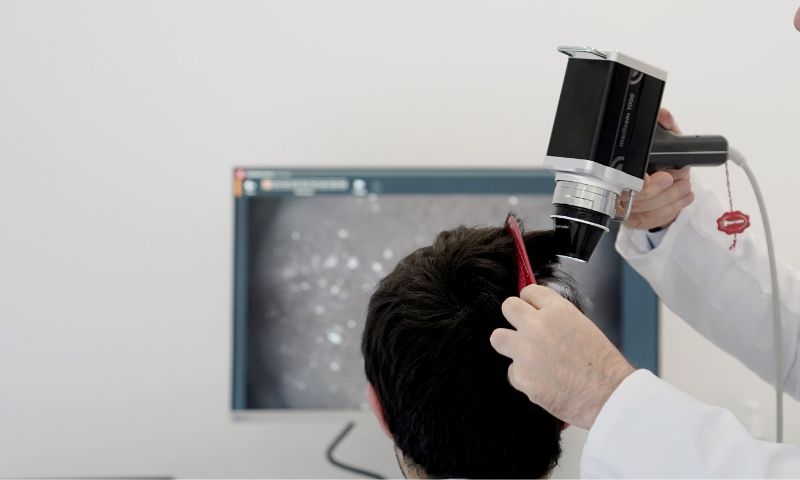
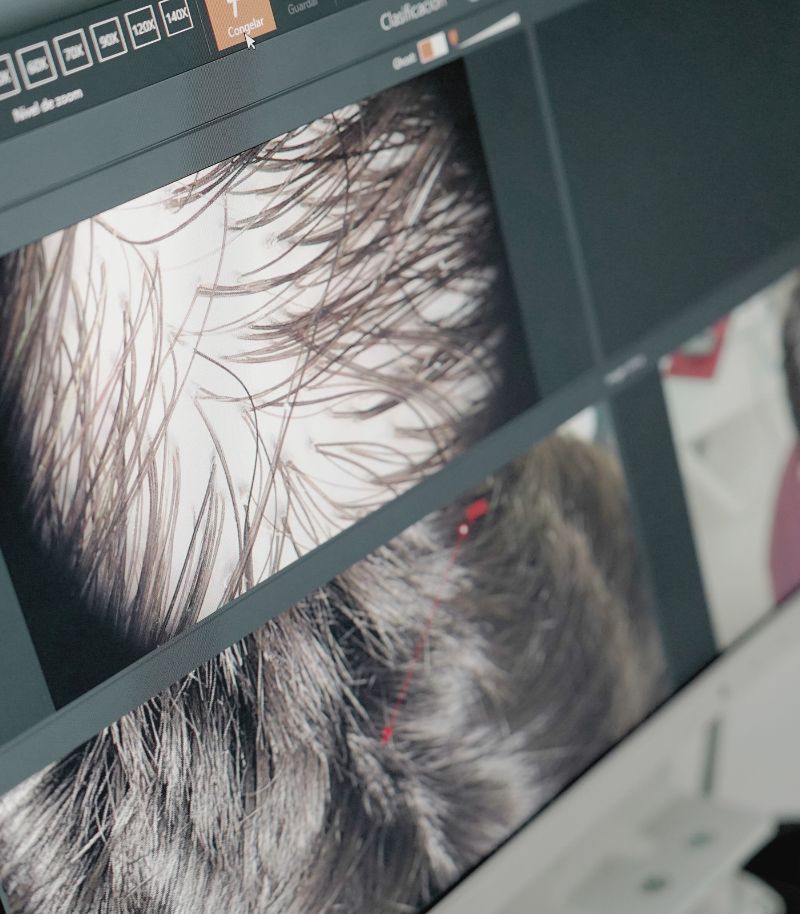
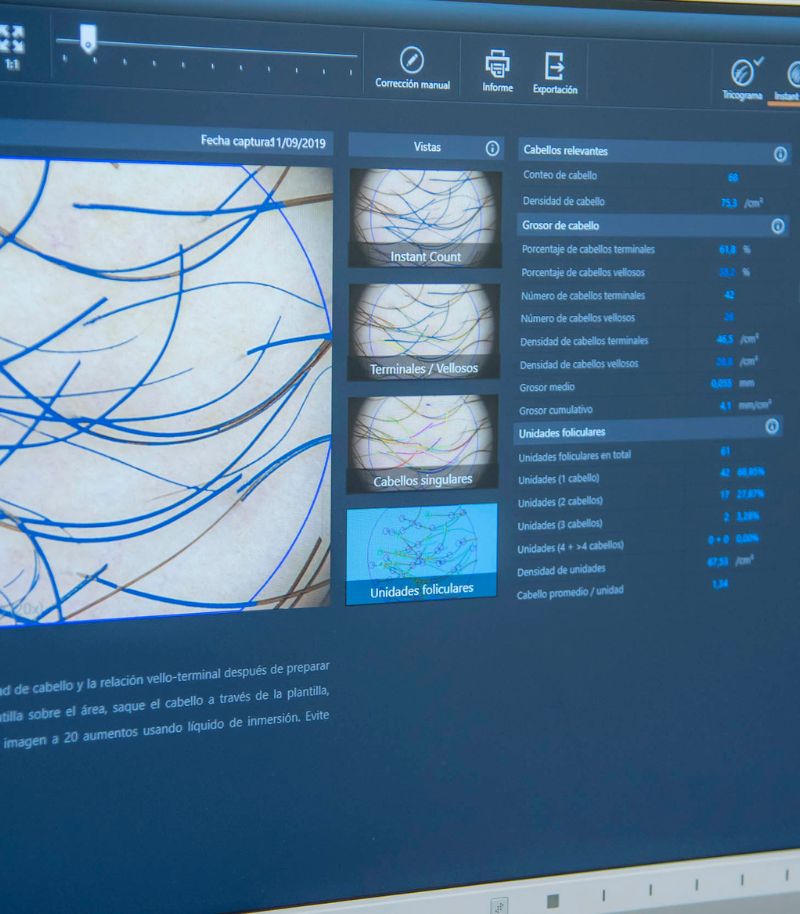
In our Hair Disorders Unit, we use high-resolution digital trichoscopy, which allows detailed observation of the scalp and hair follicles at a microscopic level. This non-invasive tool facilitates the identification of hair loss patterns, follicular miniaturisation and other relevant signs that help determine the type of alopecia.
Case documentation and monitoring
This technology enables visual documentation of the patient’s initial condition and its evolution throughout treatment. In this way, our dermatologists specialising in hair loss diagnosis can accurately monitor progress and adjust treatment plans in a timely manner to optimise outcomes.
Confidence based on visual evidence
This technology enables visual documentation of the patient’s initial condition and its evolution throughout treatment. In this way, our dermatologists specialising in hair loss diagnosis can accurately monitor progress and adjust treatment plans in a timely manner to optimise outcomes.
Scalp ultrasound
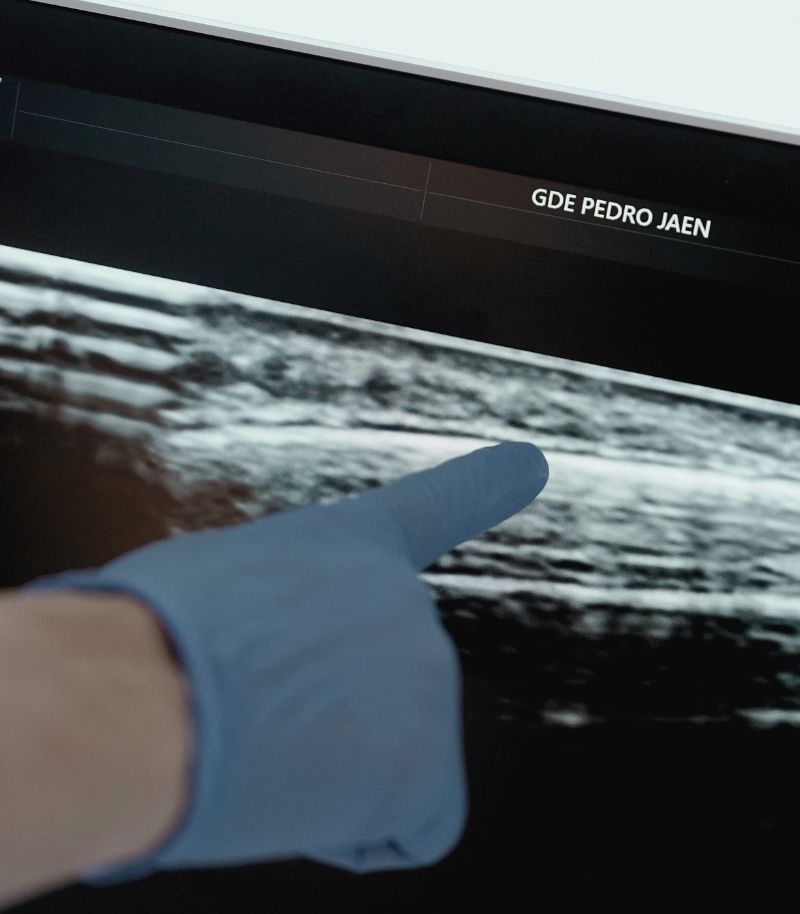
Scalp ultrasound is a non-invasive technique that allows real-time examination of subcutaneous structures and scalp skin. Using this high-precision tool, we can detect signs of fibrosis or inflammation at very early stages, which is crucial for accurate and early diagnosis. It also allows in-depth visualisation of tissue status, facilitating the identification of alterations that may affect hair health.
Detailed assessment of vascularity
This technique provides valuable information about scalp vascularisation, a key factor in hair follicle health and hair growth. It enables early identification of blood supply alterations, allowing for personalised and timely intervention.
Added value in ongoing diagnosis
Ultrasound is not only useful for initial diagnosis but also for monitoring treatment response, adjusting therapeutic strategies and preventing potential complications, reinforcing our comprehensive approach to hair disorder management.
Scalp biopsy
Scalp biopsies are performed when more detailed information is required or when complex diagnoses need confirmation. This procedure allows tissue analysis to identify signs of scarring alopecia or inflammatory processes, particularly in cases where other diagnostic methods do not provide definitive conclusions.
Simple and safe procedure
The biopsy is performed under local anaesthesia during a short outpatient consultation, ensuring minimal discomfort for the patient. The sample is analysed using specialised laboratory techniques to obtain diagnostic information not visible in standard studies.
Comprehensive diagnosis for personalised treatment plans
Based on biopsy results, our dermatologists specialising in hair disorders can differentiate between types of alopecia and establish treatment plans tailored to each patient’s specific needs, optimising therapeutic outcomes and promoting effective hair recovery.

Laboratory studies
We perform laboratory studies to identify factors such as hormonal imbalances, nutritional deficiencies and other conditions that may influence hair health. These studies allow us to address not only symptoms but also the underlying causes of hair loss, providing a comprehensive view of each patient’s condition.
Data-driven personalised treatment
Laboratory results enable the design of treatment plans adapted to the patient’s medical profile, including collaboration with other specialist units when necessary, ensuring a precise and effective therapeutic strategy.
Multidisciplinary advantage
Our integrated approach and access to other specialist units within Grupo Pedro Jaén ensure that all aspects of the patient’s health are addressed, optimising hair recovery and providing thorough, personalised follow-up.
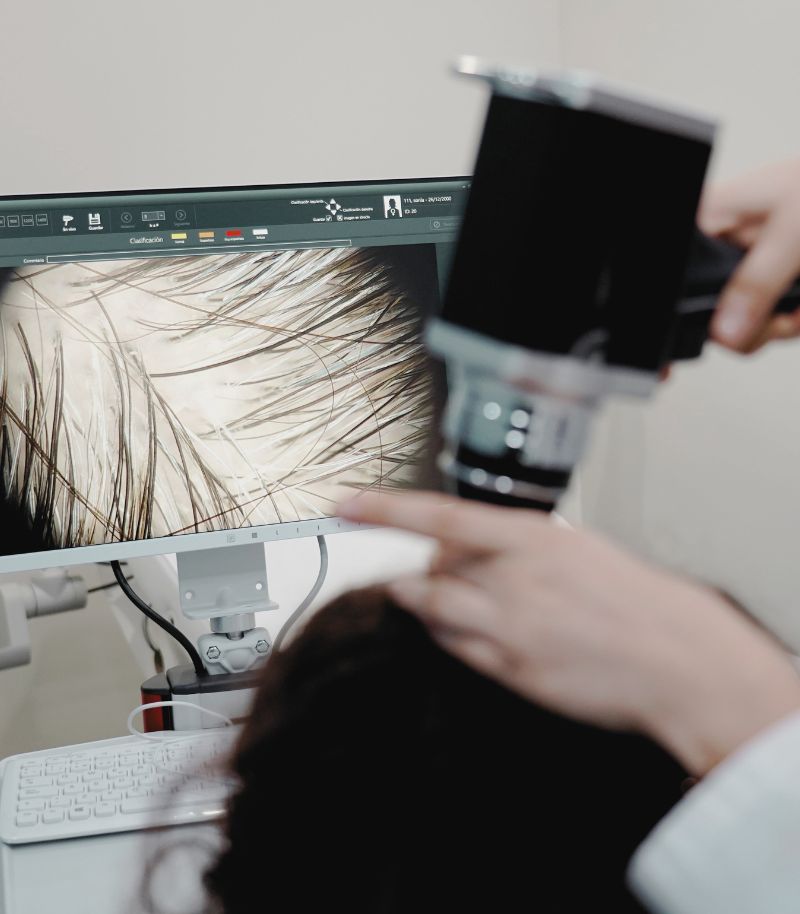
Physical and visual examination
During the first consultation, we carry out a detailed physical examination of the scalp and hair. We assess hair density, thickness and texture, and look for signs such as inflammation, scaling or erythema that may indicate different types of alopecia. This clinical examination is essential for establishing an accurate initial diagnosis and determining overall hair health.
Early detection of hair disorders
Visual assessment allows early identification of follicular miniaturisation patterns and other abnormalities, facilitating timely treatment to slow disease progression. Early detection is key to maximising treatment effectiveness.
Professional and personalised care
Our team of dermatologists specialised in hair disorders provides a thorough evaluation tailored to the characteristics of each case. This examination also enables the design of personalised treatment strategies to optimise hair recovery.

Pull Test
The pull test is a simple, non-invasive procedure used to assess the phase of the hair cycle and detect abnormal hair shedding. It complements other diagnostic techniques to ensure a complete and accurate patient assessment.
Fast and effective method
Combined with digital trichoscopy and laboratory studies, the pull test allows efficient diagnosis and supports the development of a personalised treatment plan. Its simplicity and speed make it particularly valuable during the initial consultation.
Integral part of a comprehensive diagnosis
The pull test and visual assessments form part of a structured diagnostic process that ensures every aspect of the hair disorder is addressed from a rigorous medical perspective, guaranteeing personalised and high-quality care.
Using the most advanced diagnostic tools
A guide to understanding hair loss diagnosis
In our Hair Disorders and Hair Transplant Unit, we advocate a comprehensive and personalised approach to every case. This process must always begin with a precise diagnosis, which represents the cornerstone of any procedure recommended within the unit.
This approach is essential not only to prescribe the most appropriate therapeutic protocol tailored to each patient’s needs. It also helps to avoid unnecessary or potentially harmful treatments, promotes early intervention—crucial in the management of certain hair disorders to prevent progression or irreversible damage—and provides highly valuable additional information when other health parameters may be contributing to the hair condition, such as nutritional deficiencies, hormonal imbalances or autoimmune diseases.
The combination of physical examination, digital trichoscopy, laboratory studies, scalp ultrasound and scalp biopsy, together with photographic documentation, constitutes the full range of diagnostic resources available to the dermatologists specialising in hair disorders within the unit, enabling a more precise and efficient diagnosis.
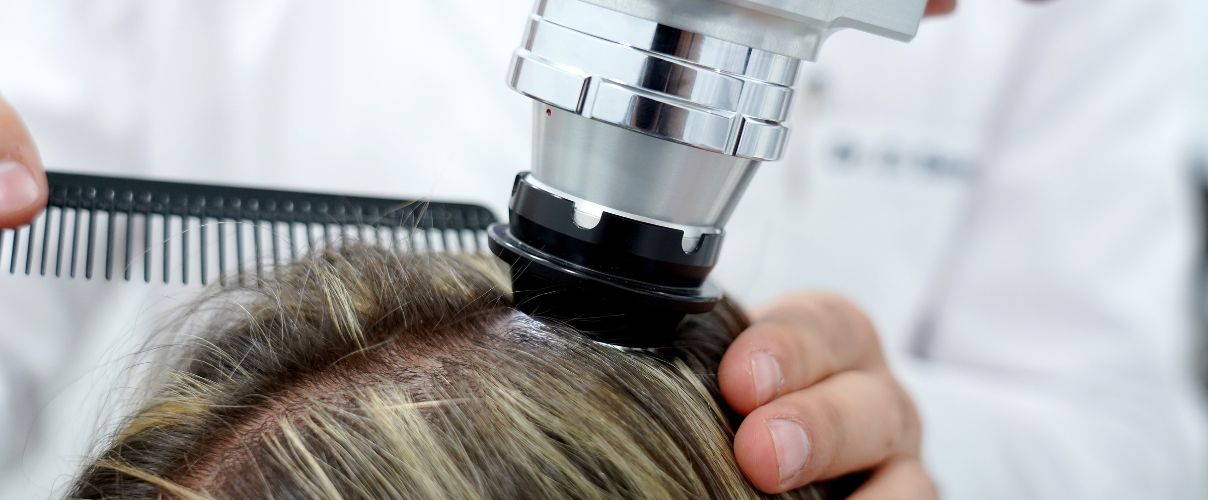
Comprehensive medical history
The evaluation begins with a thorough medical history, including the patient’s physical and emotional health status, family history of alopecia or other hair disorders, autoimmune diseases and other relevant medical information. This data is essential to identify potential underlying causes of hair loss and to determine which diagnostic tests are required to reach an accurate diagnosis.
Physical examination of the hair and scalp
During the consultation, a detailed physical examination of the patient’s hair and scalp is performed. Through direct observation, the dermatologist expert in hair disorders assesses hair distribution to identify areas of reduced density, patches of hair loss and specific patterns of shedding that may indicate different types of alopecia, such as androgenetic alopecia, alopecia areata or frontal fibrosing alopecia.
At this stage, hair fibre quality is also evaluated, including texture and thickness, as well as the presence of miniaturised hairs (thinner and shorter hairs), which may suggest certain forms of alopecia. Finally, the scalp is examined for signs of inflammation, erythema, scaling, scarring or other abnormalities indicative of conditions such as seborrhoeic dermatitis or scarring alopecias.
Pull test
The pull test is a simple technique that involves gently pulling a small group of hairs to assess how many are shed and how easily this occurs, in order to determine whether the findings are consistent with the normal hair cycle.
Assessment of sebaceous production
Sebum production on the scalp is evaluated visually and by palpation. Excessive sebum may be associated with conditions such as seborrhoeic dermatitis, while insufficient production may indicate other imbalances affecting hair and scalp health.
«An accurate hair loss diagnosis is essential in order to apply an effective treatment for alopecia.»
Advanced studies and technology for hair loss diagnosis
The Grupo Pedro Jaén Hair Disorders and Hair Transplant Unit is equipped with state-of-the-art technology and performs all necessary investigations to achieve an accurate hair loss diagnosis, which is a fundamental step before establishing the most appropriate treatment strategy.
Digital trichoscopy
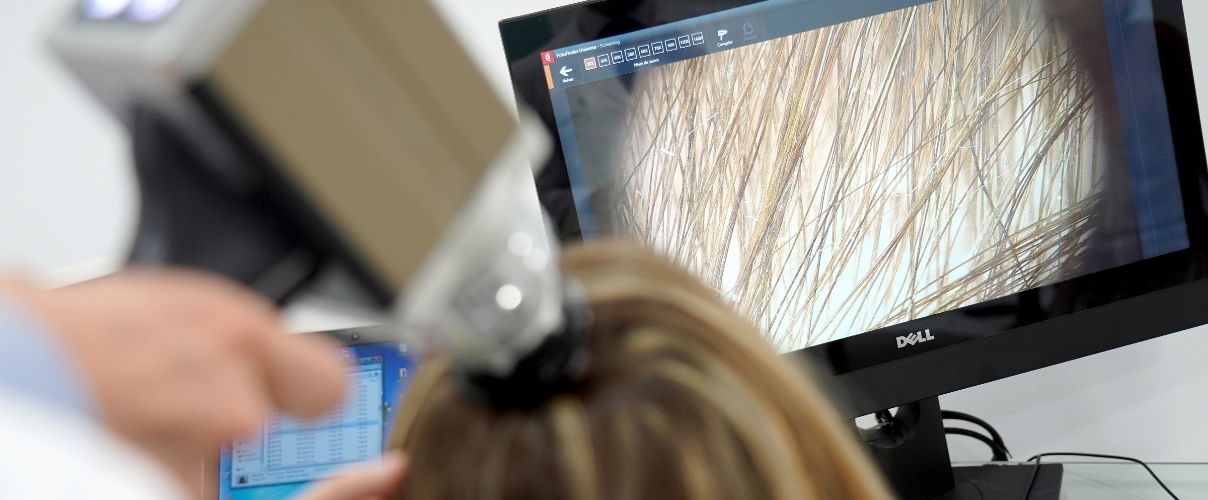
Digital trichoscopy is a key diagnostic tool that allows specialists to obtain a detailed microscopic view of the scalp and hair, facilitating the detection of abnormalities that cannot be identified through simple visual inspection.
It is a non-invasive, painless procedure that enables simultaneous analysis of the scalp, hair follicles and hair shafts. The captured images are examined in detail to identify signs of follicular miniaturisation, variations in hair shaft thickness or shape, inflammation, scaling, irritation and other relevant findings.
Digital trichoscopy also allows assessment of hair growth patterns, follicular density and even very early shedding patterns, enabling early intervention—an essential factor in certain hair disorders, particularly scarring alopecias.
The images obtained are processed and stored in our system to create a photographic record of the patient, which is extremely valuable for comparing baseline findings with follow-up assessments. This enables close monitoring of disease progression and treatment response, allowing timely adjustments when necessary.
Digital trichoscopy is an indispensable tool in hair loss diagnosis at Grupo Pedro Jaén. By integrating it into our consultations, we ensure that each patient receives a comprehensive and personalised diagnosis, optimising treatment outcomes and promoting long-term hair health.
More information about digital trichoscopy.
Laboratory studies
Laboratory investigations provide a more complete understanding of the patient’s hair disorder and help identify contributing factors such as hormonal imbalances or nutritional deficiencies. When combined with thorough physical and visual examination, these studies allow the development of effective treatment plans that address not only symptoms but also the underlying causes of hair loss, optimising outcomes and promoting sustained hair recovery.
Laboratory tests may include blood analyses to detect conditions such as anaemia, infections or other systemic disorders that may contribute to hair problems.
Hormonal profiling may also be recommended to assess thyroid hormones, sex hormones and stress-related hormones, which can be associated with hair loss and deterioration in hair quality.
In addition, targeted tests may be prescribed to identify deficiencies in vitamins and minerals such as iron, ferritin, zinc, vitamin D and vitamin B12, all of which can negatively affect hair health.
The results of these tests are incorporated into the patient’s personalised treatment plan. Depending on the findings, patients may be referred to other specialist units within Grupo Pedro Jaén to address underlying causes, such as Endocrinology and Nutrition, Gynaecology, Urology or Emotional Support.
Scalp ultrasound
Scalp ultrasound is an advanced, non-invasive diagnostic tool used in the Grupo Pedro Jaén Hair Disorders and Hair Transplant Unit when a more detailed assessment is required. This technology uses ultrasound waves to obtain highly precise images of soft tissues and structures.
Unlike other diagnostic methods that provide a more superficial view, scalp ultrasound allows real-time evaluation of subcutaneous tissue, scalp skin, hair follicle structure and vascularisation—an essential factor in blood supply to the hair root and scalp. Ultrasound can also detect early signs of fibrosis or inflammation, which is crucial for early diagnosis.
By performing periodic scalp ultrasound examinations, dermatologists specialising in hair disorders can monitor alopecia progression, assess changes in scalp structure and follicular health over time, evaluate treatment response through before-and-after comparisons, adjust therapeutic strategies accordingly and detect early signs of complications or adverse effects, allowing timely intervention.
Scalp biopsy
Scalp biopsy is a diagnostic tool used when information cannot be obtained through non-invasive methods or when confirmation of complex diagnoses is required. The procedure involves removing a small tissue sample from the scalp, including skin and hair follicles.
The sample is subsequently analysed under a microscope to identify cellular and tissue-level abnormalities. It is particularly useful in diagnosing certain types of alopecia that cannot be reliably identified through conventional examination.
Scalp biopsy is especially important in the diagnosis of scarring alopecias, as the formation of scar tissue leads to permanent follicular destruction, preventing hair regrowth and, in some cases, ruling out hair transplantation. It is also valuable for differentiating between types of alopecia with similar clinical presentations but requiring different treatments.
The procedure is performed using a biopsy punch to extract a small sample containing several follicles. Local anaesthesia is administered beforehand to ensure the patient experiences no pain. The biopsy site is closed with a single suture.
The tissue sample is sent to a pathology laboratory, where it is processed and stained for microscopic examination. A specialised pathologist analyses the sample to identify signs of inflammation, fibrosis, follicular atrophy, sebaceous gland changes and other indicators of hair disorders. Findings may include lymphocytic infiltrates, perifollicular or perivascular fibrosis and other features characteristic of different types of alopecia.
More information
Authorship and references for the information on this page
Authorship and references for the information on this page
The content of this page has been prepared by the Communication Department and the Medical Team of Grupo Pedro Jaén, in line with our editorial commitment to ensuring the accuracy and up-to-date nature of the information provided.
References on hair loss diagnosis:
1. Singh S, Muthuvel K. Practical Approach to Hair Loss Diagnosis. Indian J Plast Surg. 2021 Dec 27;54(4):399-403. doi: 10.1055/s-0041-1739240. PMID: 34984076; PMCID: PMC8719967.
2. Jackson AJ, Price VH. How to diagnose hair loss. Dermatol Clin. 2013 Jan;31(1):21-8. doi: 10.1016/j.det.2012.08.007. Epub 2012 Sep 29. PMID: 23159173.
3. E. González-Guerra, E. López-Bran, Protocolo diagnóstico de la alopecia, Medicine – Programa de Formación Médica Continuada Acreditado, Volume 12, Issue 48, 2018, Pages 2864-2867, ISSN 0304-5412, https://doi.org/10.1016/j.med.2018.01.005.
4. Mubki T, Rudnicka L, Olszewska M, Shapiro J. Evaluation and diagnosis of the hair loss patient: part I. History and clinical examination. J Am Acad Dermatol. 2014 Sep;71(3):415.e1-415.e15. doi: 10.1016/j.jaad.2014.04.070. PMID: 25128118.
5. Mubki T, Rudnicka L, Olszewska M, Shapiro J. Evaluation and diagnosis of the hair loss patient: part II. Trichoscopic and laboratory evaluations. J Am Acad Dermatol. 2014 Sep;71(3):431.e1-431.e11. doi: 10.1016/j.jaad.2014.05.008. PMID: 25128119.
6. Miteva M, Tosti A. Hair and scalp dermatoscopy. J Am Acad Dermatol. 2012 Nov;67(5):1040-8. doi: 10.1016/j.jaad.2012.02.013. Epub 2012 Mar 8. PMID: 22405573.
7. Rudnicka L, Rakowska A, Kerzeja M, Olszewska M. Hair shafts in trichoscopy: clues for diagnosis of hair and scalp diseases. Dermatol Clin. 2013 Oct;31(4):695-708, x. doi: 10.1016/j.det.2013.06.007. PMID: 24075554.
8. Lencastre A, Tosti A. Role of trichoscopy in children’s scalp and hair disorders. Pediatr Dermatol. 2013 Nov-Dec;30(6):674-82. doi: 10.1111/pde.12173. Epub 2013 Aug 13. PMID: 23937326.
Where we see patients?
Clinics in Madrid
Grupo Pedro Jaén is a medical group with more than thirty years of experience, specialising in medical, surgical and aesthetic solutions related to skin health and care. Under the leadership of Dr Pedro Jaén, the group has a multidisciplinary team of highly qualified specialists, ensuring expert care across all areas of treatment. In addition, Grupo Pedro Jaén is recognised for its strong commitment to medical education, its leadership in clinical research and its network of clinics in Madrid, from which it provides healthcare of the highest quality and excellence to its patients.


Calle Cinca 30
Located in the El Viso district, this centre houses the consultations of the Hair Disorders and Hair Transplant Unit of Grupo Pedro Jaén in central Madrid.
Mon - Fri: 09:00 - 20:30
Calle Cinca 30, El Viso neighbourhood, Chamartín District, 28002 Madrid

La Moraleja
Located in Plaza de La Moraleja, this exclusive centre allows Grupo Pedro Jaén to bring its medical and aesthetic services closer to patients across the entire northern area of Madrid.
Mon - Thu: 09:30 - 20:00 / Fri: 10:00 - 18:00
Calle de la Estafeta 8, ground floor, La Moraleja, 28109 Alcobendas, Madrid, Spain
Related units and pages
Topical and oral medication
Evidence-based prescription of the most advanced medications for male and female alopecia.
Hair mesotherapy
Microinjection of medications and substances derived from regenerative medicine techniques.
Hair Disorders Unit
A specialised medical team and the most effective treatments for all types of hair disorders.
Female alopecia
Individualised diagnosis and specific treatments for the different types of alopecia in women.
Frontal fibrosing alopecia
Personalised treatment based on the extent of hair loss and the degree of scalp inflammation.
Alopecia areata
Treatments aimed both at promoting hair regrowth and preventing common relapses.
Information and news
Press room
In the Grupo Pedro Jaén Press Room you can find information, advice and news related to dermatology, aesthetic medicine, trichology and general health. The group’s journals are also shared through an online platform, along with updates on the activity and media appearances of our clinics and healthcare professionals.

How to shower properly: tips for looking after your skin
Cold or hot water? Is it better to use a sponge? Find out how to shower properly and what dermatologists recommend to protect your skin.
Retinol in summer: should you stop using it?
We debunk this and other myths about using retinol during the warmer months.

Blog
News about Grupo Pedro Jaén. Information and advice on dermatology, aesthetic medicine, trichology, and general health

Media
Information about media appearances by our clinics and medical specialists.

Journal
Archive of all Grupo Pedro Jaén journals, available through an external online platform.