
Actinic keratosis
Treatment available at our Madrid clinics at Calle Serrano 143 and La Moraleja
Dermatologists specialising in
Treatment of actinic keratosis
Actinic keratosis (also known as solar keratosis) is a precancerous skin lesion that requires careful attention due to its potential to progress to skin cancer. It is one of the most common reasons for dermatology consultations and accounts for approximately 5–6% of all patients seen at the Grupo Pedro Jaén Skin Cancer Unit. Our specialists therefore have extensive experience in its diagnosis and treatment.

Recognised reference clinics in Spain
Home > Skin cancer > Actinic Keratosis
What sets us apart
Expertise in sun-damaged skin and advanced treatments
We specialise in the use of advanced diagnostic technology to detect actinic keratoses at early stages, when treatment is most effective and least invasive. Our approach is personalised and combines innovative therapies such as photodynamic therapy, laser treatments and topical medications, tailored to each patient’s clinical profile. Particular attention is paid to minimising aesthetic impact in sensitive areas such as the face and scalp. Treatment is complemented by preventive strategies and regular follow-up, ensuring comprehensive monitoring to reduce the risk of recurrence and promote long-term skin health.
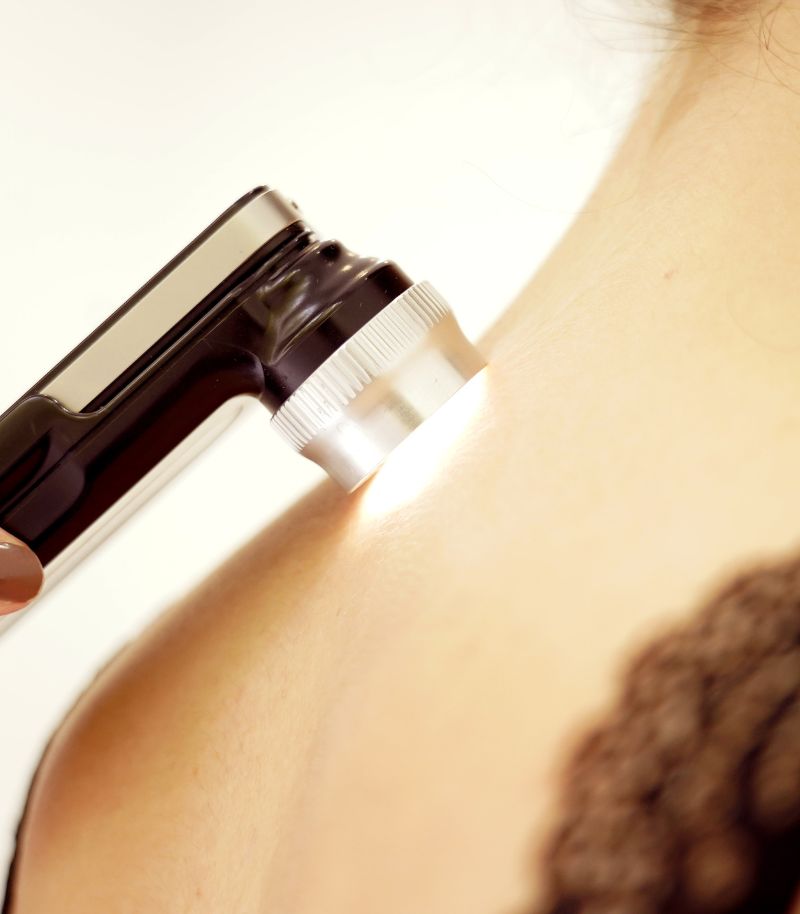
Early diagnosis
Early detection of actinic keratosis is essential to prevent progression to skin cancer. Diagnosis should be carried out by a dermatologist specialising in skin cancer and should not rely solely on visual inspection, as the characteristic scaly lesions do not always present clearly. Actinic keratoses may be mistaken for seborrhoeic keratoses, psoriatic plaques, lupus-related lesions, solar lentigines, viral warts or superficial basal cell carcinoma.
At the Grupo Pedro Jaén Skin Cancer Unit, we use advanced diagnostic tools such as the Vectra 360 system, confocal microscopy and digital dermoscopy. These technologies allow early and highly accurate detection, even of subtle skin changes that may go unnoticed during conventional examinations.
Digital dermoscopy
Digital dermoscopy is a non-invasive imaging technique that enables real-time, high-resolution visualisation of skin structures not visible to the naked eye. It is widely used for mole monitoring and early skin cancer detection. Images are stored and compared over time, allowing suspicious changes to be identified at follow-up visits.
Vectra 360 and confocal microscopy
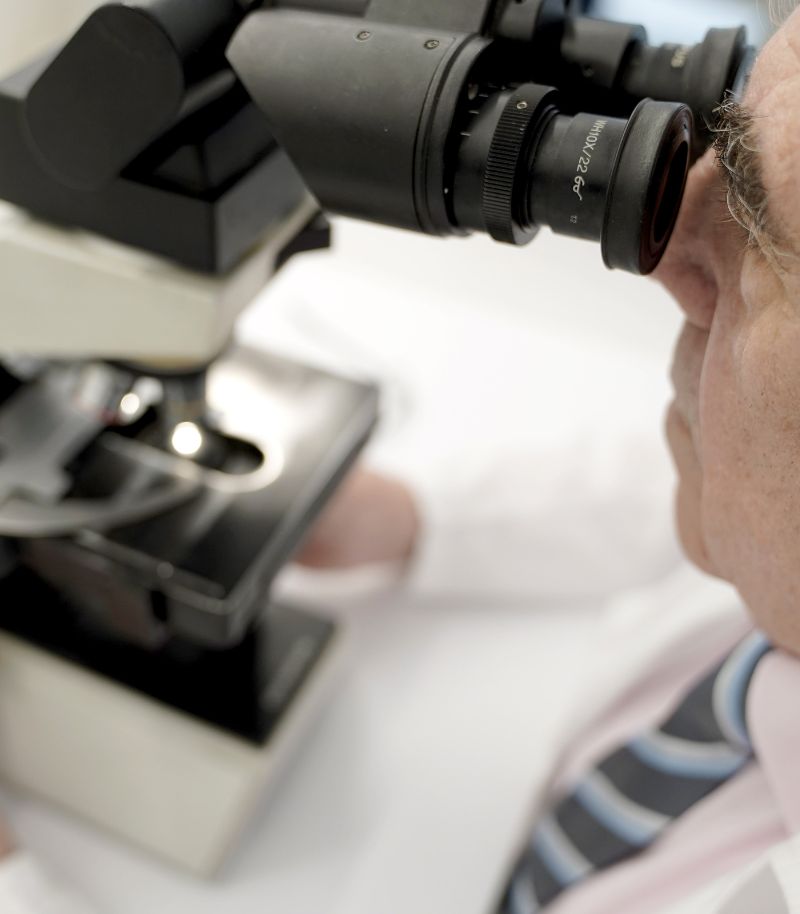
These two technologies play a complementary role. Vectra 360 creates a three-dimensional body map of suspicious skin lesions, while confocal microscopy enables a so-called “virtual biopsy”, without removing tissue. This technique allows actinic keratoses to be classified according to their level of risk or malignant potential, supporting accurate and personalised therapeutic decision-making.
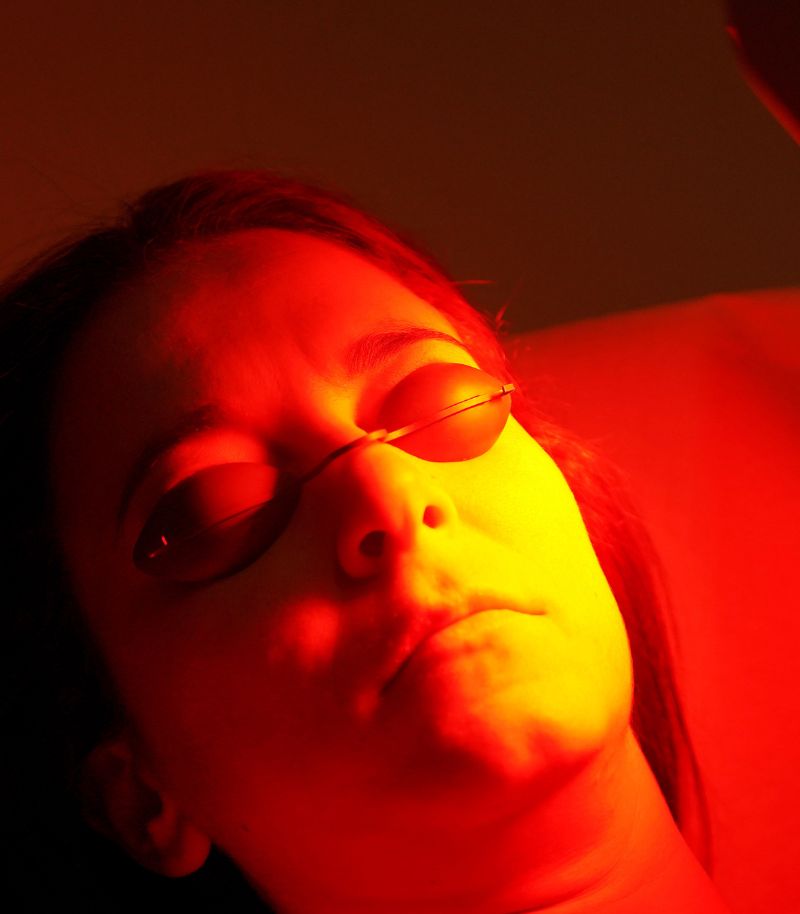
Minimally invasive treatments
Each patient presents a different skin type and degree of involvement, which is why treatment strategies are always tailored. We offer a wide range of options, from topical therapies to more advanced treatments such as photodynamic therapy and laser procedures, always aiming to eliminate damaged skin while preserving the surrounding healthy tissue.
Photodynamic therapy
Photodynamic therapy involves the application of a topical photosensitising agent that is subsequently activated with a specific light source. This triggers a phototoxic reaction that selectively destroys abnormal cells. It is particularly suitable for patients with multiple actinic keratoses and extensive sun damage.
Topical treatment of actinic keratosis
Topical medications in the form of creams or gels are applied directly to the lesion. These treatments modulate the patient’s immune response and progressively eliminate the actinic keratosis over several weeks. In some cases, their effect may be enhanced by activation with laser or light-based devices, helping to shorten treatment duration.
Focus on aesthetic outcomes
Actinic keratoses commonly appear in highly visible areas such as the face, neck and chest, making it essential to adopt an approach that not only removes the lesions but also preserves the patient’s appearance. At the Grupo Pedro Jaén Skin Cancer Unit, treatment plans are designed to combine clinical effectiveness with meticulous skin care.
Precise techniques for sensitive areas
Our dermatologists specialising in actinic keratosis use techniques that minimise impact on delicate areas. Treatments such as photodynamic therapy and laser procedures allow lesions to be treated without compromising skin texture or tone.
Skin regeneration and prevention of scarring
Advanced therapies not only eliminate lesions but also stimulate skin regeneration. This helps preserve skin uniformity and luminosity, minimising the risk of scarring and achieving optimal long-term aesthetic results.
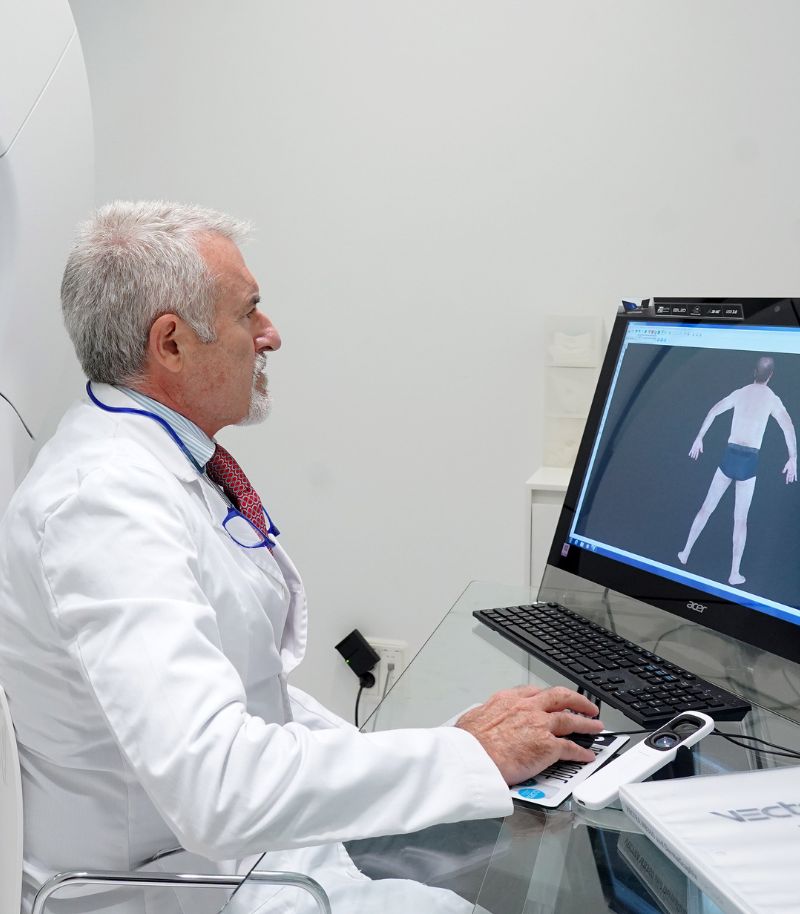
Personalised prevention and monitoring
Actinic keratoses are a manifestation of cumulative sun damage and may recur if preventive measures are not adequately addressed. At the Grupo Pedro Jaén Skin Cancer Unit, care extends beyond treatment of existing lesions to include personalised strategies aimed at reducing the risk of new keratoses.
Sun protection tailored to each patient
We provide individualised guidance on sun protection, recommending the most appropriate type of sunscreen based on the patient’s skin phototype and daily activities. Additional measures may include oral photoprotective supplements, sun-protective clothing and advice on safe sun exposure habits.
Regular dermatological follow-up
Ongoing medical follow-up is essential for early detection of new actinic keratoses or suspicious skin lesions. Through regular check-ups using advanced tools such as Vectra 360, we monitor skin changes over time and adjust treatment and prevention strategies to maintain long-term skin health.
What it is, symptoms, prevention and treatment
A guide to understanding actinic keratosis
Actinic keratosis, also known as solar keratosis, is a rough, scaly skin lesion that may resemble a crust, patch or scar, usually brownish or whitish in colour. Actinic keratoses typically develop on areas of the body that have been exposed to the sun for many years, such as the face (lips, ears, forehead and nose), forearms, scalp and the back of the hands.
As their development is directly related to cumulative sun damage, actinic keratoses are more prevalent in individuals over the age of 40, with incidence increasing progressively as patients age. In addition, people who develop one or a small number of actinic keratoses are at a significantly higher risk of developing new lesions over time.
Actinic keratosis is a very common condition, and its incidence has increased considerably over the past decade compared with other skin disorders. This rise is mainly attributed to increased life expectancy and inadequate sun protection during prolonged sun exposure.
In Europe, it is estimated that approximately 35% of men and nearly 20% of women over the age of 70 have actinic keratosis, with even higher figures among those over 80. Despite this, skin cancer specialists consider actinic keratosis to be underdiagnosed and often underestimated, which has a negative impact on the early detection of new cases of skin cancer each year.

Risk factors, symptoms and prevention of actinic keratosis
Understanding the risk factors, symptoms and preventive measures associated with actinic keratosis is essential to reduce the likelihood of developing these lesions or to recognise them early so that they can be diagnosed and treated promptly.
Risk factors
The main risk factors for actinic keratosis (many of which overlap with those for skin cancer) include:
Prolonged sun exposure
Actinic keratosis is directly linked to cumulative sun damage. Individuals whose occupations, activities or lifestyles involve prolonged outdoor exposure are therefore at greater risk. This includes people who practise outdoor sports regularly and those who frequently use tanning beds or ultraviolet lamps.
Advanced age
Actinic keratosis predominantly affects individuals over the age of 40. Its prevalence increases significantly in older age groups.
Fair skin phototype
People with fair skin, light-coloured eyes and blond or red hair are more vulnerable. However, any individual may develop actinic keratoses if they are exposed to ultraviolet radiation without adequate protection over many years.
Geographical location
Due to the strong association with chronic sun exposure, people living in particularly sunny regions are more susceptible to developing these precancerous lesions. In general, the closer to the equator, the higher the risk.
That said, living further from the equator does not eliminate risk, as ultraviolet radiation can damage the skin even on cloudy days. For this reason, dermatologists strongly recommend daily use of sun protection throughout the year, including in winter and on overcast days.
Immunodeficiency
Individuals with weakened immune systems—either due to underlying medical conditions or the use of immunosuppressive medication—have an increased risk of developing actinic keratosis. In these patients, prolonged sun exposure further compromises the immune system’s ability to respond to cellular damage.
Symptoms of actinic keratosis
Typical actinic keratosis lesions usually have a dry, scaly appearance and a rough texture, similar to a scab that forms after a skin injury. Lesion size varies but rarely exceeds 2 centimetres in diameter.
However, actinic keratoses may also present as flat, slightly raised patches or as firm, wart-like lesions that may be pink, brown or reddish in colour. For this reason, dermatologists advise paying attention not only to the appearance of the lesion but also to associated symptoms such as itching, bleeding, ulceration, burning sensations or crust formation. In fact, specialists often note that actinic keratosis is easier to feel than to see.
Although many actinic keratoses may remain stable for years without significant clinical change, they require ongoing dermatological monitoring, as there is a risk of progression to squamous cell carcinoma. For this reason, many experts consider actinic keratoses to represent early-stage squamous cell carcinoma.
Prevention
The following preventive measures are essential to reduce the risk of developing actinic keratoses—and skin cancer in general:
Sun protection
Protecting the skin from ultraviolet radiation is the most effective way to prevent actinic keratosis. This includes daily use of a broad-spectrum, high-SPF sunscreen throughout the year. Additional protective measures such as hats, caps, sunglasses and protective clothing are recommended on sunny days, along with avoiding sun exposure during peak hours.
Regular self-examination
In addition to monitoring new moles or changes in existing ones, specialists at the Grupo Pedro Jaén Skin Cancer Unit recommend regular self-examination of the skin to identify suspicious patches or lesions. Patients are encouraged to ask for assistance from family members to examine hard-to-see areas and to consult a dermatologist if they notice a lesion that does not heal, itches or bleeds without an obvious cause.
Dermatology check-ups
Skin self-examination has limitations, as some areas are difficult to inspect and some lesions may not appear suspicious. For this reason, it is advisable to attend a dermatological check-up at least once a year for a thorough full-body skin examination.
The Grupo Pedro Jaén Skin Cancer Unit is equipped with state-of-the-art diagnostic technology to detect skin conditions at their earliest stages. This plays a key role in achieving optimal outcomes in terms of early diagnosis, personalised treatment and the best possible clinical, aesthetic and functional results.
Diagnosis of actinic keratosis
Diagnosis of actinic keratosis is usually carried out during consultation with a dermatologist specialising in skin cancer and should not rely solely on visual examination. The characteristic lesions of actinic keratosis do not always clearly indicate the presence of the condition and may be confused with seborrhoeic keratoses, psoriatic plaques, lupus-related lesions, solar lentigines, viral warts or superficial basal cell carcinoma.
At the Grupo Pedro Jaén Diagnostic Imaging Unit, digital dermoscopy, the Vectra 360 system and confocal microscopy are used to support accurate differential diagnosis. These tools allow the identification of even minimal features characteristic of actinic keratosis and enable precise classification of the skin changes observed in each patient.
“The characteristic lesions of actinic keratosis do not always clearly indicate the presence of this condition”
Treatment of actinic keratosis
Until a few years ago, actinic keratosis was considered a precancerous lesion with a variable risk of progression to carcinoma. The fact that many of these lesions remained stable over time without clinically significant changes—and that others regressed spontaneously—led to a watchful waiting approach in many patients, consisting of periodic monitoring and treatment only if pathological changes were detected.
However, a large proportion of experts now consider actinic keratoses to be, for all practical purposes, cutaneous squamous cell carcinomas in situ, as they share morphological features and certain genetic alterations. In addition, up to 60% of invasive variants of cutaneous squamous cell carcinoma are thought to arise from clinically evident actinic keratoses. For this reason, and given the availability of effective non-invasive therapies, skin cancer specialists currently advocate abandoning the watchful waiting approach and treating all detected actinic keratoses.
The treatment of actinic keratosis currently involves several non-mutually exclusive options. In fact, it is common practice to combine different therapeutic approaches based on the specific characteristics and needs of each case, in order to achieve the highest cure rates and the best medium- and long-term outcomes.
Photodynamic therapy
Photodynamic therapy consists of applying a topical photosensitising agent to the affected area and activating it with a specific light source. This triggers a phototoxic reaction that selectively destroys the abnormal cells and lesions targeted for treatment. Photodynamic therapy is commonly used in patients with multiple actinic keratoses and significant sun damage, as it allows for treatment of large areas of affected skin while preserving surrounding healthy tissue.
Topical treatment
Topical treatment of actinic keratosis involves the application of a medication in gel or cream form directly to the lesion. These treatments work by modulating the patient’s immune response or by progressively destroying the actinic keratosis over the course of several weeks. In some cases, these topical agents are activated or enhanced using laser devices or specific light sources, increasing their effectiveness and shortening treatment duration.
Lesion-directed treatments for actinic keratoses
These treatments are typically used in patients with one or a small number of isolated, well-defined lesions that can be removed in a single session without affecting surrounding tissue:
- Laser. A focused beam of light is used to vaporise the lesion layer by layer until it is completely removed.
- Curettage. The actinic lesion is scraped or shaved off, followed by coagulation of the area to destroy residual cells and control bleeding.
- Cryotherapy. Liquid nitrogen is applied directly to the actinic keratosis. The treated lesion usually detaches after a few days, allowing healthy, renewed skin to form.
- Chemical exfoliation (chemical peel). This technique removes the superficial layers of the skin, promoting regeneration of new skin free of lesions.
The dermatologist specialising in actinic keratosis will select the most appropriate treatment to ensure therapeutic effectiveness while achieving the best possible aesthetic outcomes.

More information
Below you will find the authorship and references for the information provided on this page:
Authorship and references
The content of this page has been prepared by the Communication Department and the Medical Team of Grupo Pedro Jaén, in line with our editorial commitment to ensuring the accuracy and up-to-date nature of the information provided.
References on actinic keratosis:
1. Reinehr CPH, Bakos RM. Actinic keratoses: review of clinical, dermoscopic, and therapeutic aspects. An Bras Dermatol. 2019 Nov-Dec;94(6):637-657. doi: 10.1016/j.abd.2019.10.004. Epub 2019 Nov 6. PMID: 31789244; PMCID: PMC6939186.
2. Hommel T, Szeimies RM. Aktinische Keratosen [Actinic keratoses]. Hautarzt. 2016 Nov;67(11):867-875. German. doi: 10.1007/s00105-016-3873-4. PMID: 27613022.
3. Nashan D, Hüning S, Heppt MV, Brehmer A, Berking C. Aktinische Keratosen : Aktuelle Leitlinie und praxisbezogene Empfehlungen [Actinic keratoses : Current guideline and practical recommendations]. Hautarzt. 2020 Jun;71(6):463-475. German. doi: 10.1007/s00105-020-04619-x. PMID: 32472149.
4. Carbone A, Silipo V, Eibenschutz L, Piemonte P, Ferrari A, Buccini P, Iorio A, Frascione P. Actinic keratoses: when and how to treat a single lesion. G Ital Dermatol Venereol. 2020 Aug;155(4):527-528. doi: 10.23736/S0392-0488.18.06082-0. Erratum in: G Ital Dermatol Venereol. 2020 Dec;155(6):808. PMID: 33050683.
5. Gutzmer R, Wiegand S, Kölbl O, Wermker K, Heppt M, Berking C. Actinic Keratosis and Cutaneous Squamous Cell Carcinoma. Dtsch Arztebl Int. 2019 Sep 13;116(37):616-626. doi: 10.3238/arztebl.2019.0616. PMID: 32048593; PMCID: PMC6819699.
6. Gollnick Em HPM. Die Prävention und Therapie Aktinischer Keratosen [Prevention and therapy of actinic keratoses]. MMW Fortschr Med. 2017 May;159(8):60-68. German. doi: 10.1007/s15006-017-9045-3. PMID: 28466354.
7. Zalaudek I, Argenziano G. Dermoscopy of actinic keratosis, intraepidermal carcinoma and squamous cell carcinoma. Curr Probl Dermatol. 2015;46:70-6. doi: 10.1159/000366539. Epub 2014 Dec 18. PMID: 25561209.
8. Conforti C, Beninati E, Dianzani C. Are actinic keratoses really squamous cell cancer? How do we know if they would become malignant? Clin Dermatol. 2018 May-Jun;36(3):430-432. doi: 10.1016/j.clindermatol.2017.08.013. Epub 2017 Aug 31. PMID: 29908585.
9. Basset-Seguin N. Le vrai visage de la kératose actinique : champ de kératinisation et carcinome spinocellulaire [The real face of actinic keratosis: field of cancerisation and squamous cell carcinoma]. Eur J Dermatol. 2012 Dec;22 Suppl 1:5-9. French. doi: 10.1684/ejd.2012.1872. PMID: 23269757.
10. Gilchrest BA. Actinic Keratoses: Reconciling the Biology of Field Cancerization with Treatment Paradigms. J Invest Dermatol. 2021 Apr;141(4):727-731. doi: 10.1016/j.jid.2020.09.002. Epub 2020 Sep 18. PMID: 32956650.
11. Feldman SR, Fleischer AB Jr. Progression of actinic keratosis to squamous cell carcinoma revisited: clinical and treatment implications. Cutis. 2011 Apr;87(4):201-7. PMID: 21644496.
Where we see patients?
Clinics in Madrid
Grupo Pedro Jaén is a medical group founded more than three decades ago with the aim of providing medical, surgical and aesthetic solutions related to skin health and appearance. Led by Dr Pedro Jaén, the group has a highly specialised medical team that covers every area of care with top-level specialists, carries out extensive training activities, is a leader in medical research, and operates several clinics in Madrid, from which it offers the highest standards of care and clinical excellence to all patients.


Calle Serrano 143
This centre is the main headquarters of Grupo Pedro Jaén. It provides diagnostic and treatment services in skin cancer, clinical and aesthetic dermatology, laser treatments and other related specialties.
Mon - Fri 09:00 - 21:00 / Sat: 09:00 - 14:00
Calle Serrano 143, El Viso neighbourhood, Chamartín district, 28006 Madrid, Spain

La Moraleja
Located in Plaza de La Moraleja, this exclusive centre allows Grupo Pedro Jaén to bring its medical and aesthetic services closer to patients across the entire northern area of Madrid.
Mon - Thu: 09:30 - 20:00 / Fri: 09:30 - 18:00
Calle de la Estafeta 8, ground floor, La Moraleja, 28109 Alcobendas, Madrid
Related units and pages
Basal Cell Carcinoma
Early diagnosis and treatment of the most common type of skin cancer, using the most advanced techniques currently available.
Skin Cancer Prevention
Based on simple self-care measures and more advanced techniques for early diagnosis.
Clinical dermatology
Highly specialised dermatologists for each skin condition, offering the most advanced treatments available.
Skin Cancer
Diagnosis using the most advanced systems, treatment and surgery for the different types of skin cancer.
Mohs Surgery
A surgical technique that allows skin tumours to be removed while preserving as much healthy tissue as possible.
Squamous Cell Carcinoma
The second most common type of skin cancer after basal cell carcinoma, although it is more aggressive.
Information and news
Press room
In the Grupo Pedro Jaén Press Room you can find information, advice and news related to dermatology, aesthetic medicine, trichology and general health. The group’s journals are also shared through an online platform, along with updates on the activity and media appearances of our clinics and healthcare professionals.

How to shower properly: tips for looking after your skin
Cold or hot water? Is it better to use a sponge? Find out how to shower properly and what dermatologists recommend to protect your skin.

Retinol in summer: should you stop using it?
We debunk this and other myths about using retinol during the warmer months.

Blog
News about Grupo Pedro Jaén. Information and advice on dermatology, aesthetic medicine, trichology, and general health

Media
Information about media appearances by our clinics and medical specialists.

Journal
Archive of all Grupo Pedro Jaén journals, available through an external online platform.