
Alopecia androgénica
Treatment at our clinics in Madrid on Calle Cinca and La Moraleja
Dermatologists specialising in
Treatment of male and female androgenetic alopecia
Therapies for androgenetic alopecia have undergone a true revolution over the last decade, a process in which the specialists of the Grupo Pedro Jaén Hair Disorders and Hair Transplant Unit have actively participated, leading several of the most relevant scientific studies in this field. Treatment for androgenetic alopecia may be medical (topical, oral or injectable therapies) or surgical (hair transplantation), depending on the characteristics and stage of the condition.

Recognised reference clinics in Spain
Home > Hair Disorders Unit > Androgenetic alopecia
What sets us apart
Latest developments and extensive experience
We address androgenetic alopecia, a condition that affects both men and women, through a comprehensive and personalised medical approach. By combining advanced diagnostic tools with tailored treatment strategies, we aim to slow disease progression and stimulate hair regrowth. Our team of dermatologists specialised in hair disorders, with extensive experience in both clinical practice and research, focus on achieving long-term, sustainable results based on scientific evidence.

Personalised approach
Within our Hair Disorders and Hair Transplant Unit, each case of androgenetic alopecia is assessed individually from the very first consultation. We avoid standardised or generic protocols, opting instead for a detailed evaluation that allows us to understand the specific characteristics, expectations and needs of each patient.
Effective medical treatment and long-term results
The primary goal in treating androgenetic alopecia is to slow disease progression and improve hair density by increasing the diameter of miniaturised hair fibres. We have access to the full range of topical, oral and injectable therapies currently supported by scientific evidence, and we design combined, personalised treatment protocols to optimise outcomes.
In addition, we establish long-term management plans to maintain results and prevent further progression of alopecia, adapting treatment over time according to each patient’s clinical evolution.
More information
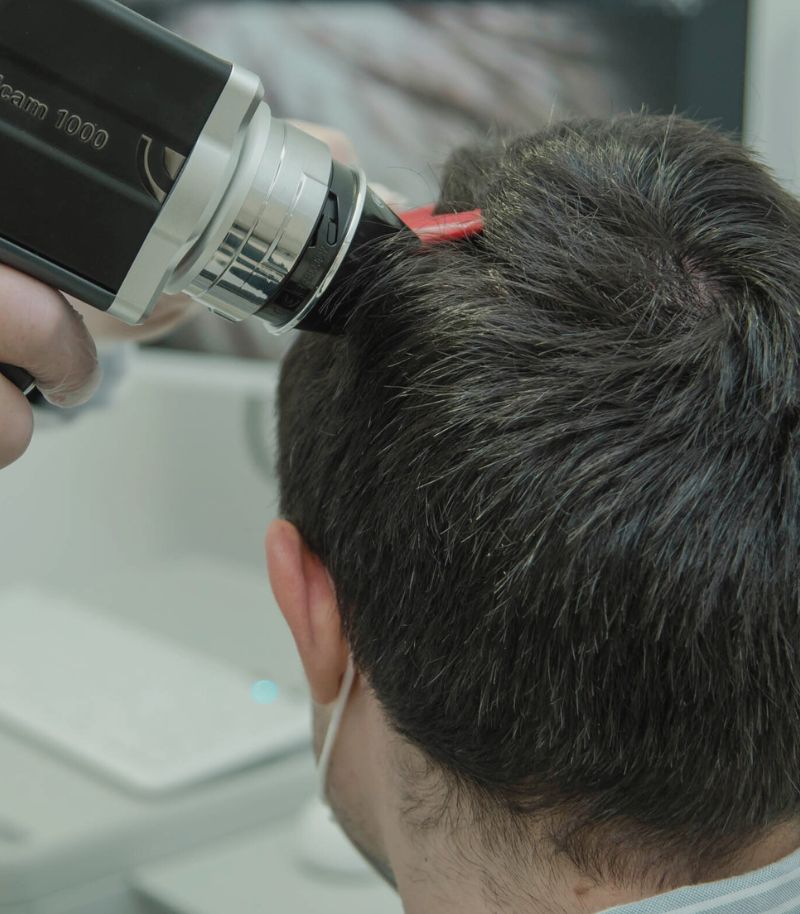
Differential diagnosis
Our dermatologists specialised in androgenetic alopecia perform all necessary diagnostic studies to determine the most appropriate treatment strategy for each patient.
Advanced diagnostic techniques
We use advanced diagnostic tools such as digital trichoscopy, scalp ultrasound, histological analysis and targeted blood tests to assess hormonal, metabolic or inflammatory factors that may influence hair loss. This comprehensive evaluation ensures an accurate diagnosis and an evidence-based therapeutic decision.
Detailed assessment for personalised treatment planning
The combination of advanced diagnostics and specialist clinical expertise allows us to design an effective, individualised treatment plan from the outset, maximising the likelihood of hair recovery and long-term disease control.
More information
A leading medical team
We have a team of dermatologists specialised in androgenetic alopecia with extensive hospital-based training and recognised clinical expertise.
Extensive research experience
With more than 200 scientific publications and numerous international distinctions, our specialists actively contribute to the advancement of knowledge in hair disorders. They participate in research projects and supervise doctoral theses, ensuring that our clinical practice is always aligned with the latest scientific evidence.
Access to the most advanced treatments
This strong research background allows us to offer our patients the most innovative and effective therapies available, ensuring high-quality care from diagnosis through long-term follow-up.
More information
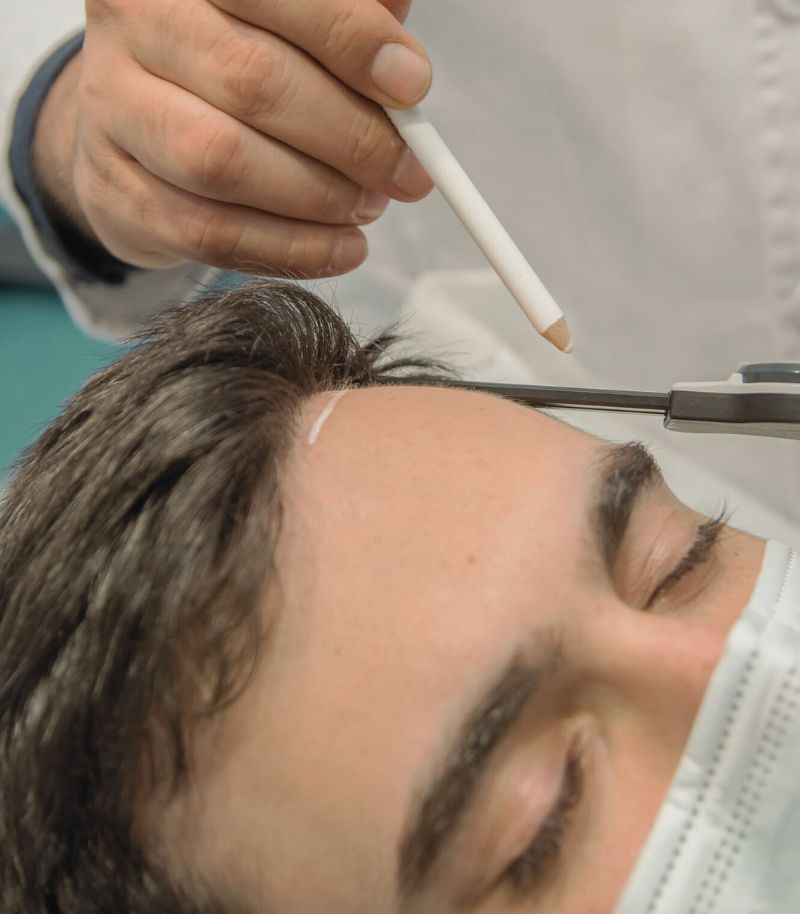
Advanced hair surgery
Our surgical team is highly experienced in hair transplantation using follicular micrografting techniques. Hair transplantation may be indicated as a complementary treatment when medical therapy alone is insufficient to restore hair density.
Natural and precise results with the FUE technique
We perform hair transplantation using the FUE technique, including non-shaven approaches when appropriate. This method allows individual follicular units to be harvested and implanted with precision, achieving natural-looking results. Procedures are performed under local anaesthesia with sedation to maximise patient comfort, followed by structured medical follow-up to optimise outcomes.
Mega sessions for extensive alopecia
Our unit is among the few in Madrid capable of performing mega sessions of up to 6,000 follicular units in a single procedure, allowing extensive areas of alopecia to be treated effectively.
More information
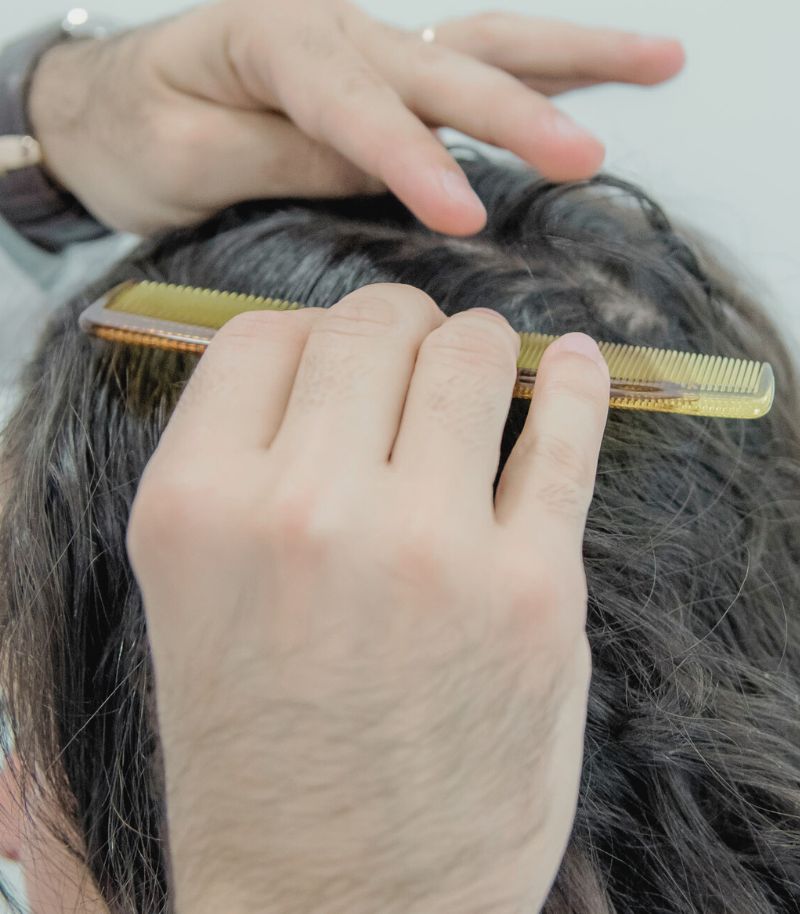
Complementary treatments
Los especialistas en tricología y trasplante capilar del Grupo Pedro Jaén pueden valorar la prescripción de un tratamiento médico complementario en función de posibles alteraciones detectadas en analíticas y pruebas diagnósticas realizadas, así como ante la existencia de patologías concretas que puedan coexistir junto a la alopecia androgénica, tales como anemia ferropénica, dermatitis seborreica…
Multidisciplinary collaboration
When indicated, patients may be referred to other specialised units within Grupo Pedro Jaén, such as Urology, Emotional Support or Clinical Dermatology, to address comorbidities that may influence hair loss.
Synergistic treatment strategies
By combining medical, surgical and supportive therapies, we are able to address different stages of androgenetic alopecia more effectively, achieving denser and more natural results.
Ongoing monitoring
Long-term follow-up allows us to assess treatment response and adjust therapy as needed, ensuring sustained results and a high standard of care throughout the patient’s clinical journey.
What it is, types, causes and treatment
A guide to understanding androgenetic alopecia
Androgenetic alopecia, also known as androgenetic hair loss, is the most common form of alopecia among the more than 100 types currently described. It is estimated to affect approximately 40% of men between the ages of 18 and 39, and up to 95% of men over the age of 70. In fact, androgenetic alopecia is so frequent in men that it is often considered a near-physiological process.
Although androgenetic alopecia is primarily associated with men due to the role of androgens (male hormones) in its development, it can also affect women throughout their lives, albeit to a lesser extent. It is estimated that female androgenetic alopecia affects around 35% of women of reproductive age and up to 50% of women after menopause.
Hair loss of this type can be particularly distressing for female patients, often leading to a significant impact on emotional wellbeing and self-esteem.

Male androgenetic alopecia
The characteristic clinical feature of male androgenetic alopecia is a progressive reduction in hair density, resulting in visible thinning of the scalp. The areas most commonly affected are the frontal region (receding hairline) and the vertex (crown). However, some patients present with diffuse thinning across the entire upper scalp.
In the early stages, many patients only notice reduced density when the hair is wet or under strong lighting. Male androgenetic alopecia is classified into seven stages according to the Norwood scale, with grade I being the mildest and grade VII the most advanced. Not all patients progress to advanced stages, although without treatment, hair loss typically follows a slow but progressive course, particularly during younger adulthood.
Female androgenetic alopecia
The main clinical difference between male and female androgenetic alopecia is the absence, in most women, of the classic receding hairline or vertex balding pattern. Instead, female androgenetic alopecia usually presents as diffuse thinning, with increased scalp visibility, particularly under bright light.
The most commonly affected areas are the central frontal and parietal regions, with progressive widening of the central parting while preserving the frontal hairline. Over time, diffuse thinning may extend across the entire upper scalp.
Female androgenetic alopecia is classified into three stages according to the Ludwig or Olsen scales, from grade I (mild) to grade III (advanced). Using the Ebling scale, five stages are described. As in men, not all women progress to advanced stages, but without medical treatment, hair loss generally follows a slow and sustained course.
In most cases, not all patients with androgenetic alopecia will progress to the most advanced stages of hair loss. However, if medical treatment is not prescribed, the course of female androgenetic alopecia—similar to that observed in male androgenetic alopecia—is typically slow but progressive.
Causes and diagnosis of androgenetic alopecia
The causes of both male and female androgenetic alopecia are primarily genetic and hormonal. Early diagnosis is possible, even before hair loss becomes clinically evident.
Causes of male and female androgenetic alopecia
Male androgenetic alopecia is mainly driven by genetic predisposition and hormonal factors. Although many affected men have a family history of the condition, the absence of such a history does not exclude the possibility of developing androgenetic alopecia.
Hair loss occurs because follicles in the frontal, vertex and upper scalp regions are more sensitive to androgens.
These hormones trigger a process known as follicular miniaturisation, in which hair follicles progressively decrease in diameter until they eventually stop producing visible hair if no treatment is initiated.. Male androgenetic alopecia usually begins between the ages of 20 and 25, although earlier onset is possible. It is generally not associated with underlying systemic disease.
In female androgenetic alopecia, although genetic and hormonal factors also play a central role, additional mechanisms may be involved that are not exclusively related to androgens.
This condition may begin as early as childhood, coinciding with adrenarche (the onset of adrenal hormone production), may develop before menopause, or may become more pronounced after menopause due to the physiological decline in oestrogen levels. When hair loss appears before menopause, it is referred to as early-onset female androgenetic alopecia; when it develops after menopause, it is classified as late-onset.
Family history is common but not universal. Unlike male androgenetic alopecia, the female form is frequently associated with concomitant conditions such as iron or vitamin deficiencies, eating disorders, restrictive diets, and hormonal disorders including polycystic ovary syndrome, HAIR-AN syndrome, congenital adrenal hyperplasia, or adrenal or ovarian tumours. For this reason, a thorough diagnostic evaluation is essential before initiating treatment.
Diagnosis of androgenetic alopecia
The diagnosis of androgenetic alopecia is primarily clinical and is performed by dermatologists specialised in hair disorders during consultation. Thanks to the advanced technology available in the Hair Disorders and Hair Transplant Unit of Grupo Pedro Jaén, diagnosis can be made at early stages, even when hair loss is not yet clearly visible.
Digital trichoscopy and video trichoscopy systems are used to obtain magnified images of the scalp, hair shafts and follicles. These tools allow accurate diagnosis, assessment of disease severity, treatment planning and medium- to long-term monitoring of disease progression.
In men, routine laboratory testing is not usually required, as male androgenetic alopecia is rarely associated with systemic disease. In women, however, comprehensive blood tests are often necessary to assess for hormonal or metabolic abnormalities that may contribute to hair loss.
“Although androgenetic alopecia is primarily associated with men, it can also affect women, albeit to a lesser extent”
Treatment of male and female androgenetic alopecia
The treatment of androgenetic alopecia may be medical (topical, oral or injected medication) or surgical (hair transplantation). In both cases, therapies for androgenetic alopecia have undergone a true revolution over the past decade, a process in which the specialists of the Hair Disorders and Hair Transplant Unit of Grupo Pedro Jaén have played an active role, leading several of the most relevant scientific studies in this field.
At present, there is no curative treatment for androgenetic alopecia. Available therapies must therefore be maintained over time in order to achieve sustained results. Although lifelong treatment is not usually necessary, it is well established that longer treatment duration is associated with better overall outcomes.
The main objectives of treatment are, first, to slow the progression of hair loss, and second, to increase hair density by thickening existing hair fibres that have undergone follicular miniaturisation.
The most common strategy adopted by the specialists at Grupo Pedro Jaén consists of implementing a more intensive treatment during the first two years following diagnosis, followed by a maintenance protocol thereafter, always adapted to the individual course of the condition.
This approach is based on the fact that the effects of treatment generally become noticeable after approximately six months, reaching their maximum efficacy between one and one and a half years. From that point onwards, a maintenance regimen can be considered, making long-term treatment more manageable for the patient.
The accumulated experience of the dermatologists specialised in hair disorders and hair transplantation at Grupo Pedro Jaén shows that the most effective approach is to combine different therapeutic strategies and adjust them over time according to the patient’s response and the evolution of their alopecia.
By doing so, we achieve a significant reduction in hair loss and a clear improvement in hair density, with effectiveness rates approaching 90% in a large proportion of treated cases. In fact, many patients who initially attend consultation seeking hair transplantation ultimately do not require surgery due to the favourable response obtained with medical treatment alone.
Currently, our Hair Disorders and Hair Transplant Unit, recognised as one of the most relevant at an international scientific level, offers all available therapeutic options for the treatment of androgenetic alopecia, including oral, topical and injected medications with proven efficacy and safety supported by robust scientific evidence.
Complementary medical therapies
Additional treatments may be useful in selected cases of androgenetic alopecia, including microneedling, mesotherapy combining different active compounds, low-level laser therapy, or prostaglandin analogues. Although regenerative therapies based on stem cells are under investigation, further research is still required before their routine clinical application.
In addition, the specialists at Grupo Pedro Jaén may consider prescribing complementary medical treatments based on abnormalities detected in laboratory tests or diagnostic studies, or in the presence of associated conditions that may coexist with androgenetic alopecia, such as iron deficiency anaemia or seborrhoeic dermatitis.
Hair transplantation for androgenetic alopecia
Hair transplantation is one of the therapeutic options for androgenetic alopecia. The Hair Disorders and Hair Transplant Unit of Grupo Pedro Jaén specialises in performing this procedure using follicular micrografting techniques, a minimally invasive surgical approach that can be used as a complement to medical treatment to significantly improve hair density in areas of established hair loss.
This procedure provides completely natural-looking results. Hair transplantation is mainly performed using the FUE technique (which can be done with or without shaving, depending on the case) or the FUSS technique. In all cases, the procedure is carried out in an operating theatre, does not require hospital admission, and recovery is usually complete within 7 to 8 days. New hair growth typically becomes visible after approximately six months, with the final result achieved between 12 and 15 months after surgery.

More information
Below you will find the authorship and references for the information provided on this page:
Authorship and references
The content of this page has been prepared by the Communication Department and the Medical Team of Grupo Pedro Jaén, in line with our editorial commitment to ensuring the accuracy and up-to-date nature of the information provided.
References on androgenetic alopecia:
1. New Treatments for Hair Loss. Vañó-Galván S, Camacho F. Actas Dermosifiliogr. 2017 Apr;108(3):221-228. doi: 10.1016/j.ad.2016.11.010.
2. Superiority of dutasteride over finasteride in hair regrowth and reversal of miniaturization in men with androgenetic alopecia: A randomized controlled open-label, evaluator-blinded study. Shanshanwal SJ, Dhurat RS. Indian J Dermatol Venereol Leprol. 2017 Jan-Feb;83(1):47-54.
3. Effectiveness and safety of oral dutasteride for male androgenetic alopecia in real clinical practice: A descriptive monocentric study. Vañó-Galván S, Saceda-Corralo D, Moreno-Arrones OM, Rodrigues-Barata R, Morales C, Gil-Redondo R, Bernárdez-Guerra C, Hermosa-Gelbard Á, Jaén-Olasolo P. Dermatol Ther. 2020 Jan;33(1):e13182. doi: 10.1111/dth.13182.
4. Long-term safety and efficacy of dutasteride in the treatment of male patients with androgenetic alopecia. Tsunemi Y, Irisawa R, Yoshiie H, Brotherton B, Ito H, Tsuboi R, Kawashima M, Manyak M; ARI114264 Study Group. J Dermatol. 2016 Sep;43(9):1051-8.
5. A randomized, active- and placebo-controlled study of the efficacy and safety of different doses of dutasteride versus placebo and finasteride in the treatment of male subjects with androgenetic alopecia. Gubelin Harcha W, Barboza Martínez J, Tsai TF, Katsuoka K, Kawashima M, Tsuboi R, Barnes A, Ferron-Brady G, Chetty D. J Am Acad Dermatol. 2014 Mar;70(3):489-498.e3.
6. Mesotherapy with dutasteride in the treatment of androgenetic alopecia. Saceda-Corralo D, Rodrigues-Barata AR, Vano-Galvan S, Jaen-Olasolo P. Int J Trichol 2017;9:143-5.
7. Effectiveness and safety of low-dose oral minoxidil in male androgenetic alopecia. Jimenez- Cauhe J, Saceda-Corralo D, Rodrigues-Barata R, Hermosa-Gelbard A, Moreno-Arrones OM Fernandez-Nieto D, Vaño-Galvan S. J Am Acad Dermatol. 2019 Aug;81(2):648-649.
8. Safety of low-dose oral minoxidil treatment for hair loss. A systematic review and pooled-analysis of individual patient data. Jimenez-Cauhe J, Saceda-Corralo D, Rodrigues-Barata R, Moreno-Arrones OM, Ortega-Quijano D, Fernandez-Nieto D, Jaen-Olasolo P, Vaño-Galvan S. Dermatol Ther. 2020 Aug 5. doi: 10.1111/dth.14106.
9. Safety and Tolerability of the Dual 5-Alpha Reductase Inhibitor Dutasteride in the Treatment of Androgenetic Alopecia. Choi GS, Kim JH, Oh SY, Park JM, Hong JS, Lee YS, Lee WS. Ann Dermatol. 2016 Aug;28(4):444-50.
10. The effectiveness of finasteride and dutasteride used for 3 years in women with androgenetic alopecia. Boersma IH, Oranje AP, Grimalt R, Iorizzo M, Piraccini BM, Verdonschot EH. Indian J Dermatol Venereol Leprol. 2014 Nov-Dec;80(6):521-5.
11. Mesotherapy using dutasteride-containing preparation in treatment of female pattern hair loss: photographic, morphometric and ultrustructural evaluation. Moftah N, Moftah N, Abd-Elaziz G, Ahmed N, Hamed Y, Ghannam B, Ibrahim M. J Eur Acad Dermatol Venereol. 2013 Jun;27(6):686-93.
12. Oral bicalutamide for female pattern hair loss: A pilot study. Fernandez-Nieto D, Saceda-Corralo D, Rodrigues-Barata R, Hermosa-Gelbard A, Moreno-Arrones O, Jimenez-Cauhe J, Ortega-Quijano D, Vano-Galvan S. Dermatol Ther. 2019 Nov;32(6):e13096.
13. Safety of oral bicalutamide in female pattern hair loss: a retrospective review of 316 patients. Ferial Ismail F, Meah N, de Carvalho LT, Bhoyrul B, Wall D, Sinclair R. J Am Acad Dermatol. 2020 Mar 22:S0190-9622(20)30452-7.8.
14. Sinclair, Rodney D. “Female pattern hair loss: a pilot study investigating combination therapy with low-dose oral minoxidil and spironolactone.” International journal of dermatology 57.1 (2018): 104-109.
15. Low-Dose Oral Minoxidil for Female Pattern Hair Loss: A Unicenter Descriptive Study of 148 Women. Rodrigues-Barata R, Moreno-Arrones OM, Saceda-Corralo D, Jiménez-Cauhé J, Ortega- Quijano D, Fernández-Nieto D, Jaén-Olasolo P, Vaño-Galvan S. Skin Appendage Disord. 2020 Jun;6(3):175-176
Where we see patients?
Clinics in Madrid
Grupo Pedro Jaén is a medical group with more than thirty years of experience, specialising in medical, surgical and aesthetic solutions related to skin health and care. Under the leadership of Dr Pedro Jaén, the group has a multidisciplinary team of highly qualified specialists, ensuring expert care across all areas of treatment. In addition, Grupo Pedro Jaén is recognised for its strong commitment to medical education, its leadership in clinical research and its network of clinics in Madrid, from which it provides healthcare of the highest quality and excellence to its patients.


Calle Cinca 30
Located in the El Viso district, this centre houses the consultations of the Hair Disorders and Hair Transplant Unit of Grupo Pedro Jaén in central Madrid.
Mon - Fri: 09:00 - 20:30
Calle Cinca 30, El Viso neighbourhood, Chamartín District, 28002 Madrid

La Moraleja
Located in Plaza de La Moraleja, this exclusive centre allows Grupo Pedro Jaén to bring its medical and aesthetic services closer to patients across the entire northern area of Madrid.
Mon - Thu: 09:30 - 20:00 / Fri: 10:00 - 18:00
Calle de la Estafeta 8, ground floor, La Moraleja, 28109 Alcobendas, Madrid, Spain
Related units and pages
Hair Disorders Unit
A specialised medical team and the most effective treatments for all types of hair disorders.
Topical and oral medication
Evidence-based prescription of the most advanced medications for male and female alopecia.
Hair mesotherapy
Microinjection of medications and substances derived from regenerative medicine techniques.
Hair transplant
En varones y mujeres, cuando se ha perdido densidad capilar y se busca recuperarla de forma notoria
Hair loss diagnosis
Diagnosis of alopecia using advanced technology and an expert medical team to determine the most appropriate therapeutic approach.
Female alopecia
Individualised diagnosis and specific treatments for the different types of alopecia in women.
Information and news
Press room
In the Grupo Pedro Jaén Press Room you can find information, advice and news related to dermatology, aesthetic medicine, trichology and general health. The group’s journals are also shared through an online platform, along with updates on the activity and media appearances of our clinics and healthcare professionals.
How to shower properly: tips for looking after your skin
Cold or hot water? Is it better to use a sponge? Find out how to shower properly and what dermatologists recommend to protect your skin.
Retinol in summer: should you stop using it?
We debunk this and other myths about using retinol during the warmer months.

Blog
News about Grupo Pedro Jaén. Information and advice on dermatology, aesthetic medicine, trichology, and general health

Media
Information about media appearances by our clinics and medical specialists.

Journal
Archive of all Grupo Pedro Jaén journals, available through an external online platform.