
Contact Dermatitis
Treatment available at our Madrid clinics at Calle Serrano 143 and La Moraleja
Dermatologists specialising in
Treatment of contact dermatitis
Contact dermatitis is caused by exposure to an external agent that inflames the skin. It is usually characterised by the appearance of itching, redness, and eczema or scaling on the affected area when skin comes into contact with an irritant. Allergic contact dermatitis is caused by contact between a particular substance and skin previously sensitised to an allergen. These cases are referred to the Grupo Pedro Jaén Allergy Unit.
Recognised reference clinics in Spain
Home > Clinical Dermatology > Contact Dermatitis
What sets us apart
Comprehensive and specialised approach
We combine precision diagnostics, advanced technology and a multidisciplinary approach to treat this condition in a holistic manner. We apply patch tests to identify specific allergens and differentiate between irritant and allergic dermatitis. We offer innovative treatments such as phototherapy and energy-based devices, as well as personalised therapies, including magistral formulas prepared by pharmacists in accordance with the needs of each individual patient. Our team also provides cosmetic advice to support disease control and prevent new flare-ups.
Accurate diagnosis with skin tests
Identifying the exact cause of contact dermatitis is essential to design effective treatment and prevent further flare-ups. Our unit has advanced tools to obtain an accurate diagnosis from the first consultation.
Starting point, a detailed medical history
Diagnosis of contact dermatitis begins with a detailed medical history to identify possible causative substances depending on the location of the irritated skin. If the area affected is the face, cosmetic ingredients are analysed; the ears, nickel from costume jewellery; the eyelids, preservatives from make-up or contact lens solutions. If the hands are affected, the cause may be cleaning products, cosmetics, dyes, plants or foods.
Skin tests (patch tests)
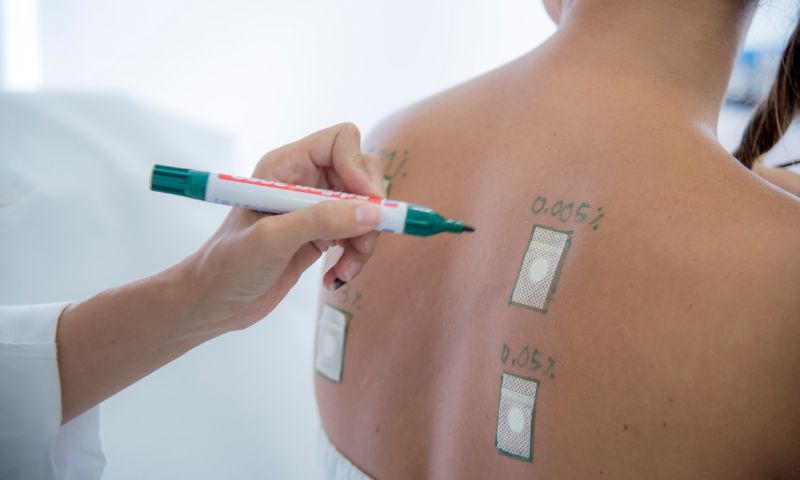
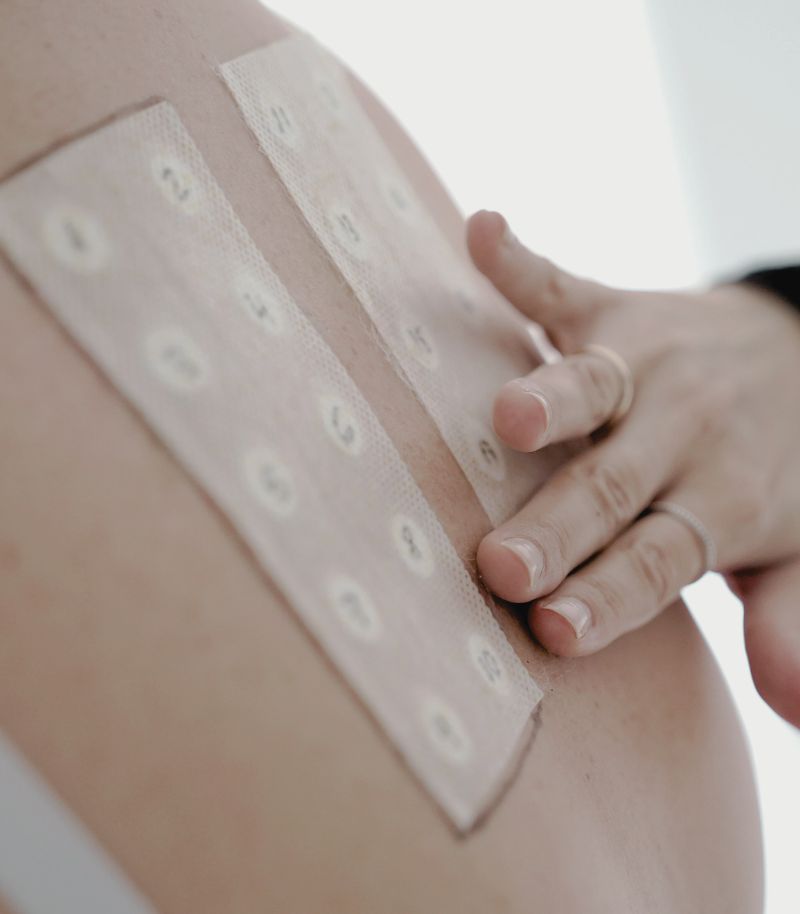
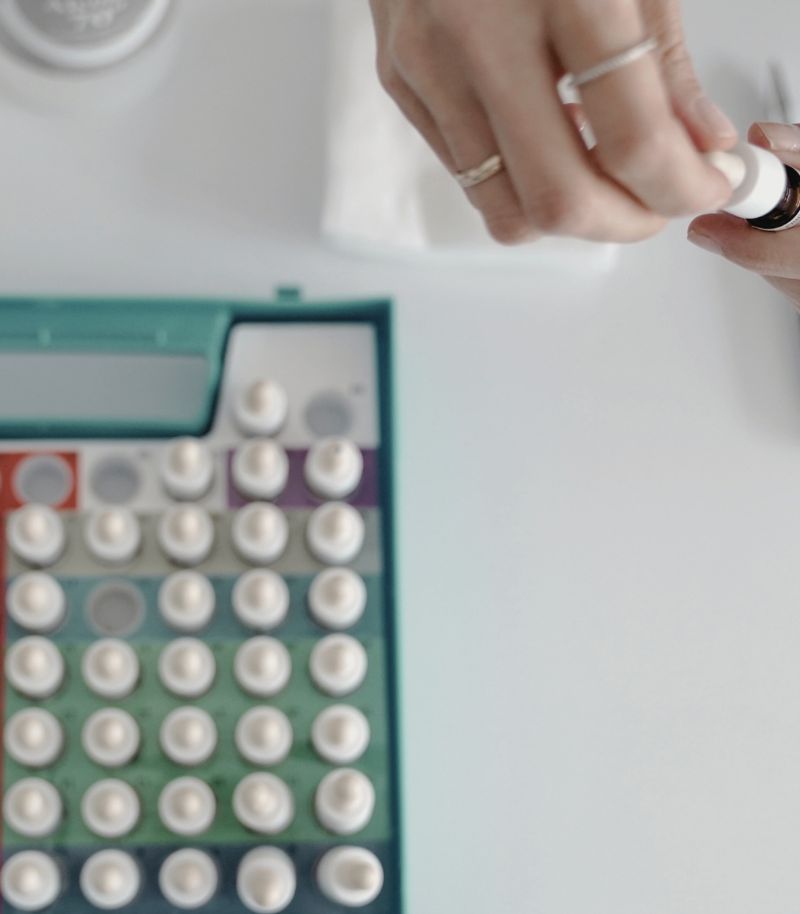
To confirm the diagnosis, skin tests or patch tests are performed, as there are no blood tests for this condition. These tests consist of applying patches carrying small doses of suspected substances to the patient’s back. After 48-72 hours, the specialist evaluates the skin reaction and determines the allergen responsible.
The results are used to produce a diagnostic report to guide the patient on how to avoid the triggering substance and manage the contact dermatitis effectively.
Collaboration with the Allergy Unit
More complex cases can be referred to our Allergy Unit. This multidisciplinary approach enables a holistic treatment of the condition, identifying possible environmental, occupational or cosmetic triggers for the reaction. Through this collaboration, we can offer control strategies that minimise exposure and reduce the occurrence of long-term symptoms.
Personalised treatment
To reduce the risk of new flare-ups, we prepare personalised reports for each patient, identifying specific allergens to be avoided. In addition, we recommend safe alternative products, including cosmetics, detergents and personal hygiene items appropriate to each case.
Topical and systemic active ingredients, phototherapy and laser therapy
We offer topical treatments specifically formulated for each patient, combined with dermocosmetic products suitable for sensitive skin. In addition, we offer advice on skincare routines that help strengthen the skin barrier and reduce inflammation.
In moderate and severe cases, we use phototherapy with ultraviolet light or laser therapy to reduce inflammation and alleviate the symptoms of contact dermatitis. These options are particularly suitable for patients with chronic dermatitis which is resistant to conventional treatments.
Integration with the Sensitive Skin Unit
Contact dermatitis can be confused with other conditions, which is why our unit works closely with the Sensitive Skin Unit to establish differential diagnoses and specific treatments.
Differential diagnosis in reactive skins
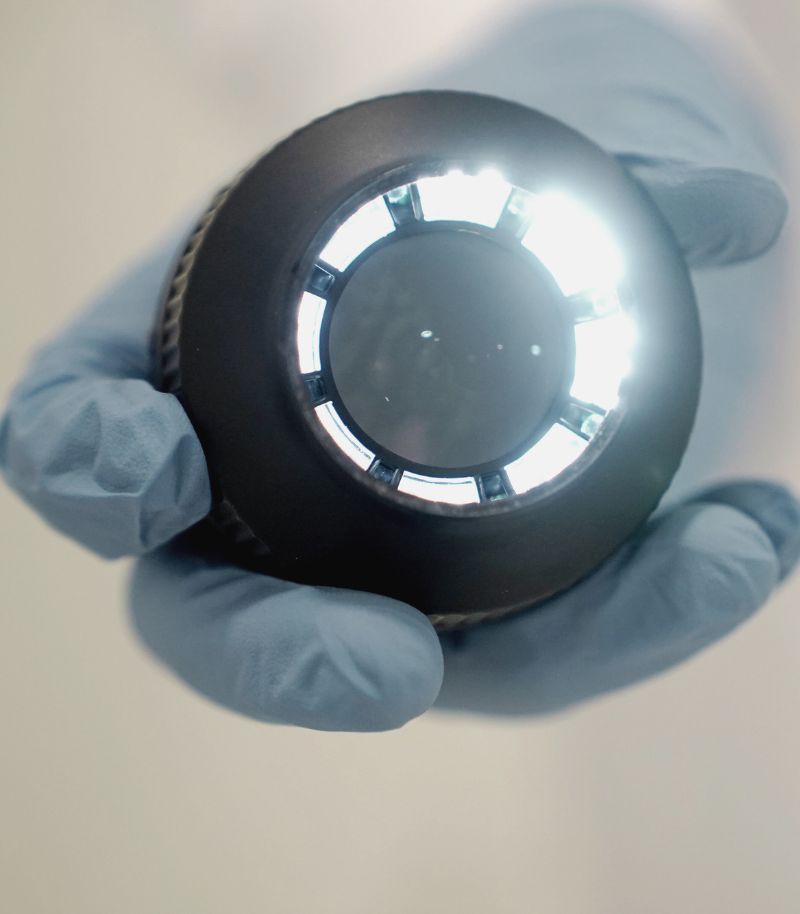
We distinguish contact dermatitis from other conditions such as rosacea or atopic dermatitis, using advanced tools to assess skin sensitivity and establish the best treatment strategy.
Combination of treatments to improve skin quality
In patients with particularly reactive skin, we combine techniques such as vascular laser and intense pulsed light to reduce redness and improve skin texture. These complementary treatments help minimise inflammation and strengthen the skin barrier, reducing susceptibility to future flare-ups.
What it is, types, causes and treatment
A guide to understanding contact dermatitis
In dermatology, the term dermatitis—considered synonymous with eczema—refers to inflammation of the most superficial layers of the skin, resulting in visible skin changes
The most common clinical signs of dermatitis are erythema (redness) and scaling. In some cases, vesicles, blisters, exudation and crusting may also be observed. The most frequent symptoms include itching (pruritus), burning or stinging sensations. Once inflammation resolves, the affected skin may appear lighter or darker than before the inflammatory episode.
Several dermatological conditions present with similar symptoms, such as atopic dermatitis or seborrhoeic dermatitis, but they are not contact dermatitis. Contact dermatitis specifically arises from an excessive skin reaction to certain substances that are applied to or come into contact with the skin.

Types of contact dermatitis
The abnormal skin reaction may be caused by the action of an irritating agent—known as irritant contact dermatitis—or by skin sensitisation after repeated exposure to a specific substance, leading to allergy. In this case, it is referred to as allergic contact dermatitis.
Irritant contact dermatitis
Irritant contact dermatitis is the most common form and is characterised by skin damage resulting from a non-allergic reaction. It may occur after intense exposure or after repeated mild contact. In some cases, following repeated exposure, the patient may develop tolerance to the irritant and no longer experience symptoms.
The substances most frequently responsible for irritant contact dermatitis include solvents, alcohol, detergents, bleach, dyes and hairdressing products, industrial dust, plants, fertilisers and pesticides.
Allergic contact dermatitis
Allergic contact dermatitis, on the other hand, triggers an immune response when the patient is exposed to an allergen to which they have already been sensitised. Sensitisation usually occurs after repeated exposure, and symptoms tend not only to persist but to become more intense and severe.
Symptoms typically affect the area of skin that has been in contact with the allergen, but systemic reactions of varying severity may also occur if the allergen enters the body through mucous membranes or via drinks, food, medication or medical procedures.
More than 200 substances have been identified as allergens responsible for allergic contact dermatitis. These allergens are widespread in both everyday life and occupational settings. Manual workers and professionals such as carpenters, hairdressers, construction workers and painters have a significantly higher incidence of this condition due to greater exposure.
Symptoms and causes of contact dermatitis
Contact dermatitis is clinically characterised by the development of eczema in the area directly exposed to the irritant or sensitising agent. Eczema is a red, inflamed skin eruption that causes intense itching, which can be difficult to control and often worsens with scratching.
Swelling and redness lead to scaling, which may result in skin cracks due to dryness and scratching, as well as vesicles and small blisters that may form crusts if they rupture—either spontaneously or as a result of scratching.
“Contact dermatitis is clinically characterised by the appearance of eczema in the area directly exposed to the irritant or sensitising agent”
Diagnosis and treatment of contact dermatitis
Contact dermatitis may coexist with other forms of dermatitis, worsening their course and sometimes being confused with them. Furthermore, as previously described, it may be caused by an allergic reaction or occur without any underlying immunological involvement in the development of symptoms. For this reason, it is important to establish a differential diagnosis in order to prescribe the most appropriate treatment for each patient.
Diagnosis of contact dermatitis
Para ello, en primer lugar, se realiza una historia clínica completa que ayude a identificar la exposición o contacto a determinadas sustancias sospechosas. En esta primera aproximación, el dermatólogo especialista en dermatitis de contacto puede empezar a hacerse una idea de cuáles son las sustancias más susceptibles de estar provocando los síntomas del paciente según la localización de los eccemas en su piel.
Diagnosis begins with a detailed medical history aimed at identifying exposure to potentially responsible substances. At this stage, the dermatologist specialising in contact dermatitis can often infer the most likely causative agents based on the location of eczema.
In the case of the hands, diagnosis is more complex, as the range of potential triggers is much broader, including cleaning products, cosmetics, dyes, industrial substances, plants and foods.
Patch testing—also known as epicutaneous testing or patch tests—is then required, as there are no blood tests that diagnose contact dermatitis.
Patch tests involve applying patches to the patient’s back containing low concentrations of suspected allergens. The patches remain in place for approximately 48 hours, after which they are removed and the skin reaction is assessed at 48 and 72 hours.
The appearance of small eczema reactions on the back allows the specialist to identify the substance responsible for contact dermatitis.
Once the study is complete, a diagnostic report is prepared including the diagnosis and interpretation of all test results.
Treatment of contact dermatitis
As with patients with sensitive skin or rosacea, treatment includes personalised topical formulations to control dermatological symptoms, together with specific recommendations for skin care.
A detailed list of allergenic substances and the products that contain them is also provided, along with information on the most common cross-reactions associated with exposure to these substances. This enables patients to identify and avoid triggers in their daily lives. In parallel, they receive individualised advice on the most appropriate and safe cosmetic products for everyday use.

More information
Below you will find the authorship and references for the information provided on this page:
Authorship and references
The content of this page has been prepared by the Communication Department and the Medical Team of Grupo Pedro Jaén, in line with our editorial commitment to ensuring the accuracy and up-to-date nature of the information provided.
Contact dermatitis references:
1. Li Y, Li L. Contact Dermatitis: Classifications and Management. Clin Rev Allergy Immunol. 2021 Dec;61(3):245-281. doi: 10.1007/s12016-021-08875-0. Epub 2021 Jul 15. PMID: 34264448.
2. Bains SN, Nash P, Fonacier L. Irritant Contact Dermatitis. Clin Rev Allergy Immunol. 2019 Feb;56(1):99-109. doi: 10.1007/s12016-018-8713-0. PMID: 30293200.
3. Scheinman PL, Vocanson M, Thyssen JP, Johansen JD, Nixon RL, Dear K, Botto NC, Morot J, Goldminz AM. Contact dermatitis. Nat Rev Dis Primers. 2021 May 27;7(1):38. doi: 10.1038/s41572-021-00271-4. PMID: 34045488.
4. Brar KK. A review of contact dermatitis. Ann Allergy Asthma Immunol. 2021 Jan;126(1):32-39. doi: 10.1016/j.anai.2020.10.003. Epub 2020 Oct 20. PMID: 33091591.
5. Aquino M, Rosner G. Systemic Contact Dermatitis. Clin Rev Allergy Immunol. 2019 Feb;56(1):9-18. doi: 10.1007/s12016-018-8686-z. PMID: 29766368.
6. Nassau S, Fonacier L. Allergic Contact Dermatitis. Med Clin North Am. 2020 Jan;104(1):61-76. doi: 10.1016/j.mcna.2019.08.012. Epub 2019 Oct 28. PMID: 31757238.
7. Belloni Fortina A, Caroppo F, Tadiotto Cicogna G. Allergic contact dermatitis in children. Expert Rev Clin Immunol. 2020 Jun;16(6):579-589. doi: 10.1080/1744666X.2020.1777858. Epub 2020 Jun 15. PMID: 32490693.
8. Brown C, Yu J. Pediatric Allergic Contact Dermatitis. Immunol Allergy Clin North Am. 2021 Aug;41(3):393-408. doi: 10.1016/j.iac.2021.04.004. Epub 2021 Jun 5. PMID: 34225896.
9. Kodumudi V, Feng H. Contact dermatitis and nutrition. Clin Dermatol. 2022 Mar-Apr;40(2):145-149. doi: 10.1016/j.clindermatol.2021.10.007. Epub 2021 Oct 27. PMID: 35183401.
Where we see patients?
Clinics in Madrid
Grupo Pedro Jaén is a medical group founded more than three decades ago with the aim of providing medical, surgical and aesthetic solutions related to skin health and appearance. Led by Dr Pedro Jaén, the group has a highly specialised medical team that covers every area of care with top-level specialists, carries out extensive training activities, is a leader in medical research, and operates several clinics in Madrid, from which it offers the highest standards of care and clinical excellence to all patients.


Calle Serrano 143
This centre is the main headquarters of Grupo Pedro Jaén. It provides diagnostic and treatment services in skin cancer, clinical and aesthetic dermatology, laser treatments and other related specialties.
Mon - Fri 09:00 - 21:00 / Sat: 09:00 - 14:00
Calle Serrano 143, El Viso neighbourhood, Chamartín district, 28006 Madrid, Spain

La Moraleja
Located in Plaza de La Moraleja, this exclusive centre allows Grupo Pedro Jaén to bring its medical and aesthetic services closer to patients across the entire northern area of Madrid.
Mon - Thu: 09:30 - 20:00 / Fri: 09:30 - 18:00
Calle de la Estafeta 8, ground floor, La Moraleja, 28109 Alcobendas, Madrid
Related units and pages
Sensitive Skin Unit
Integrated management of reactive and inflammatory skin conditions closely associated with rosacea.
Clinical dermatology
Highly specialised dermatologists for each skin condition, offering the most advanced treatments available.
Paediatric dermatology
Specialised care for the full range of dermatological conditions that may affect children.
Allergy Unit
Diagnosis of the different types of allergy and personalised treatment plans designed by a specialist allergist
Rosacea Unit
Experts in treatments that enable long-term control of this condition.
Acne Unit
Experts in treatments that enable long-term control of this condition.
Information and news
Press room
In the Grupo Pedro Jaén Press Room you can find information, advice and news related to dermatology, aesthetic medicine, trichology and general health. The group’s journals are also shared through an online platform, along with updates on the activity and media appearances of our clinics and healthcare professionals.

How to shower properly: tips for looking after your skin
Cold or hot water? Is it better to use a sponge? Find out how to shower properly and what dermatologists recommend to protect your skin.

Retinol in summer: should you stop using it?
We debunk this and other myths about using retinol during the warmer months.

Blog
News about Grupo Pedro Jaén. Information and advice on dermatology, aesthetic medicine, trichology, and general health

Media
Information about media appearances by our clinics and medical specialists.

Journal
Archive of all Grupo Pedro Jaén journals, available through an external online platform.