
Mohs surgery
At our clinics in Madrid: Calle Serrano 143 and La Moraleja
Dermatologists specialising in
Mohs surgery
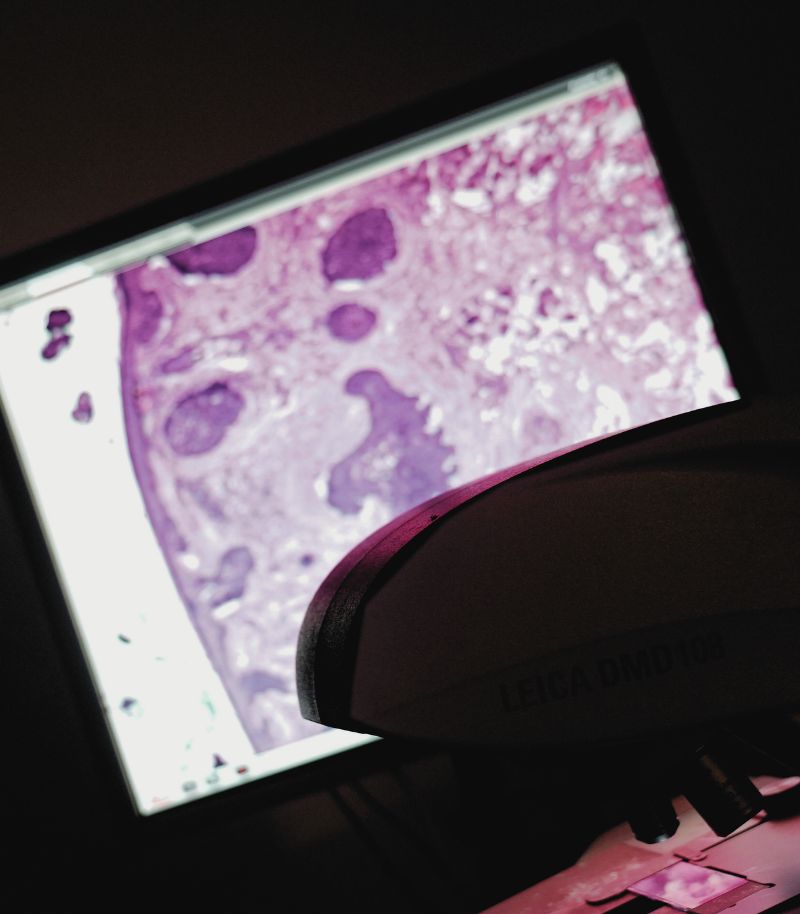
Mohs surgery is a highly effective surgical technique that fulfils three key objectives: complete tumour removal, preservation of function, and maximal conservation of healthy tissue. This is particularly important when subsequent tissue reconstruction is required and is especially relevant given that most skin cancers develop on the face. The procedure consists of removing the tumour in successive layers, each of which is examined immediately under the microscope. If tumour cells are identified, an additional layer is removed and analysed. This process is repeated until a layer free of cancer cells is confirmed.

Recognised reference clinics in Spain
Home > Skin cancer > Mohs Surgery
What sets us apart
Effective removal of skin tumours while minimising aesthetic impact
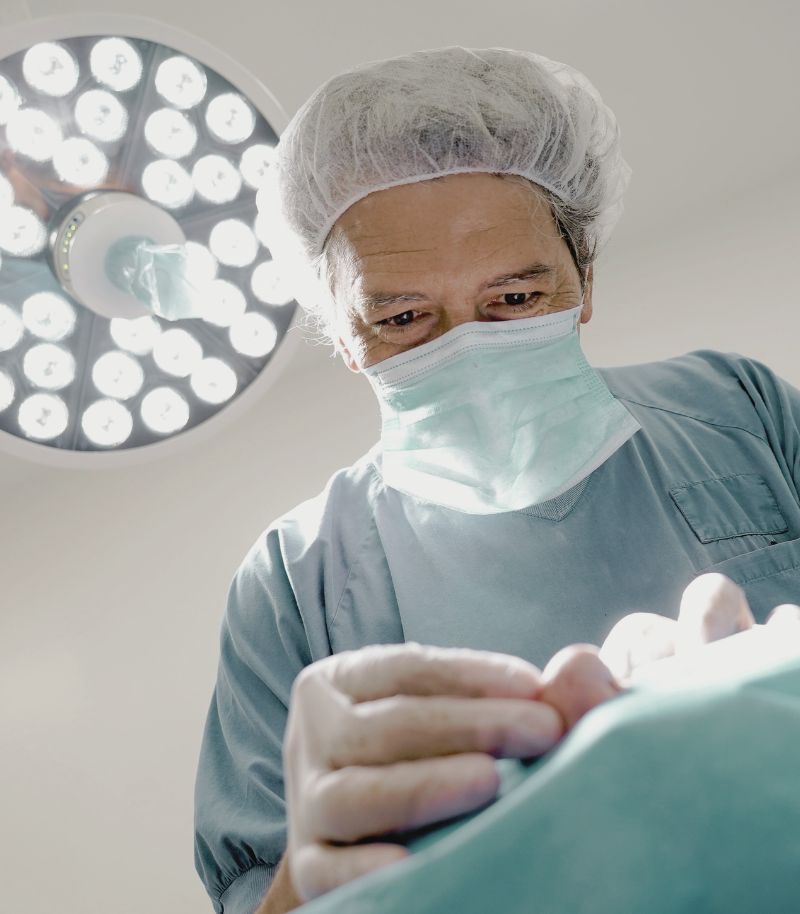
The Grupo Pedro Jaén Skin Cancer Unit has extensive experience in Mohs surgery, supported by a team of highly specialised dermatologists and access to advanced technology for real-time histological analysis. Our multidisciplinary approach allows each case to be assessed individually, optimising surgical precision while minimising aesthetic and functional impact. The availability of in-house laboratories enables an efficient surgical workflow, reducing procedure times and facilitating accurate intraoperative decision-making, which contributes to optimal clinical outcomes.
Pioneers in Spain
The Grupo Pedro Jaén Skin Cancer Unit has played a significant role in the introduction and development of Mohs surgery in Spain. Our team includes highly experienced specialists, such as Dr Luis Ríos, recognised for his long-standing expertise in this technique and his involvement in the training of dermatologists in oncological surgery.
Training and experience of the team
Our dermatologists specialising in Mohs surgery have in-depth knowledge of tumour biology, horizontal section histopathology and specialised surgical techniques. This combination of expertise ensures a high level of care based on established best practices in skin cancer treatment.
Commitment to medical education
Alongside clinical activity, our specialists are involved in the training of future professionals through collaboration with academic institutions and participation in educational programmes in Mohs surgery. This commitment supports continuous improvement in the management of skin cancer.
Aesthetic and functional outcomes
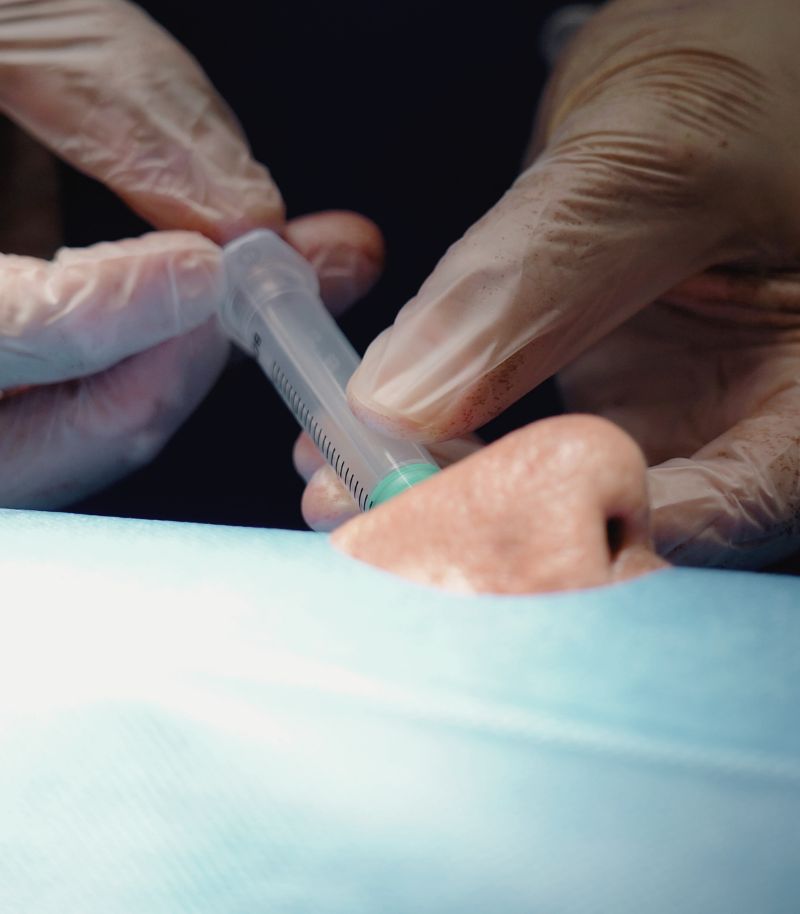
Mohs surgery offers cure rates close to 100% in appropriately selected cases. Beyond tumour eradication, our specialists place particular emphasis on achieving the best possible aesthetic and functional outcomes, especially when lesions are located in visible or functionally sensitive areas.
Preservation of healthy tissue
The precision of Mohs surgery allows for maximal preservation of healthy tissue, which is essential for maintaining function and reducing aesthetic impact. This approach helps minimise scarring and supports optimal healing.
Comprehensive patient recovery
Following surgery, patients receive personalised follow-up care, including dermatological monitoring and guidance on scar management. When needed, additional support is coordinated to ensure a satisfactory functional and aesthetic recovery.
Highly effective surgical treatment
Mohs surgery is particularly indicated for certain types of skin cancer, such as basal cell carcinoma and squamous cell carcinoma, especially when located in areas where tissue preservation is critical. It is also recommended for recurrent tumours or lesions with poorly defined borders.
High cure rates
Due to its meticulous technique, Mohs surgery achieves higher cure rates than conventional excision. In primary tumours, cure rates approach 100%, and in recurrent tumours they are close to 98%, making it the treatment of choice in selected cases.
Reduction of recurrence
By ensuring complete tumour removal during the initial procedure, Mohs surgery significantly reduces the risk of recurrence, limiting the need for additional interventions.

Access to the latest advances
The Grupo Pedro Jaén Skin Cancer Unit combines clinical expertise with advanced technology to optimise each stage of Mohs surgery.
State-of-the-art facilities
Our unit is equipped with on-site laboratories and high-resolution microscopy systems, allowing immediate analysis of surgical specimens. This infrastructure supports precise intraoperative decision-making and efficient surgical management.
Continuous professional development
Our specialists participate in ongoing training and research activities to remain up to date with advances in oncological dermatology and Mohs surgery. This ensures that patients benefit from treatments grounded in the most current scientific evidence.
We offer both in-person appointments at our centres and online consultations.
What the procedure involves and its advantages
Information about Mohs surgery
Mohs surgery originated in the United States in 1932, when surgeon Frederic E. Mohs observed in animal studies that performing horizontal sections of skin affected by a tumour allowed for better visualisation of the specimen margins. He also found that creating a sequential map of each specimen made it possible to continue removing tissue only when cancer cells were present.
Over the years, the technique has been progressively developed and refined. As a result, its indications have expanded and cure rates close to 100% have been achieved in appropriately selected cases.
Mohs micrographic surgery consists of the systematic and sequential removal of the tumour. The surgeon excises a layer of tumour tissue, which is immediately examined under the microscope to determine whether cancer cells are present. If tumour cells are identified, an additional layer of skin is removed and analysed. This process is repeated until a layer free of cancer cells is obtained.
Once tumour clearance has been confirmed, the surgical wound is closed. Depending on the size and location of the lesion, this may involve allowing the wound to heal by secondary intention (particularly for small lesions on bony surfaces or concave areas), direct suturing, or reconstruction using local flaps or skin grafts.

Advantages of Mohs surgery
The cornerstone of this meticulous surgical technique—complete tumour removal while preserving the maximum amount of healthy tissue—offers a number of advantages compared with other surgical approaches.
Cure rates
Long-term outcome data show that Mohs surgery achieves cure rates close to 100% in primary skin tumours. It also provides superior cure rates in higher-risk patients, particularly in cases with an increased likelihood of recurrence, compared with conventional surgical techniques. This is largely because certain tumours develop subclinical extensions that are not visible on clinical examination but can be detected through intraoperative micrographic control.
Fewer reinterventions
Mohs surgery is performed by removing the tumour layer by layer, with immediate microscopic examination during the same surgical procedure. This allows real-time therapeutic decisions to be made—either to continue removing tissue or to conclude the surgery—thereby reducing the need for subsequent interventions.
In contrast, conventional skin cancer surgery involves excising the visible tumour along with a predetermined safety margin of surrounding tissue. If postoperative histological analysis reveals residual tumour cells, additional surgical procedures are required to widen the margins, resulting in further tissue removal and additional operations.
Reduced functional sequelae
Removing more tissue than necessary increases the risk of functional impairment, particularly when skin tumours are located on the face. In such cases, insufficient skin in certain facial areas may compromise facial expression and essential functions such as chewing, speech, swallowing or blinking, making full functional recovery more difficult.
Improved aesthetic outcomes
By preserving healthy tissue, Mohs surgery not only leads to better postoperative aesthetic results due to reduced skin loss, but also decreases the need for reconstructive surgery. When reconstruction is required, the availability of more surrounding healthy skin allows for less aggressive techniques, which generally offer a better prognosis and more satisfactory cosmetic results.
All these factors, together with the significant refinement of the technique since its development in the 1930s, have contributed to a progressive expansion of the indications for Mohs surgery.
Today, Mohs surgery can be applied to a wide range of skin tumours when surgical treatment is indicated, including benign tumours with a favourable oncological prognosis that have major aesthetic or functional implications due to their size or location, as well as more aggressive tumours that pose a risk to the patient’s life.
“Long-term data on Mohs surgery indicate cure rates close to 100% in primary skin tumours”
More information
Below you will find the authorship and references for the information provided on this page:
Authorship and references
The content of this page has been prepared by the Communication Department and the Medical Team of Grupo Pedro Jaén, in line with our editorial commitment to ensuring the accuracy and up-to-date nature of the information provided.
References on Mohs surgery:
1. Bobotsis R, Guenther L. How Mohs Surgery Transformed Into a First-Line Treatment of Skin Cancer. J Cutan Med Surg. 2017 Jan/Feb;21(1):40-41. doi: 10.1177/1203475416658289. Epub 2016 Jul 9. PMID: 27381921.
2. Mansouri B, Bicknell LM, Hill D, Walker GD, Fiala K, Housewright C. Mohs Micrographic Surgery for the Management of Cutaneous Malignancies. Facial Plast Surg Clin North Am. 2017 Aug;25(3):291-301. doi: 10.1016/j.fsc.2017.03.002. Epub 2017 May 20. PMID: 28676157.
3. Etzkorn JR, Alam M. What Is Mohs Surgery? JAMA Dermatol. 2020 Jun 1;156(6):716. doi: 10.1001/jamadermatol.2020.0039. PMID: 32374349.
4. Bittner GC, Cerci FB, Kubo EM, Tolkachjov SN. Mohs micrographic surgery: a review of indications, technique, outcomes, and considerations. An Bras Dermatol. 2021 May-Jun;96(3):263-277. doi: 10.1016/j.abd.2020.10.004. Epub 2021 Mar 24. PMID: 33849752; PMCID: PMC8178571.
5. Le ST, Kamal HY, Khachemoune A. Mohs micrographic surgery for cutaneous malignancies: A focus review of its indications in pediatric age groups. Pediatr Dermatol. 2018 Jul;35(4):434-440. doi: 10.1111/pde.13460. Epub 2018 Mar 25. PMID: 29575263.
6. Glud M, Omland SH, Paoli J, Gniadecki R. [Mohs surgery for basal cell carcinoma]. Ugeskr Laeger. 2017 Feb 6;179(6):V07160501. Danish. PMID: 28397683.
7. Ellison PM, Zitelli JA, Brodland DG. Mohs micrographic surgery for melanoma: A prospective multicenter study. J Am Acad Dermatol. 2019 Sep;81(3):767-774. doi: 10.1016/j.jaad.2019.05.057. Epub 2019 May 28. PMID: 31150700.
Dermatologists specialising in Mohs surgery
Contamos con un equipo de especialistas experimentados
Where we see patients?
Clinics in Madrid
Grupo Pedro Jaén is a medical group founded more than three decades ago with the aim of providing medical, surgical and aesthetic solutions related to skin health and appearance. Led by Dr Pedro Jaén, the group has a highly specialised medical team that covers every area of care with top-level specialists, carries out extensive training activities, is a leader in medical research, and operates several clinics in Madrid, from which it offers the highest standards of care and clinical excellence to all patients.


Calle Serrano 143
This centre is the main headquarters of Grupo Pedro Jaén. It provides diagnostic and treatment services in skin cancer, clinical and aesthetic dermatology, laser treatments and other related specialties.
Mon - Fri 09:00 - 21:00 / Sat: 09:00 - 14:00
Calle Serrano 143, El Viso neighbourhood, Chamartín district, 28006 Madrid, Spain

La Moraleja
Located in Plaza de La Moraleja, this exclusive centre allows Grupo Pedro Jaén to bring its medical and aesthetic services closer to patients across the entire northern area of Madrid.
Mon - Thu: 09:30 - 20:00 / Fri: 09:30 - 18:00
Calle de la Estafeta 8, ground floor, La Moraleja, 28109 Alcobendas, Madrid
Related units and pages
Skin Cancer
Diagnosis using the most advanced systems, treatment and surgery for the different types of skin cancer.
Melanoma
Early diagnosis and treatment of this aggressive skin cancer using the most advanced techniques and technologies.
Skin Cancer Prevention
Based on simple self-care measures and more advanced techniques for early diagnosis.
Basal Cell Carcinoma
Early diagnosis and treatment of the most common type of skin cancer, using the most advanced techniques currently available.
Squamous Cell Carcinoma
The second most common type of skin cancer after basal cell carcinoma, although it is more aggressive.
Clinical dermatology
Highly specialised dermatologists for each skin condition, offering the most advanced treatments available.
Information and news
Press room
In the Grupo Pedro Jaén Press Room you can find information, advice and news related to dermatology, aesthetic medicine, trichology and general health. The group’s journals are also shared through an online platform, along with updates on the activity and media appearances of our clinics and healthcare professionals.

How to shower properly: tips for looking after your skin
Cold or hot water? Is it better to use a sponge? Find out how to shower properly and what dermatologists recommend to protect your skin.
Retinol in summer: should you stop using it?
We debunk this and other myths about using retinol during the warmer months.

Blog
News about Grupo Pedro Jaén. Information and advice on dermatology, aesthetic medicine, trichology, and general health

Media
Information about media appearances by our clinics and medical specialists.

Journal
Archive of all Grupo Pedro Jaén journals, available through an external online platform.