
Folliculitis decalvans
Treatment at our clinics in Madrid on Calle Cinca and La Moraleja
Dermatologists specialising in
Treatment of folliculitis decalvans
There is currently no treatment that can cure folliculitis decalvans, but early diagnosis is essential to slow its progression. At the Grupo Pedro Jaén Hair Disorders and Hair Transplant Unit, we offer the most advanced and effective options to stabilise the clinical situation and prevent this form of alopecia from progressing.
Recognised reference clinics in Spain
Home > Hair Disorders > Foliculitis decalvante
What sets us apart
Comprehensive and specialised approach
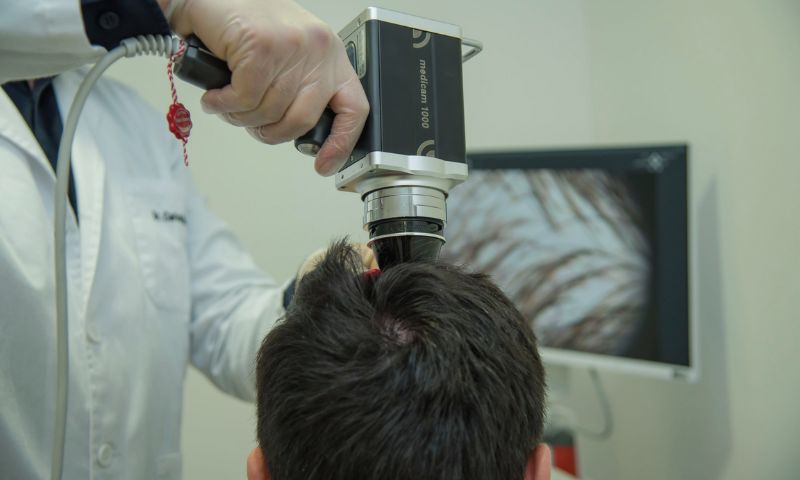
Our team addresses folliculitis decalvans through a personalised approach, based on advanced diagnostic techniques and the use of innovative therapies. We use tools such as digital trichoscopy and, in selected cases, scalp biopsies to achieve a more precise evaluation. In addition, we offer all therapeutic options supported by scientific evidence, and our specialists are actively involved in research and fully up to date with the latest therapeutic developments.
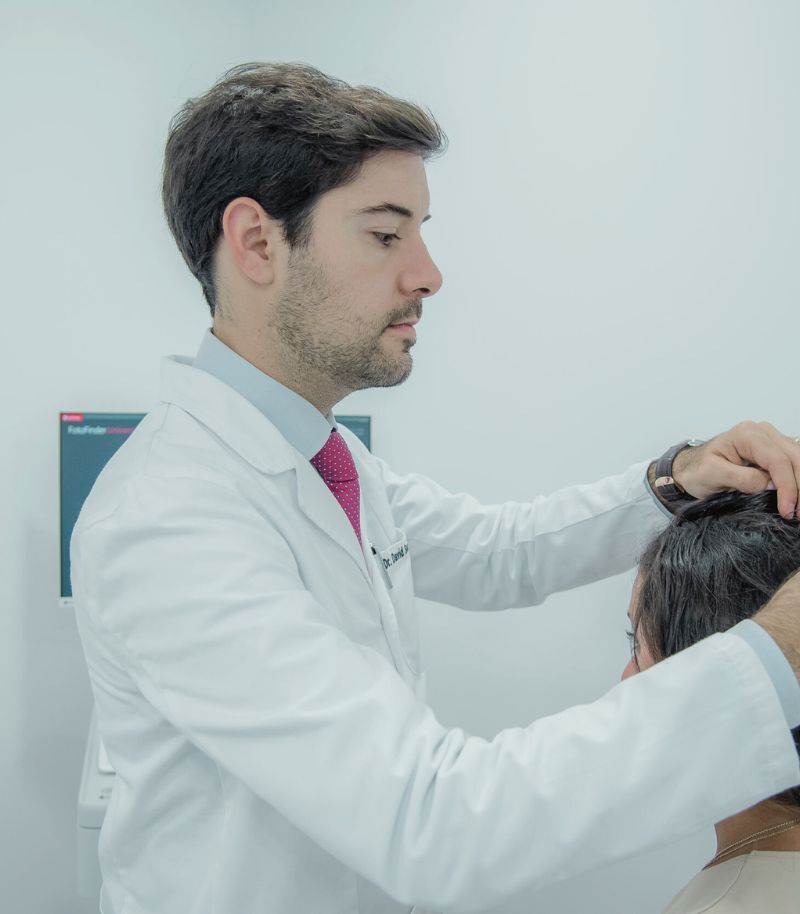
Personalised diagnosis and monitoring
We use cutting-edge tools such as digital trichoscopy to accurately assess the scalp, allowing early detection of disease activity and close monitoring of its progression.
Advanced diagnostic resources
Utilizamos herramientas de vanguardia como la tricoscopia digital para evaluar el cuero cabelludo con precisión, permitiendo detectar signos tempranos de la enfermedad y monitorizar su evolución. En casos necesarios, realizamos biopsias para obtener un análisis histológico detallado y confirmar el diagnóstico.
Close monitoring of changes
Close follow-up is key to controlling this condition. By combining advanced diagnostic technology with a personalised clinical approach, treatments are adjusted according to each patient’s response. This proactive management helps stabilise the disease, minimise inflammatory flare-ups and protect the remaining hair over the long term.
More information
Advanced treatments and research experience
The Hair Disorders and Hair Transplant Unit at Grupo Pedro Jaén offers the most advanced and effective options currently available for the treatment of folliculitis decalvans
Latest therapeutic options
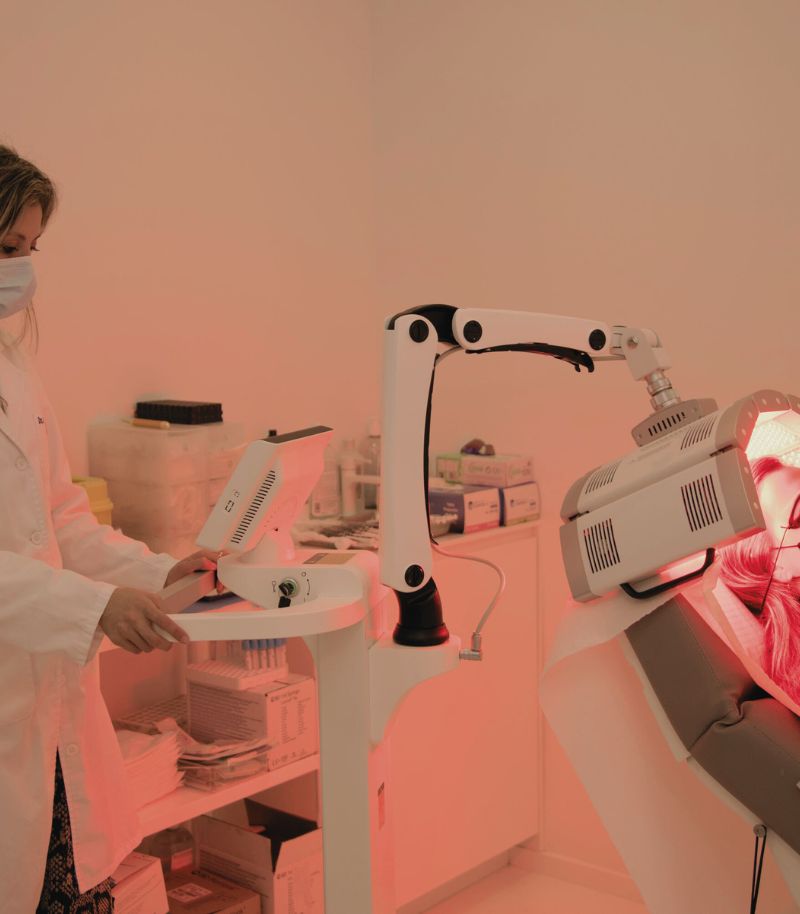
Our unit provides patients with folliculitis decalvans access to all scientifically validated therapeutic strategies, including oral, topical or injected medication, photodynamic therapy and advanced targeted treatments designed to modulate specific molecular mechanisms involved in the disease. Hair transplantation may be considered only in carefully selected cases.
Research experience
The clinical and research experience of our dermatologists specialised in hair disorders allows us to offer a precise and up-to-date approach to folliculitis decalvans. Through active participation in clinical research, we have access to innovative therapies supported by scientific evidence, enabling personalised treatment plans aimed at stabilising the disease and slowing its progression.
A detailed understanding of disease mechanisms also allows the design of optimised treatment protocols, improving both safety and clinical effectiveness.
Hair transplant in selected cases
Although there is no definitive cure for folliculitis decalvans, the disease can often be stabilised and controlled over time. Early and appropriate medical treatment is essential to preserve hair and prevent further scarring.
Enhancing results
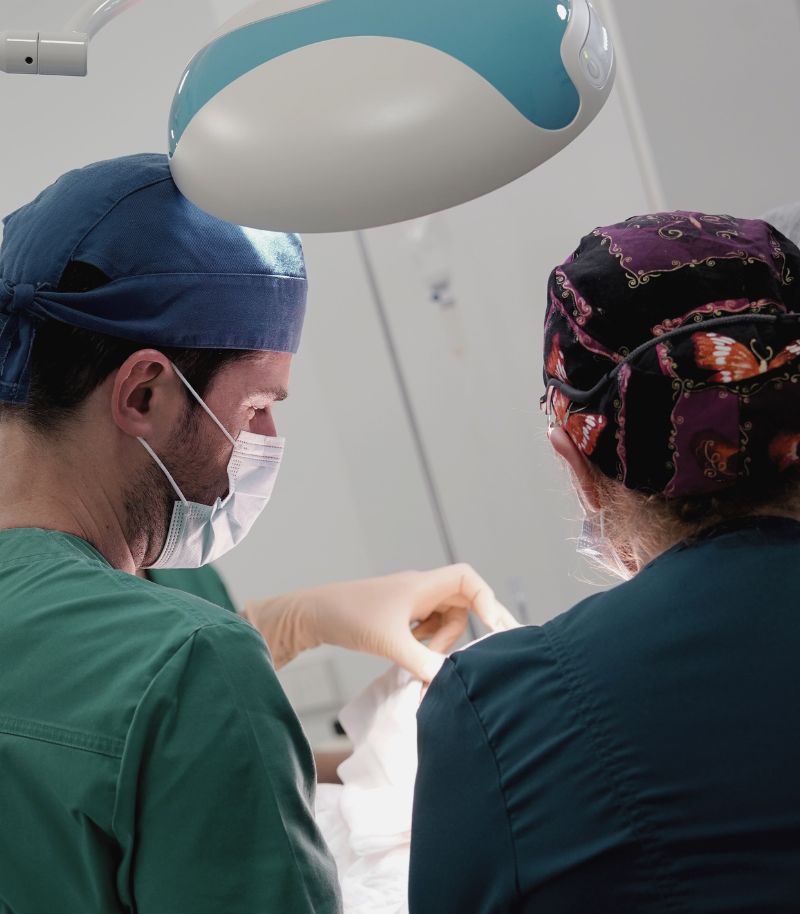
In selected cases, and once the disease has been completely stabilised, hair transplantation may be considered as a complementary option to improve cosmetic outcomes.
Careful selection of candidates
Before surgery, our dermatologists with expertise in folliculitis decalvans carry out a rigorous assessment. As with other cicatricial alopecias, if the disease is not fully stable and inflammatory activity persists, the risk of graft failure is high.
For this reason, careful patient selection and management by a highly specialised and experienced medical team are essential.
More information
What it is, types, causes and treatment
A guide to understanding folliculitis decalvans
Folliculitis decalvans is a rare form of primary cicatricial (scarring) alopecia that most commonly affects young patients, particularly men, although women may also develop this condition.
This type of alopecia often begins as what appears to be a conventional folliculitis affecting the crown of the scalp, characterised by an inflammatory process associated with pustules and varying degrees of discomfort or burning sensation. Over time, the inflammation may spread to other areas of the scalp and progressively destroy the hair follicle, leading to irreversible hair loss and scarring, as occurs in other forms of cicatricial alopecia.
A characteristic feature of this condition is the presence of so-called tufted hairs, in which several hair shafts emerge from a single follicular opening. Crusting and inflammatory lesions around the areas of hair loss are also common, causing symptoms of varying severity such as intense itching, burning, stinging or irritation.
Folliculitis decalvans often has a profound emotional impact on affected patients and may significantly impair quality of life, as the areas of hair loss can become extensive and lead to considerable cosmetic disfigurement.
As with other forms of cicatricial alopecia, early diagnosis and prompt initiation of treatment are particularly important to slow disease progression and to mitigate both the aesthetic and psychological impact. Once scarring develops in the affected areas of the scalp, hair regrowth is no longer possible.
The Hair Disorders and Hair Transplant Unit at Grupo Pedro Jaén participates in scientific research aimed at improving understanding of this condition and contributing to the development of effective treatments. The team has published some of the most relevant data regarding the origin, clinical course and therapeutic approaches to folliculitis decalvans.

Causes of folliculitis decalvans
The exact causes of folliculitis decalvans are not yet fully understood. Data obtained from various studies conducted on this topic—some of them led by specialists from the Hair Disorders and Hair Transplant Unit at Grupo Pedro Jaén in collaboration with their counterparts at Hospital Universitario Ramón y Cajal—suggest that the inflammatory process responsible for follicular destruction may begin with a bacterial infection. In genetically predisposed patients, this infection could trigger an immune response aimed at eliminating the bacteria, but which may also inadvertently damage the hair follicle, ultimately leading to hair loss.
This inflammatory response is chronic and may persist for years in the form of recurrent flare-ups, even after the initial infection has been eradicated. Although folliculitis decalvans may be associated with a bacterial trigger, it is important to note that this hair disorder is not contagious.
Diagnosis of folliculitis decalvans
The diagnosis of folliculitis decalvans can be established clinically during consultation using digital trichoscopy, a magnification device that allows the trichologist to examine the scalp and hair shaft structure in detail. In many cases, an experienced specialist may be able to make the diagnosis through direct clinical observation alone. However, digital trichoscopy enables a more comprehensive assessment of both the hair shaft and scalp, while also allowing documentation and monitoring of disease progression, treatment response and the need for therapeutic adjustments when necessary.
In certain cases, histological analysis may be required. This involves performing a scalp biopsy to assess the degree of inflammation or to clarify specific diagnostic uncertainties. It is a straightforward procedure carried out under local anaesthesia in the outpatient setting, usually taking less than 15 minutes and requiring only a single suture after sample collection.
“Folliculitis decalvans is a hair disorder that can have a significant emotional impact on affected patients”
Treatment of folliculitis decalvans
There is currently no curative treatment for folliculitis decalvans. However, at the Hair Disorders and Hair Transplant Unit of Grupo Pedro Jaén, we offer the most advanced and effective therapeutic options to stabilise the clinical condition and prevent further progression of this form of alopecia.
Combination drug therapies
Among the available therapeutic strategies, combinations of medications may be used to eradicate the bacterial component associated with inflammatory flare-ups, together with intralesional injections of drugs aimed at controlling the inflammatory process characteristic of this condition. With this approach, some patients are able to keep folliculitis decalvans under control for several months without the need for additional therapies.
These treatments are generally well tolerated and associated with a low incidence of adverse effects. Nevertheless, they must always be prescribed and monitored by dermatologists specialised in hair disorders.
Other treatment options
Other therapeutic alternatives may be considered in selected cases. These include photodynamic therapy, which involves the application of a photosensitising agent followed by exposure to a specific light source to treat targeted lesions. In addition, certain topical or systemic treatments commonly used in other dermatological conditions, such as acne, may be considered, as well as advanced therapies that act on highly specific molecular pathways in order to modulate the immune and inflammatory responses involved in the disease.
Treatment considerations
In all cases, as with any form of cicatricial alopecia, the primary therapeutic goal is to control the inflammatory process responsible for follicular destruction and to prevent further hair loss.
Once the disease has been medically stabilised, hair transplantation may be considered. However, an individualised assessment is essential, as there is a risk of losing transplanted hair if a new inflammatory flare of folliculitis decalvans occurs.
The main prognostic factor in preventing progression of alopecia is therefore the early treatment of inflammatory flare-ups, as hair does not regrow once scarring tissue has developed.
Over time, the activity of folliculitis decalvans often decreases spontaneously. In a significant proportion of patients, inflammatory episodes may eventually resolve completely. Nevertheless, more severe forms of this cicatricial alopecia may require long-term treatment over months or even years.

More information
Below you will find the authorship and references for the information provided on this page:
Authorship and references
The content of this page has been prepared by the Communication Department and the Medical Team of Grupo Pedro Jaén, in line with our editorial commitment to ensuring the accuracy and up-to-date nature of the information provided.
References on folliculitis decalvans:
1. Folliculitis decalvans. A multicenter review of 82 patients. Vañó-Galván S, AM. Molina-Ruiz, P. Fernández-Crehuet , R. Rodrigues-Barata, S. Arias-Santiago, C. Serrano-Falcón, A. Martorell-Calatayud, D. Barco, B. Pérez, S. Serrano, L. Requena, R. Grimalt, P. Jaén, F. M. Camacho. J Eur Acad Dermatol Venereol. 2015 Sep;29(9):1750-7.
2. Treatment of folliculitis decalvans with photodynamic therapy: Results in 10 patients. Miguel-Gomez L, Vano-Galvan S, Perez-Garcia B, Carrillo-Gijon R, Jaen-Olasolo P. J Am Acad Dermatol. 2015 Jun;72(6):1085-7.
3. Folliculitis decalvans including tufted folliculitis: clinical, histological and therapeutic findings. Powell JJ, Dawber RP, Gatter K. Br J Dermatol 1999; 140: 328–333.
4. Primary cicatricial alopecia: Other lymphocytic primary cicatricial alopecias and neutrophilic and mixed primary cicatricial alopecias. Bolduc C, Sperling LC, Shapiro J. J Am Acad Dermatol. 2016 Dec;75(6):1101-1117.
5. Folliculitis decalvans: Effectiveness of therapies and prognostic factors in a multicenter series of 60 patients with long-term follow-up. Miguel-Gómez L, Rodrigues-Barata AR, Molina-Ruiz A, Martorell-Calatayud A, Fernández-Crehuet P, Grimalt R, Barco D, Arias-Santiago S, Serrano-Falcón C, Camacho FM, Saceda-Corralo D, Jaén-Olasolo P, Vañó-Galván S. J Am Acad Dermatol. 2018 Nov;79(5):878-883.
6. Trichoscopy activity scale for folliculitis decalvans. Saceda-Corralo D, Moreno-Arrones OM, Rodrigues-Barata R, Rubio-Lombraña M, Mir-Bonafé JF, Morales-Raya C, Miguel-Gómez L, Hermosa-Gelbard Á, Jaén-Olasolo P, Vañó-Galván S. J Eur Acad Dermatol Venereol. 2019 Aug 21. doi: 10.1111/jdv.15900.
7. Impact of Folliculitis Decalvans on Quality of Life and Subjective Perception of Disease. Pindado-Ortega C, Saceda-Corralo D, Miguel-Gómez L, Buendía-Castaño D, Fernández-González P, Moreno-Arrones OM, Fonda-Pascual P, Alegre-Sánchez A, Rodrigues-Barata R, Vañó-Galván S. Skin Appendage Disord. 2018 Jan;4(1):34-36.
Where we see patients?
Clinics in Madrid
Grupo Pedro Jaén is a medical group with more than thirty years of experience, specialising in medical, surgical and aesthetic solutions related to skin health and care. Under the leadership of Dr Pedro Jaén, the group has a multidisciplinary team of highly qualified specialists, ensuring expert care across all areas of treatment. In addition, Grupo Pedro Jaén is recognised for its strong commitment to medical education, its leadership in clinical research and its network of clinics in Madrid, from which it provides healthcare of the highest quality and excellence to its patients.


Calle Cinca 30
Located in the El Viso district, this centre houses the consultations of the Hair Disorders and Hair Transplant Unit of Grupo Pedro Jaén in central Madrid.
Mon - Fri: 09:00 - 20:30
Calle Cinca 30, El Viso neighbourhood, Chamartín District, 28002 Madrid

La Moraleja
Located in Plaza de La Moraleja, this exclusive centre allows Grupo Pedro Jaén to bring its medical and aesthetic services closer to patients across the entire northern area of Madrid.
Mon - Thu: 09:30 - 20:00 / Fri: 10:00 - 18:00
Calle de la Estafeta 8, ground floor, La Moraleja, 28109 Alcobendas, Madrid, Spain
Related units and pages
Hair Disorders Unit
A specialised medical team and the most effective treatments for all types of hair disorders.
Frontal fibrosing alopecia
Personalised treatment based on the extent of hair loss and the degree of scalp inflammation.
Alopecia areata
Treatments aimed both at promoting hair regrowth and preventing common relapses.
Female alopecia
Individualised diagnosis and specific treatments for the different types of alopecia in women.
Eyebrow alopecia
Individualised diagnosis and treatment tailored to the underlying causes of eyebrow hair loss.
Androgenetic alopecia
Information about this common form of alopecia and the different treatment options currently available.
Information and news
Press room
In the Grupo Pedro Jaén Press Room you can find information, advice and news related to dermatology, aesthetic medicine, trichology and general health. The group’s journals are also shared through an online platform, along with updates on the activity and media appearances of our clinics and healthcare professionals.

How to shower properly: tips for looking after your skin
Cold or hot water? Is it better to use a sponge? Find out how to shower properly and what dermatologists recommend to protect your skin.

Retinol in summer: should you stop using it?
We debunk this and other myths about using retinol during the warmer months.

Blog
News about Grupo Pedro Jaén. Information and advice on dermatology, aesthetic medicine, trichology, and general health

Media
Information about media appearances by our clinics and medical specialists.

Journal
Archive of all Grupo Pedro Jaén journals, available through an external online platform.