
Alopecia areata
Treatment at our clinics in Madrid on Calle Cinca and La Moraleja
Dermatologists specialising in
Treatment of alopecia areata
At present, no medical treatment for alopecia areata can guarantee a permanent cure. However, it is possible to halt hair loss and promote hair regrowth in many patients. The dermatologists at the Grupo Pedro Jaén Hair Disorders Unit have extensive experience in the management of this condition and have participated in multiple research projects that have contributed to the development and approval of therapies aimed at achieving these objectives.
Recognised reference clinics in Spain
Home > Hair Disorders Unit > Alopecia areata
What sets us apart
Comprehensive approach and access to advanced therapies
At Grupo Pedro Jaén, alopecia areata is addressed through a comprehensive medical approach that goes beyond hair loss alone. Our care model considers potential associated comorbidities, including endocrine, metabolic and autoimmune factors, to ensure thorough evaluation and personalised management. This integrated approach allows us to monitor hair regrowth while safeguarding the patient’s overall health.

Treatment of comorbidities
Dermatologists specialising in alopecia areata at Grupo Pedro Jaén may refer patients with associated conditions to other specialist units within the group, such as the Endocrinology and Nutrition Unit, to assess and manage endocrine or metabolic disorders. This coordinated care is essential to optimise outcomes and achieve more stable, long-term results
Emotional support
Patients also have access to the Emotional Support Unit, which provides strategies to help patients cope with the psychological impact of alopecia areata. This support aims to improve emotional wellbeing, reduce stress-related triggers that may exacerbate the condition, and enhance adherence to medical treatment.
More information
Comprehensive diagnosis and clinical assessment
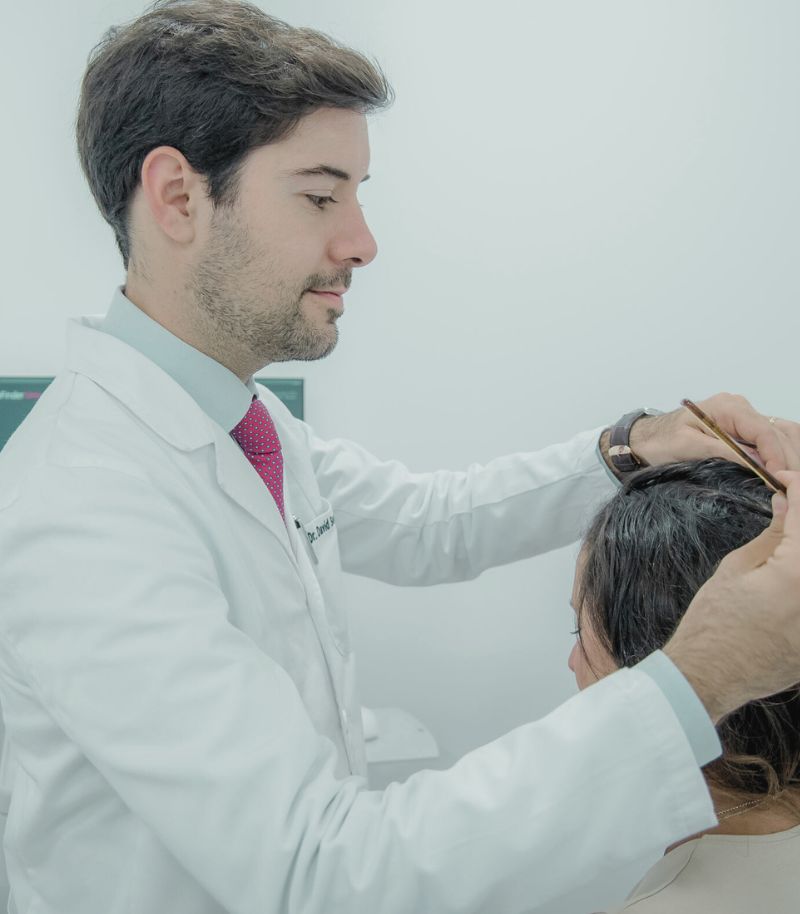
Alopecia areata is an autoimmune condition that requires a detailed diagnostic approach, including evaluation of hair loss patterns, medical history and family background.
Advanced diagnostic tools and complementary testing
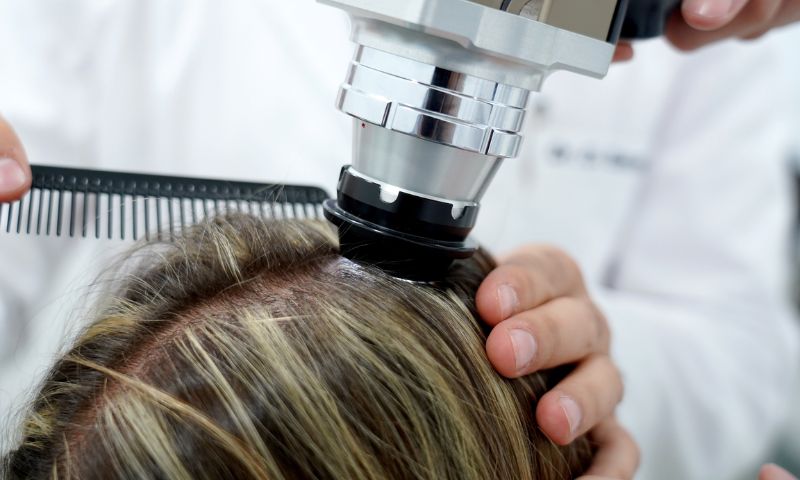
Our specialists use advanced diagnostic techniques, including digital trichoscopy, scalp ultrasound and thorough clinical examination.
In selected cases, a scalp biopsy may be performed to differentiate alopecia areata from other types of hair loss. Additional investigations may include thyroid function tests to rule out autoimmune thyroid disease—frequently associated with alopecia areata—as well as allergy testing or autoimmune marker analysis when clinically indicated.
Alopecia areata may be associated with underlying medical conditions which, when necessary, are also assessed through tests for thyroid dysfunction or hormonal imbalances that may affect hair growth.
This structured diagnostic process enables the design of a personalised treatment plan, which is subsequently adjusted according to the patient’s response to therapy.
More information
Access to advanced treatments
At Grupo Pedro Jaén, patients have access to the full range of currently available treatments for alopecia areata, including the most recently approved therapeutic options. Through specific authorisations, our centre is able to prescribe advanced treatments that are not widely available in other private clinics, offering new alternatives to patients who have not responded adequately to conventional therapies.
Clinical and research expertise
Our dermatologists specialising in alopecia areata have extensive experience in the use of these treatments and have participated, or are currently participating, in international clinical trials focused on this condition.
Flexible treatment strategies and long-term follow-up
Close follow-up and continuous monitoring are essential in the management of alopecia areata. For this reason, the expert dermatologists in our Unit schedule regular reviews to assess treatment response and make the necessary adjustments, adapting the therapeutic plan to the patient’s clinical course. This approach is designed to optimise outcomes and ensure a more satisfactory patient experience.
What it is, types, causes and treatment
A guide to alopecia areata
Alopecia areata is a form of non-scarring alopecia characterised by hair loss in well-defined, localised areas of the scalp. Although it can occur at any age and affects both men and women, it most commonly presents in childhood and young adulthood. It is estimated that between 1% and 2% of the population will experience at least one episode of alopecia areata during their lifetime.
This condition primarily affects the scalp, but it may also involve other hair-bearing areas such as the eyebrows, eyelashes or beard.
The clinical course of alopecia areata is highly variable. While some patients experience hair loss for only a few months, others may be affected for many years. In some cases, hair regrowth occurs spontaneously within a few months, whereas in others recovery takes considerably longer.
Approximately 10% of patients develop more severe forms of alopecia areata. This subgroup has a higher overall risk of associated autoimmune diseases, including systemic lupus erythematosus, autoimmune hypothyroidism or vitiligo.
Alopecia areata is painless, non-contagious and does not pose a direct risk to physical health. However, its aesthetic impact may have significant emotional consequences and substantially impair quality of life, affecting personal, social and professional domains.

Causes of alopecia areata
The exact causes of alopecia areata have not yet been fully established, although it is known to be triggered by an autoimmune reaction.
In this process, the immune system mistakenly identifies the body’s own hair follicles as harmful and initiates an inflammatory response that affects the hair root in specific areas. As a result, hair falls out and does not regrow until the inflammatory process has completely resolved. The precise mechanisms that trigger this autoimmune reaction remain unclear, but genetic predisposition is thought to play a role, and psychological stress may act as a precipitating factor.
In addition, several dermatologists at the Grupo Pedro Jaén Hair Disorders Unit are involved in ongoing research exploring the relationship between alopecia areata and imbalances in the gut microbiota.
Symptoms and diagnosis of alopecia areata
Alopecia areata can present in different clinical forms, and its diagnosis is primarily clinical.
Symptoms of alopecia areata
There are multiple variants of alopecia areata. The most common form, known as patchy or focal alopecia areata, is characterised by hair loss in one or several well-defined areas of the scalp, resulting in round or oval patches without hair. Typically, no more than three or four patches are present.
When multiple areas are affected, the condition is referred to as multifocal alopecia areata. More severe forms involve extensive hair loss, which may affect the entire scalp (alopecia areata totalis) or extend to the eyelashes, eyebrows and body hair (alopecia areata universalis).
There are no reliable predictive factors that allow the prognosis or clinical course to be determined in advance. As an autoimmune condition, alopecia areata often shows spontaneous periods of improvement, even in the absence of treatment. Conversely, inflammation may remain active for prolonged periods, leading to sustained hair loss. In such cases, treatment may induce regrowth, but hair loss can recur when therapy is withdrawn.
Limited forms of alopecia areata, affecting one or a few patches, generally respond more favourably to treatment. In contrast, more extensive variants—multifocal, total or universal alopecia areata—tend to have a less predictable response and often require prolonged treatment, with variable outcomes.
Diagnosis of alopecia areata
The diagnosis of alopecia areata is primarily clinical. During the consultation, a detailed medical history is obtained, including a thorough assessment of family history.
Digital trichoscopy is performed to obtain magnified, high-resolution images of the scalp, hair follicles and hair shafts. In patients with active inflammatory alopecia areata, microscopic examination may reveal characteristic findings such as “exclamation mark” hairs and small black dots in the affected areas.
The documentation of trichoscopic images also allows objective monitoring of treatment efficacy. When the condition is controlled, early regrowth appears as fine vellus hair, which can be detected microscopically before it becomes visible to the naked eye. This enables timely adjustment of treatment if necessary.
Digital trichoscopy is also useful for monitoring disease progression and for the early detection of relapses, contributing to higher rates of therapeutic success.
During the physical examination, a hair pull test is performed. This gentle traction test helps assess active inflammation by evaluating the ease with which hairs are extracted and the condition of their roots.
In selected cases, a scalp biopsy may be required to differentiate alopecia areata from other forms of alopecia, of which more than one hundred have been described. Depending on the clinical findings and patient history, additional blood tests and immunological studies may be indicated.
Laboratory investigations commonly include thyroid function tests, given the frequent association between alopecia areata and autoimmune hypothyroidism. In rare cases, allergy testing or analysis of autoimmune markers may also be required.
“Forms of alopecia areata affecting one or only a few patches tend to respond more favourably to treatment”
Treatment of alopecia areata
At present, there is no curative treatment for alopecia areata. However, there are medical therapies that can slow hair loss and promote hair regrowth. For this reason, the specialists at the Grupo Pedro Jaén Hair Disorders Unit usually opt for treatment strategies that act on multiple levels. In alopecia areata, the main challenge is not only achieving hair regrowth, but maintaining it over time, as relapses are relatively common in this condition.
Oral or injectable medication
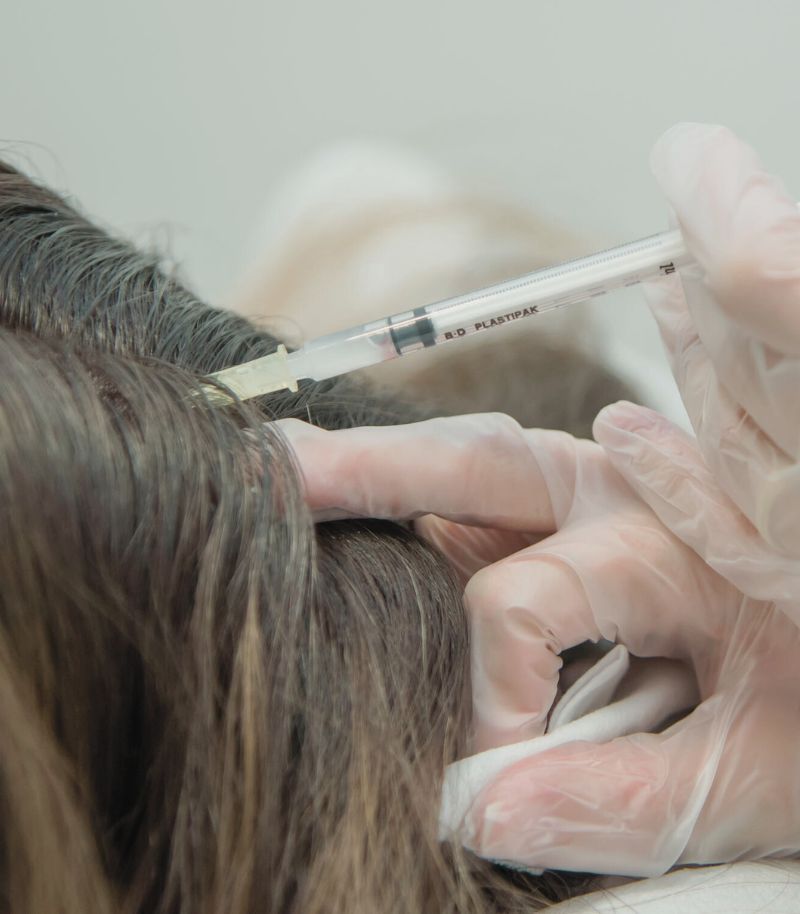
These treatments act on the autoimmune process responsible for weakening the hair follicle and promoting hair loss. They are usually administered as topical formulations or local injections, which allow targeted control of hair regrowth in limited areas of the scalp. Injected treatment does not require prior preparation and is performed in the outpatient clinic whenever necessary.
It consists of administering the medication directly into the scalp through multiple microinjections covering the affected area. Although it may cause mild discomfort, it is generally well tolerated and can be performed quickly. This option is particularly useful for controlling the disease when small areas of hair loss reappear after tapering or discontinuation of oral medication.
When clinically indicated, oral anti-inflammatory drugs may be prescribed in weekly mini-pulse regimens. This dosing schedule improves treatment adherence—usually requiring only two doses per week—and significantly reduces the risk of adverse effects typically associated with daily administration. Some patients, especially postmenopausal women, may require additional calcium and vitamin D supplementation.
Complementary medical treatment
When first-line options are insufficient or contraindicated, the dermatologist may consider systemic medications aimed at modulating the abnormal immune response, or topical immunotherapy. The latter involves the controlled application of an irritant substance to redirect inflammation from the hair follicle to the skin surface, thereby reducing immune-mediated damage to the hair root.
As an adjunct, medications aimed at reducing hair shedding, stimulating new hair growth and improving hair density may also be prescribed.
In addition, members of the Grupo Pedro Jaén Hair Disorders Unit are actively involved in research into new therapies that have shown promising results in clinical trials, although further studies are still required to fully establish their efficacy and safety profiles.
Cosmetic measures
Several cosmetic options are available to camouflage areas affected by alopecia areata. In cases involving eyebrow hair loss, many patients choose micropigmentation or microblading to restore facial expression, as eyebrows play a key role in non-verbal communication and facial aesthetics.

More information
Below you will find the authorship and references for the information provided on this page:
Authorship and references
The content of this page has been prepared by the Communication Department and the Medical Team of Grupo Pedro Jaén, in line with our editorial commitment to ensuring the accuracy and up-to-date nature of the information provided.
References on alopecia areata:
1. Vañó-Galván S, Fernández-Crehuet P, Grimalt R, Garcia-Hernandez MJ, Rodrigues-Barata R, Arias-Santiago S, Molina-Ruiz A, Garcia-Lora E, Dominguez-Cruz J, Brugues A, Ferrando J, Serrano-Falcón C, Serrano S, Paoli J, Camacho F. Alopecia areata totalis and universalis: a multicenter review of 132 patients in Spain. J Eur Acad Dermatol Venereol. 2017;31(3):550-556.
2. Saceda-Corralo D, Grimalt R, Fernández-Crehuet P, Clemente A, Bernárdez C, García-Hernandez MJ, Arias-Santiago S, Rodrigues-Barata AR, Rodríguez-Pichardo A, García-Lora E, Jaén P, Camacho FM, Vañó-Galván S.Beard alopecia areata: a multicentre review of 55 patients. J Eur Acad Dermatol Venereol. 2017;31(1):187-192.
3. Vañó-Galván S1, Hermosa-Gelbard Á2, Sánchez-Neila N2, Miguel-Gómez L2, Saceda-Corralo D2, Rodrigues-Barata R3, Jaén P3.Treatment of recalcitrant adult alopecia areata universalis with oral azathioprine. J Am Acad Dermatol. 2016;74(5):1007-8.
4. Vañó-Galván S1, Hermosa-Gelbard Á2, Sánchez-Neila N2, Miguel-Gómez L2, Saceda-Corralo D2, Rodrigues-Barata R3, Ma DL4, Jaén P3. Pulse corticosteroid therapy with oral dexamethasone for the treatment of adult alopecia totalis and universalis. J Am Acad Dermatol. 2016;74(5):1005-7.
5. Moreno-Arrones OM, Serrano-Villar S, Perez-Brocal V, Saceda-Corralo D, Morales-Raya C, Rodrigues-Barata R, Moya A, Jaen-Olasolo P, Vano-Galvan S. Analysis of the gut microbiota in alopecia areata: identification of bacterial biomarkers. J Eur Acad Dermatol Venereol. 2019 Aug 16. doi: 10.1111/jdv.15885.
6. Phan K, Sebaratnam DF. JAK inhibitors for alopecia areata: a systematic review and metaanalysis. Journal of the European Academy of Dermatology and Venereology. J Eur Acad Dermatol Venereol. 2019 May;33(5):850-856.
Where we see patients?
Clinics in Madrid
Grupo Pedro Jaén is a medical group with more than thirty years of experience, specialising in medical, surgical and aesthetic solutions related to skin health and care. Under the leadership of Dr Pedro Jaén, the group has a multidisciplinary team of highly qualified specialists, ensuring expert care across all areas of treatment. In addition, Grupo Pedro Jaén is recognised for its strong commitment to medical education, its leadership in clinical research and its network of clinics in Madrid, from which it provides healthcare of the highest quality and excellence to its patients.


Calle Cinca 30
Located in the El Viso district, this centre houses the consultations of the Hair Disorders and Hair Transplant Unit of Grupo Pedro Jaén in central Madrid.
Mon - Fri: 09:00 - 20:30
Calle Cinca 30, El Viso neighbourhood, Chamartín District, 28002 Madrid

La Moraleja
Located in Plaza de La Moraleja, this exclusive centre allows Grupo Pedro Jaén to bring its medical and aesthetic services closer to patients across the entire northern area of Madrid.
Mon - Thu: 09:30 - 20:00 / Fri: 10:00 - 18:00
Calle de la Estafeta 8, ground floor, La Moraleja, 28109 Alcobendas, Madrid, Spain
Related units and pages
Hair Disorders Unit
A specialised medical team and the most effective treatments for all types of hair disorders.
Hair loss diagnosis
Diagnosis of alopecia using advanced technology and an expert medical team to determine the most appropriate therapeutic approach.
Hair mesotherapy
Microinjection of medications and substances derived from regenerative medicine techniques.
Female alopecia
Individualised diagnosis and specific treatments for the different types of alopecia in women.
Frontal fibrosing alopecia
Personalised treatment based on the extent of hair loss and the degree of scalp inflammation.
Eyebrow alopecia
Individualised diagnosis and treatment tailored to the underlying causes of eyebrow hair loss.
Information and news
Press room
In the Grupo Pedro Jaén Press Room you can find information, advice and news related to dermatology, aesthetic medicine, trichology and general health. The group’s journals are also shared through an online platform, along with updates on the activity and media appearances of our clinics and healthcare professionals.
How to shower properly: tips for looking after your skin
Cold or hot water? Is it better to use a sponge? Find out how to shower properly and what dermatologists recommend to protect your skin.
Retinol in summer: should you stop using it?
We debunk this and other myths about using retinol during the warmer months.

Blog
News about Grupo Pedro Jaén. Information and advice on dermatology, aesthetic medicine, trichology, and general health

Media
Information about media appearances by our clinics and medical specialists.

Journal
Archive of all Grupo Pedro Jaén journals, available through an external online platform.