
Lipoedema
At our Madrid clinic on Calle Serrano 166
Specialists in
Lipoedema treatment
Grupo Pedro Jaén has extensive experience in the treatment of lipoedema, an underdiagnosed clinical condition with aesthetic implications that is often confused with other conditions such as lymphoedema, cellulite or localised fat. This condition has both clinical and aesthetic repercussions; therefore, assessment by a specialist physician is essential.

Recognised reference clinics in Spain
Home > Other specialties > Lymphology> Lipoedema
What sets us apart
Specialised approach with state-of-the-art therapies
At Grupo Pedro Jaén, we adopt a multidisciplinary approach to lipoedema, combining specialised diagnosis, conservative therapies, advanced technological treatments and, in selected cases, surgical solutions. Our specialists work closely with departments such as endocrinology, nutrition, vascular surgery and aesthetic medicine to provide a comprehensive treatment plan tailored to each patient. In addition, we offer emotional support and strategies aimed at improving quality of life, ensuring effective management that alleviates symptoms and supports mobility, body contour and patient wellbeing.
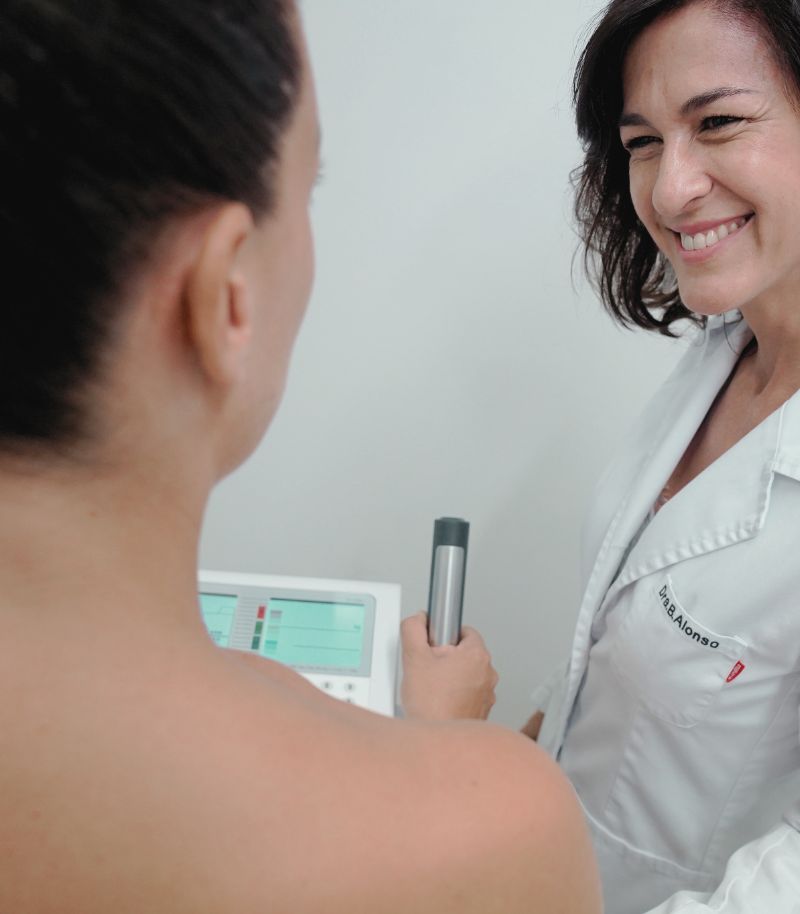
Accurate diagnosis
Successful management of lipoedema begins with accurate identification of the condition, distinguishing it from other disorders that may present with similar clinical features.
Specialised medical assessment
Our specialists carry out a detailed clinical assessment, including medical history, physical examination and complementary tests such as bioelectrical impedance analysis and soft tissue ultrasound. This thorough evaluation allows the stage and extent of lipoedema to be classified and a personalised treatment plan to be designed.
Multidisciplinary approach for comprehensive care
Lipoedema not only affects appearance but can also interfere with daily activities and significantly impact quality of life. For this reason, we work in coordination with endocrinologists, aesthetic medicine specialists and nutritionists to address metabolic factors, inflammation and the aesthetic impact of the condition. This integrated approach allows us to offer solutions adapted to each patient, combining medical treatment, lifestyle guidance and aesthetic procedures to achieve sustained improvement in wellbeing.
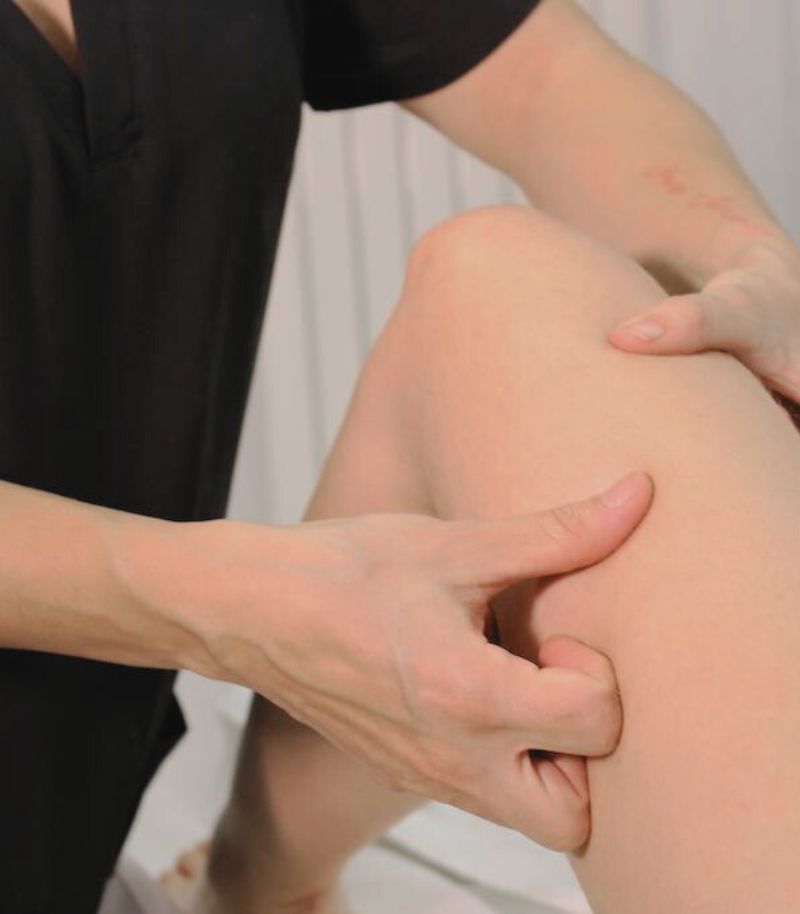
Conservative therapies
Lipoedema is managed through medical strategies and healthy habits aimed at alleviating symptoms and preventing disease progression.
Compression garments and lymphatic drainage
The use of specialised compression garments is essential to improve lymphatic circulation, reduce swelling and relieve the pain commonly associated with lipoedema. In addition, manual lymphatic drainage, performed by specialists in lymphatic physiotherapy, helps reduce oedema and the sensation of heaviness in the limbs.
Balanced diet and appropriate physical activity
Although lipoedema does not respond to diet and exercise in the same way as other fat-related conditions, maintaining an appropriate diet and engaging in specific physical activity can help improve lymphatic function and mobility. At Grupo Pedro Jaén, our specialists in nutrition and physiotherapy design personalised programmes to promote wellbeing and help control disease progression.
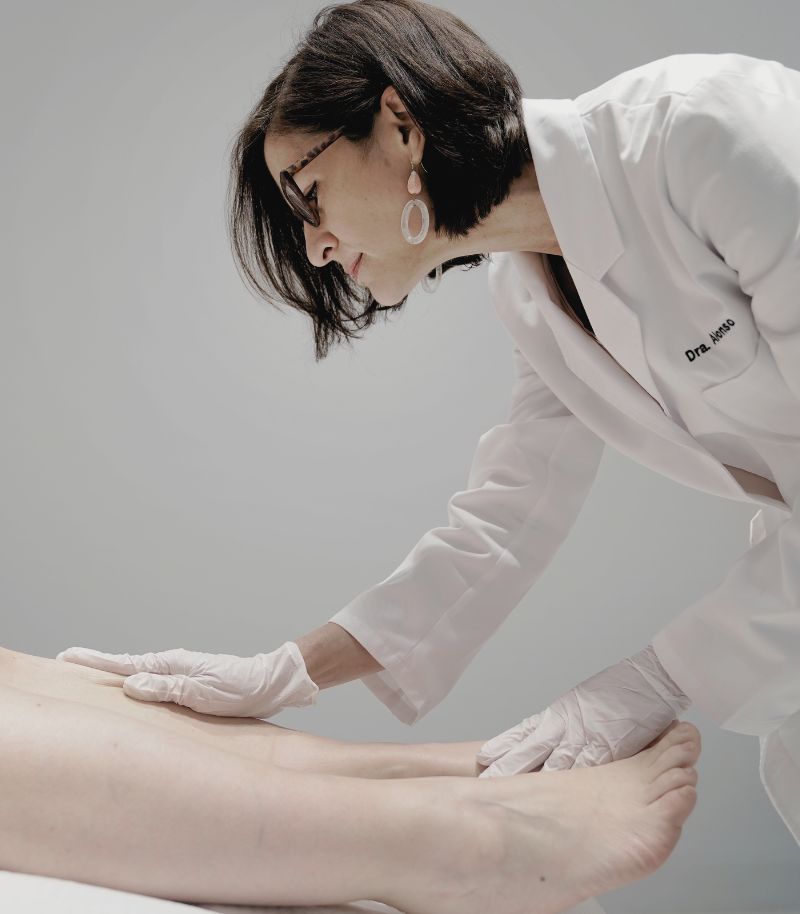
Lipoedema surgery: WAL liposuction
Water-assisted liposuction (WAL) is an advanced surgical technique that uses very fine cannulas and small incisions to infiltrate a saline solution, facilitating the removal of the pathological fat characteristic of lipoedema, which is typically more abundant and fibrotic than normal localised fat.
Specifically recommended for lipoedema
WAL is less invasive than conventional liposuction and more respectful of venous and lymphatic structures. It is designed to remove pathological fat in a precise and less traumatic manner.
Faster recovery
In addition, being less invasive than other techniques, this technique minimises bruising, swelling and post-operative pain, making the healing process faster. This technique is also effective in sculpting body contours and improving the appearance of areas affected by lipoedema.
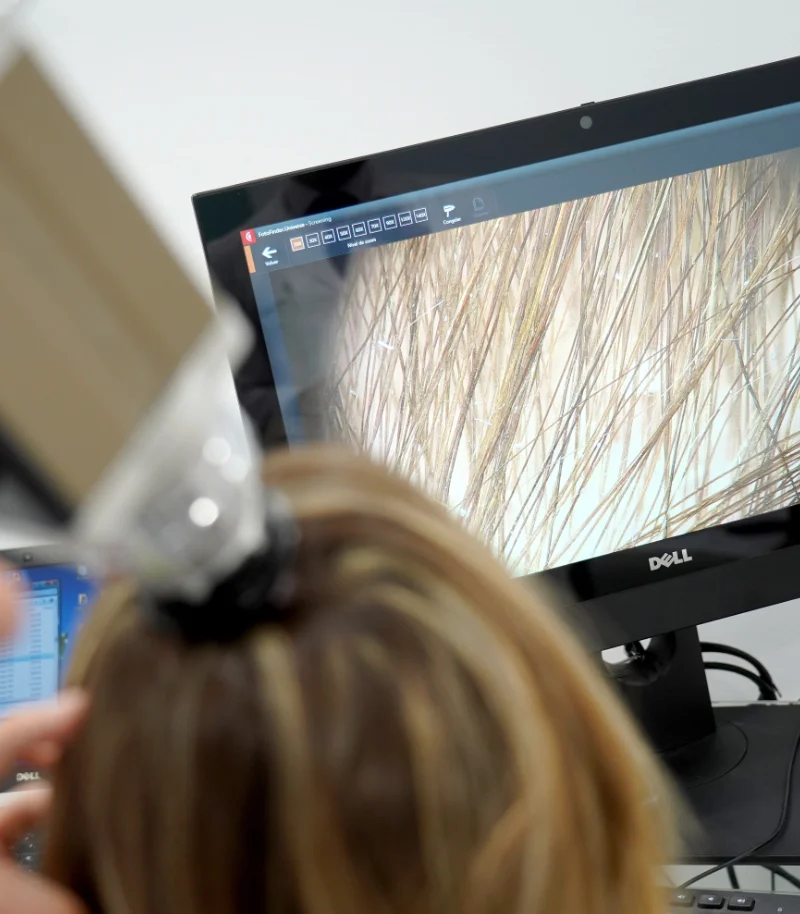
Non-surgical treatments
Advances in aesthetic medicine and medical technology have led to the development of non-surgical treatments that help improve the symptoms and appearance of lipoedema without the need for invasive procedures.
Non-surgical methods to improve skin and reduce volume
At Grupo Pedro Jaén, we use technologies such as radiofrequency, shock waves, ultrasound and cryolipolysis to reduce localised fat, improve skin elasticity and address the cellulite associated with lipoedema. These techniques help redefine body contours and improve patient comfort without surgery.
Complemented by aesthetic medicine treatments
Our Beauty and Wellbeing Unit supports patients by offering aesthetic therapies such as LPG Endermologie, mesotherapy and carboxytherapy, aimed at improving skin quality and microcirculation in the affected limbs. These treatments are also indicated as part of post-surgical care for patients who have undergone surgical treatment for lipoedema.
Symptoms, diagnosis and treatment
A guide to understanding lipoedema
Although the term oedema refers to fluid accumulation, lipoedema is in fact a clinical condition characterised by abnormal accumulation and altered distribution of body fat. It is a disorder of adipose tissue marked by disproportionate and symmetrical fat deposition, most commonly affecting the lower limbs and typically extending from the hips to the ankles.
This condition is frequently associated with overweight and obesity in a high proportion of cases. It is also often confused with other conditions such as different types of oedema, cellulite, obesity or localised fat. However, lipoedema is a clinical condition rather than a purely aesthetic one, even though it has a clear impact on body contour.
Lipoedema affects almost exclusively women. Although its exact causes are not fully understood, a genetic predisposition is clearly recognised, as most affected patients have a family history. Hormonal factors also play a significant role, with the condition most commonly appearing at puberty.

Symptoms of lipoedema
Lipoedema is characterised by an increase in leg volume due to fat accumulation. As the condition progresses, a clear disproportion develops between the lower and upper halves of the body.
This increase in leg volume is commonly associated with a sensation of heaviness and hypersensitivity to pain, where even mild pressure on the affected area can cause discomfort. This pain sensitivity appears to be related to inflammation and tissue hypoxia (reduced oxygenation). Capillary fragility is also common, leading to easy bruising, either spontaneously or following minor trauma.
Symptoms typically begin at puberty and may worsen over time, particularly when associated with significant weight gain.
Lipoedema can lead to substantial emotional distress, negatively affecting mood and self-esteem, and can significantly impair quality of life. In more advanced cases, body contour may be markedly altered, potentially resulting in functional limitations and reduced mobility.
How lipoedema is diagnosed
As lipoedema may be confused with obesity, fluid retention or firm cellulite, assessment by a specialist physician is essential. It is also important to note that lipoedema may occasionally coexist with lymphoedema, resulting in lipo-lymphoedema, a more complex clinical condition that requires a specific multidisciplinary approach.
For these reasons, at Grupo Pedro Jaén we emphasise that any swelling, oedema or abnormal fat accumulation should always be evaluated by a specialist. Accurate medical assessment is crucial, as not all increases in leg volume share the same underlying cause or characteristics, and therefore require individualised management strategies.
The diagnosis of lipoedema is primarily clinical, based on the patient’s medical history and physical examination. In addition, specialists perform bioelectrical impedance analysis to assess body composition and the proportion of different tissues (fat, muscle, fluid). Ultrasound examination is also used to evaluate subcutaneous tissue characteristics and to identify any associated oedema.
In certain cases, blood tests, venous system studies using Doppler ultrasound, or isotopic lymphoscintigraphy may be required to assess possible associated lymphatic alterations.
“In general, the best outcomes are achieved by combining different therapeutic options and initiating treatment at an early stage”
Treatment of lipoedema
Management of lipoedema must be individualised and adapted to the clinical situation of each patient. In general, treatment involves several complementary approaches:
Physical exercise and a healthy diet
Although lipoedema is not caused solely by excess weight or poor diet, regular physical activity and a balanced, healthy diet are essential to maintain appropriate body weight and help control the abnormal fat distribution characteristic of this condition. In a significant proportion of patients, lipoedema is associated with obesity, which should be addressed as a priority with the support of our Endocrinology and Nutrition specialists.
Compression garments
The use of specialised compression garments is essential to improve lymphatic circulation, reduce swelling and relieve the pain commonly associated with lipoedema. In addition, manual lymphatic drainage, performed by specialists in lymphatic physiotherapy, helps reduce oedema and the sensation of heaviness in the limbs.
Technology and medical-aesthetic treatments
En Grupo Pedro Jaén disponemos, además, de diferentes equipos para tratar el lipedema y otras alteraciones que suelen presentarse de forma conjunta, como la grasa localizada, la celulitis o la flacidez, tales como:
- Mesotherapy.
- Shock waves
- Radiofrequency
- Ultrasound
- Cryolipolysis.
- Mechanical endermologie (LPG).
- Electromagnetic Muscle Stimulation.
- Carboxytherapy.
- Manual lymphatic drainage
- Pressotherapy.
To achieve optimal results, thorough assessment and accurate diagnosis by specialists experienced in the management of this condition are essential.

Treatment of complex lipoedema cases
Liposuction may be considered a therapeutic option in carefully selected cases and must be evaluated by our specialised plastic surgeons. In order to maintain long-term results, strict weight control and the permanent adoption of healthy lifestyle habits are essential.
In cases of associated severe obesity, bariatric surgery may be considered. This procedure, commonly referred to as stomach reduction surgery, aims to achieve significant and sustained weight loss, supporting redistribution of body fat and improving overall clinical outcomes.
Treatment of lipolymphoedema
Lipoedema may sometimes be associated with impairment of lymphatic system function, leading to lymph accumulation. This mixed condition, known as lipolymphoedema or lipo-lymphoedema, is a complex clinical entity that requires a different therapeutic approach, targeting both adipose tissue and lymphatic fluid.
More information
Below are the authorship details and references for the information provided on this page.
Authorship and references
The content of this page has been prepared by the Communication Department and the Medical Team of Grupo Pedro Jaén, in line with our editorial commitment to ensuring the accuracy and up-to-date nature of the information provided.
References on lipoedema:
1. Kruppa P, Georgiou I, Biermann N, Prantl L, Klein-Weigel P, Ghods M. Lipedema-Pathogenesis, Diagnosis, and Treatment Options. Dtsch Arztebl Int. 2020 Jun 1;117(22-23):396-403. doi: 10.3238/arztebl.2020.0396. PMID: 32762835; PMCID: PMC7465366.
2. Wollina U. Das Lipödem: Aktuelle Aspekte einer lange vergessenen Erkrankung [Lipedema: up-to-date of a long forgotten disease]. Wien Med Wochenschr. 2017 Oct;167(13-14):343-348. German. doi: 10.1007/s10354-017-0566-2. Epub 2017 May 10. PMID: 28493139.
3. Aksoy H, Karadag AS, Wollina U. Cause and management of lipedema-associated pain. Dermatol Ther. 2021 Jan;34(1):e14364. doi: 10.1111/dth.14364. Epub 2020 Oct 12. PMID: 33001552.
4. Wollina U. Lipedema-An update. Dermatol Ther. 2019 Mar;32(2):e12805. doi: 10.1111/dth.12805. Epub 2018 Dec 27. PMID: 30565362.
5. Peprah K, MacDougall D. Liposuction for the Treatment of Lipedema: A Review of Clinical Effectiveness and Guidelines [Internet]. Ottawa (ON): Canadian Agency for Drugs and Technologies in Health; 2019 Jun 7. PMID: 31479212.
6. Wollina U, Heinig B. Differenzialdiagnostik von Lipödem und Lymphödem : Ein Leitfaden für die Praxis [Differential diagnostics of lipedema and lymphedema : A practical guideline]. Z Rheumatol. 2018 Nov;77(9):799-807. German. doi: 10.1007/s00393-018-0546-y. PMID: 30280233.
7. Buso G, Depairon M, Tomson D, Raffoul W, Vettor R, Mazzolai L. Lipedema: A Call to Action! Obesity (Silver Spring). 2019 Oct;27(10):1567-1576. doi: 10.1002/oby.22597. PMID: 31544340; PMCID: PMC6790573.
8. Favre L. Le lipœdème: quelles pistes étiologiques ? [Lipedema: Which Etiological Pathways?]. Praxis (Bern 1994). 2018;107(20):1077-1080. French. doi: 10.1024/1661-8157/a003085. PMID: 30278848.
9. Depairon M, Tomson D, Lessert C, Mazzolai L. Le lipœdème, cet inconnu [Lipedema, the Unknown]. Praxis (Bern 1994). 2018;107(20):1071-1076. French. doi: 10.1024/1661-8157/a003088. PMID: 30278840.
10. Redondo Galán C, García Bascones M, Marquina Valero MA. Lipedema: clínica, diagnóstico y tratamiento. Revisión de la literatura [Lipoedema: Symptoms, diagnosis and treatment. A literature review]. Rehabilitacion (Madr). 2019 Apr-Jun;53(2):104-110. Spanish. doi: 10.1016/j.rh.2018.04.007. PMID: 31186091.
11. Pereira de Godoy LM, Pereira de Godoy HJ, Pereira de Godoy Capeletto P, Guerreiro Godoy MF, Pereira de Godoy JM. Lipedema and the Evolution to Lymphedema With the Progression of Obesity. Cureus. 2020 Dec 2;12(12):e11854. doi: 10.7759/cureus.11854. PMID: 33282608; PMCID: PMC7714724.
Where we see patients?
Centre in Madrid
Grupo Pedro Jaén has several centres located in Madrid and also offers the option of online consultations. The main headquarters is located on Calle Serrano and provides all medical specialties except trichology, which is offered at the Calle Cinca clinic, just a few minutes’ walk away. For patients in the northern area of Madrid, the group also has a clinic in La Moraleja, where most specialties are available.


Calle Serrano 166
This centre currently offers services in body aesthetic medicine, endocrinology, nutrition, complementary aesthetic medicine and post-surgical aesthetic treatments.
Address and contact
Located a five-minute walk from the Nuevos Ministerios transport interchange and close to one of the most vibrant commercial areas in Spain, the Golden Mile and Serrano Street.
Mon - Fri: 09:00 - 21:00 / Sat: 09:00 - 14:00
Calle Serrano 166, El Viso neighbourhood, Chamartín district, 28002 Madrid
Related units and pages
Lymphology Unit
Comprehensive diagnosis and treatment of lymphatic system disorders with a multidisciplinary team.
Lymphoedema
Differential diagnosis and comprehensive treatment of this condition, which is characterised by the accumulation of lymphatic fluid in the tissues.
Body aesthetics
A personalised approach combining different treatment strategies to address the main body-related concerns.
Information and news
Press room
In the Grupo Pedro Jaén Press Room you can find information, advice and news related to dermatology, aesthetic medicine, trichology and general health. The group’s journals are also shared through an online platform, along with updates on the activity and media appearances of our clinics and healthcare professionals.
How to shower properly: tips for looking after your skin
Cold or hot water? Is it better to use a sponge? Find out how to shower properly and what dermatologists recommend to protect your skin.
Retinol in summer: should you stop using it?
We debunk this and other myths about using retinol during the warmer months.

Blog
News about Grupo Pedro Jaén. Information and advice on dermatology, aesthetic medicine, trichology, and general health

Media
Information about media appearances by our clinics and medical specialists.

Journal
Archive of all Grupo Pedro Jaén journals, available through an external online platform.